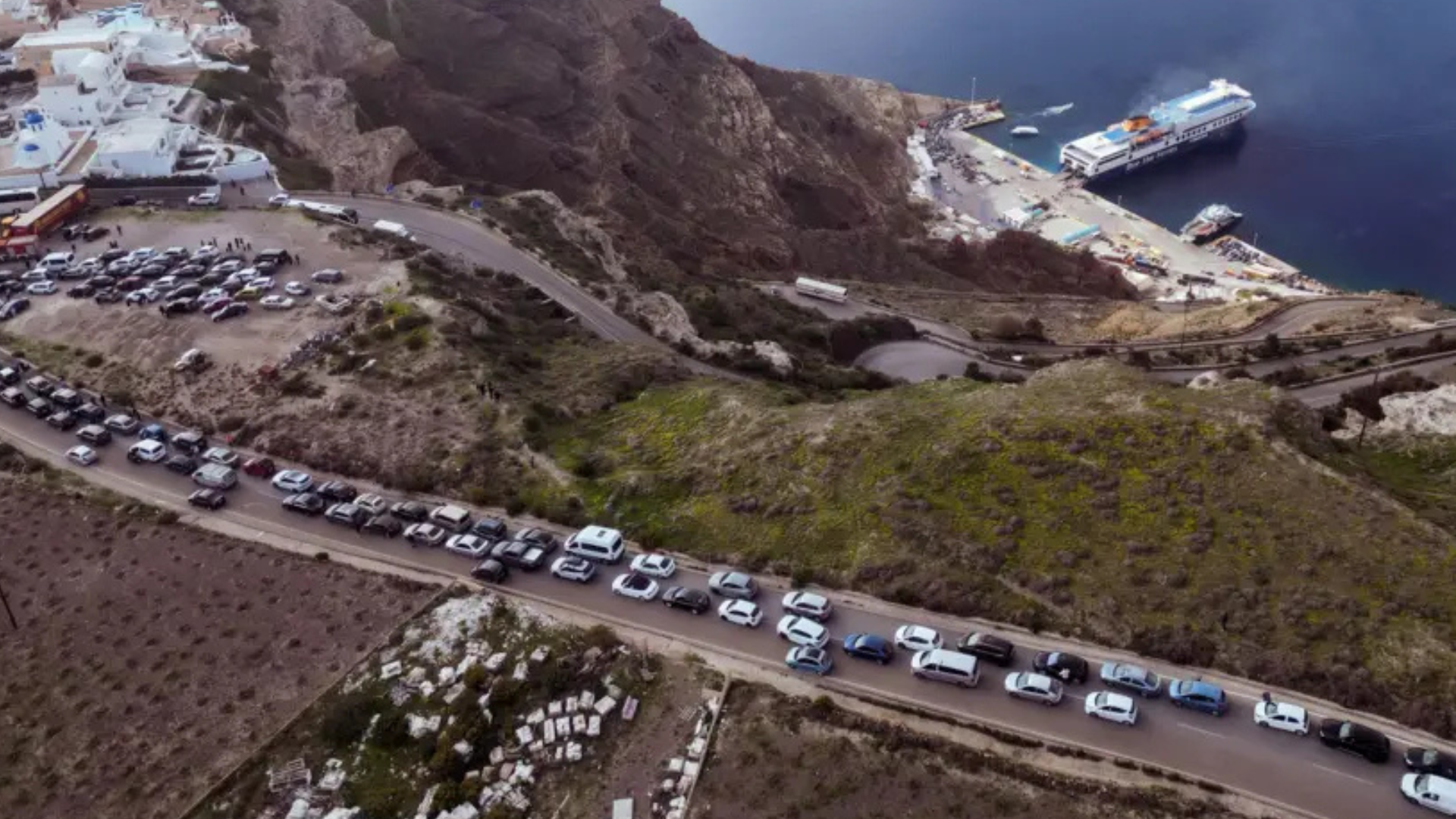
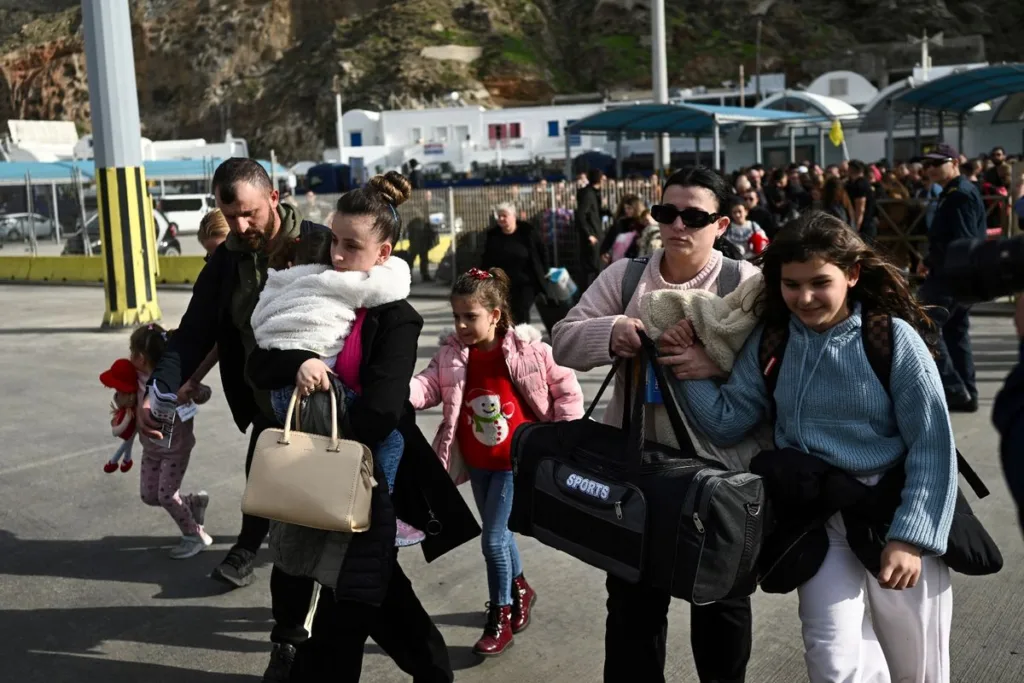
Thousands of residents and tourists are fleeing Santorini as persistent seismic activity continues to rattle the popular Greek island. Over the past few days, more than 1,200 tremors have been recorded, with the strongest reaching a magnitude of 5.1.
The ongoing seismic swarm has led to growing anxiety, prompting around 10,000 people to leave, despite no official evacuation order being issued.
The sudden spike in departures has placed immense pressure on transport services. The Greek Coast Guard confirmed that more than 4,600 people have left by ferry since Sunday, February 2, while Aegean Airlines reported that nearly 1,300 people flew out of Santorini on Monday, February 3, alone. Additional flights have been scheduled to accommodate the demand, as ferry and flight bookings continue to surge.
Although no significant structural damage has been reported, authorities have taken precautionary measures. Schools on Santorini, Amorgos, Ios, and Anafi have been ordered to close until further notice, while emergency teams have been deployed as a precautionary step.
The government has also instructed hotels and residents to empty swimming pools to prevent potential hazards in the event of stronger tremors.
Greek Prime Minister Kyriakos Mitsotakis addressed the situation, stating, “This is a very intense geological phenomenon.” He urged residents to “remain calm.”
Seismologists monitoring the situation have indicated that the current seismic activity is not linked to Santorini’s volcanic system but rather to nearby underwater faults. They warn that this pattern of tremors could persist for days or even weeks.
Santorini, one of Greece’s most renowned tourist destinations, is now facing uncertainty as the tremors disrupt daily life. While many residents and visitors have left, some tourists remain, experiencing an unusually quiet island.
Local businesses, already facing economic challenges, are concerned that prolonged uncertainty could severely impact tourism, especially with the peak travel season approaching.
As authorities continue to monitor the situation, residents and tourists remain on high alert. Officials are reassuring the public that they are prepared for any developments while urging caution.
