
Greece’s Culture Ministry slammed for laying cement on sections of the Acropolis

·

Greece’s Ministry of Culture has been slammed by archaeologists and people on social media after photos emerged of cement paths covering sections of the Acropolis.

According to the Ministry, the cementing of certain areas aims to facilitate access for visitors with mobility problems and disabilities, as well as seniors and visitors with health problems.

The project had been unanimously approved in May by the Central Archaeological Council (KAS) and includes an elevator for people with a disability.

Archaeologist, Despina Makropoulou, posted these photos of the cement on Facebook.

But protesting archaeologists and the internet community argue that other materials such as wood, plexiglass or metal ramps could have been used to avoid any potential destruction.

In response, the Culture Minister, Lina Mendoni, issued a statement, claiming that the cement critics had no “culture.”

“The Ministry of Culture expresses its joy that sensitive citizens were concerned about the routes, which are paved on the Acropolis in order to facilitate the access of the disabled, the elderly and citizens with health problems,” the statement reads.
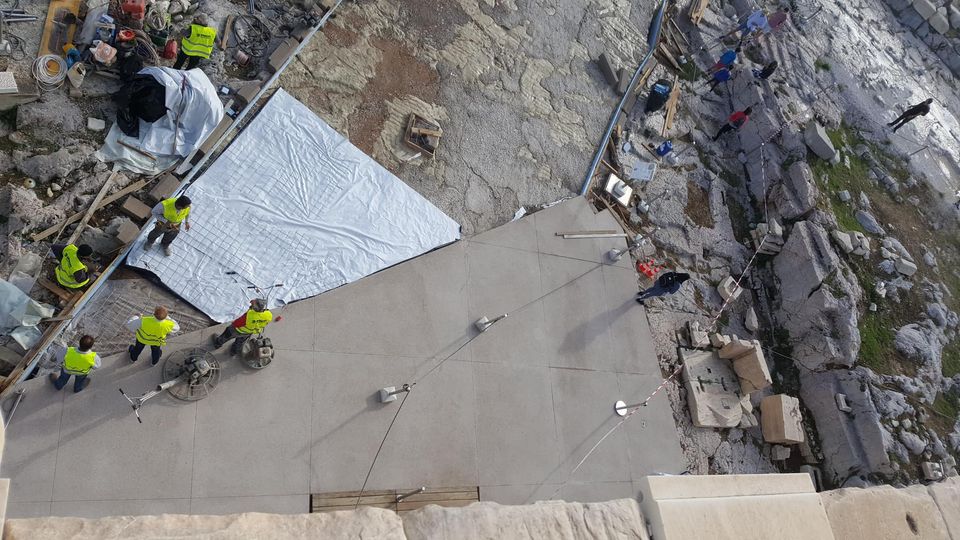
The cement paths have been heavily criticised on social media and by archaeologists.

“At the same time, it regrets that the same sensitive citizens who are protesting have not visited the Acropolis for at least twenty years, when these roads were paved with cement.

“The difference is that over time and with the passage of millions of visitors, all these years, the material has been destroyed and the routes are a trap even for those who do not have mobility problems.”

The project is reportedly funded by the Onassis Foundation, which has also funded the recently upgraded lighting system at the Acropolis.

READ MORE: Greece unveils spectacular new lighting for the Acropolis.

Share:

KEEP UP TO DATE WITH TGH

By subscribing you accept our Terms of Service and Privacy Policy.

Latest News

Echoes from the past: Owl skyphos from Athens

The owl is one of the most famous symbols of ancient Greece. Particularly associated with the goddess Athena.

Love, language and belonging: A Valentine’s Day story about choosing to be Greek

I must have been five, maybe six, watching my neighbour flip lamb on the barbecue while Greek music drifted from inside.

More than roses: How Greek Australian couples celebrate Valentine’s Day their way

The Greek Herald spoke with Greek Australian couples to hear their love stories and learn how their bonds have strengthened over time.

Bank of Sydney shares banking tips to help households and businesses in 2026

The latest inflation data confirms that price pressures are proving more stubborn than policymakers had anticipated.

Discover Athens food culture in a new cookbook‑memoir‑guide

This book is a collection of 150 recipes, but it is also much more than that. Kochilas calls it “part memoir, part reporting, and part guide” (9).

You May Also Like

State memorial farewells trailblazing Greek Australian Labor figure Nick Bolkus

A state memorial service has been held in Adelaide to honour the life and legacy of Nick Bolkus, a pioneering Greek Australian politician.

Archbishop Makarios: Our Young people are our hope for the future

His Eminence Archbishop Makarios has released a special letter emphasising his prioritisation on the next generation of Greek Australians.

‘Authenticity can’t be hidden from the audience’: Filippos Pliatsikas from Pyx Lax

Filippos Pliatsikas from Pyx Lax speaks exclusively to The Greek Herald ahead of the Greek rock bands Australian tour.