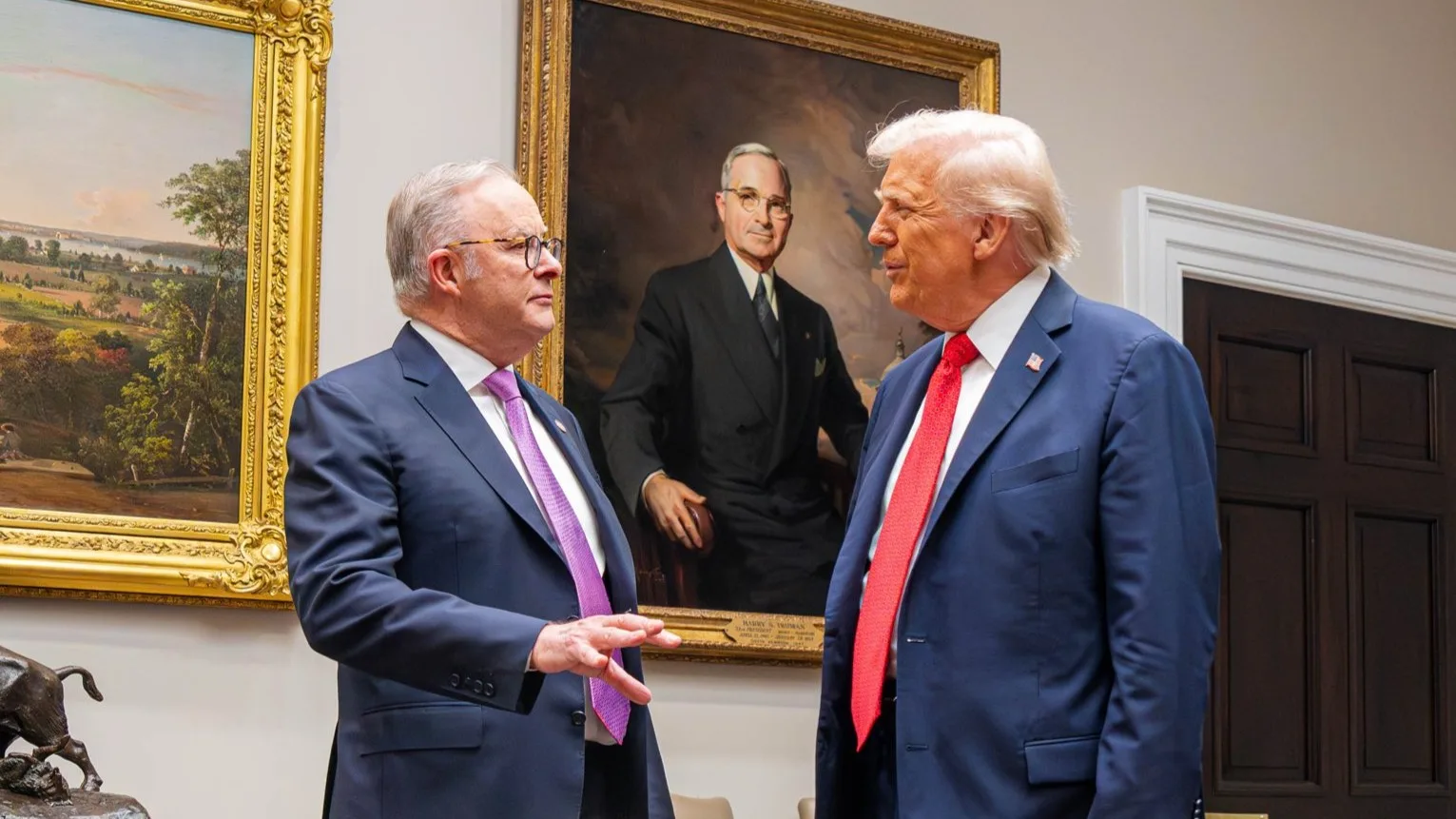
Australian Prime Minister Anthony Albanese and US President Donald Trump have announced a joint US $8.5 billion (A$13 billion) investment package to develop critical minerals projects, marking a major step towards reducing global reliance on China for rare earths and essential industrial materials.
The new framework agreement, signed at the White House, commits both countries to invest US $1 billion each over the next six months in a range of mining and processing ventures.
Early beneficiaries include a US $200 million equity stake in a West Australian gallium plant run by Alcoa and Sojitz, and a US $100 million investment in the Arafura Nolans rare earths project in the Northern Territory.
The deal also introduces price floors for new producers and empowers governments to block asset sales on national security grounds – measures likely to provoke Beijing.
“In about a year from now, we’ll have so much critical minerals and rare earths that you won’t know what to do with them. They’ll be worth about two dollars,” Trump quipped, seated beside a smiling Albanese at the White House.
Albanese hailed the partnership as proof that the allies were “seizing those opportunities which are before us to take our relationship to that next level.”
The initiative is designed to strengthen supply-chain resilience across sectors including defence, renewable energy, and advanced technology.
The meeting also reaffirmed US support for the AUKUS submarine partnership, with Trump insisting construction was moving “full steam ahead” despite an ongoing Pentagon review.
“With Anthony [Albanese] we’ve worked on this long and hard. I think it’s really moving along very rapidly, very well,” he said.
One awkward moment came when Trump was asked about past social media posts by Australia’s ambassador to Washington, Kevin Rudd, who had once labelled Trump “the most destructive president in US history.”
The president, unaware Rudd was present, replied: “I don’t like you either – and I probably never will.”
Despite occasional tensions, the talks were largely positive. Trump praised Albanese for his recent election victory and described Australia as a strong ally and valued purchaser of US defence equipment. “I hear you’re very popular today,” he joked.
Analysts described the meeting as a turning point for both AUKUS and critical minerals cooperation, setting the stage for deeper strategic and economic integration between the two nations.
Source: The Australian Financial Review
