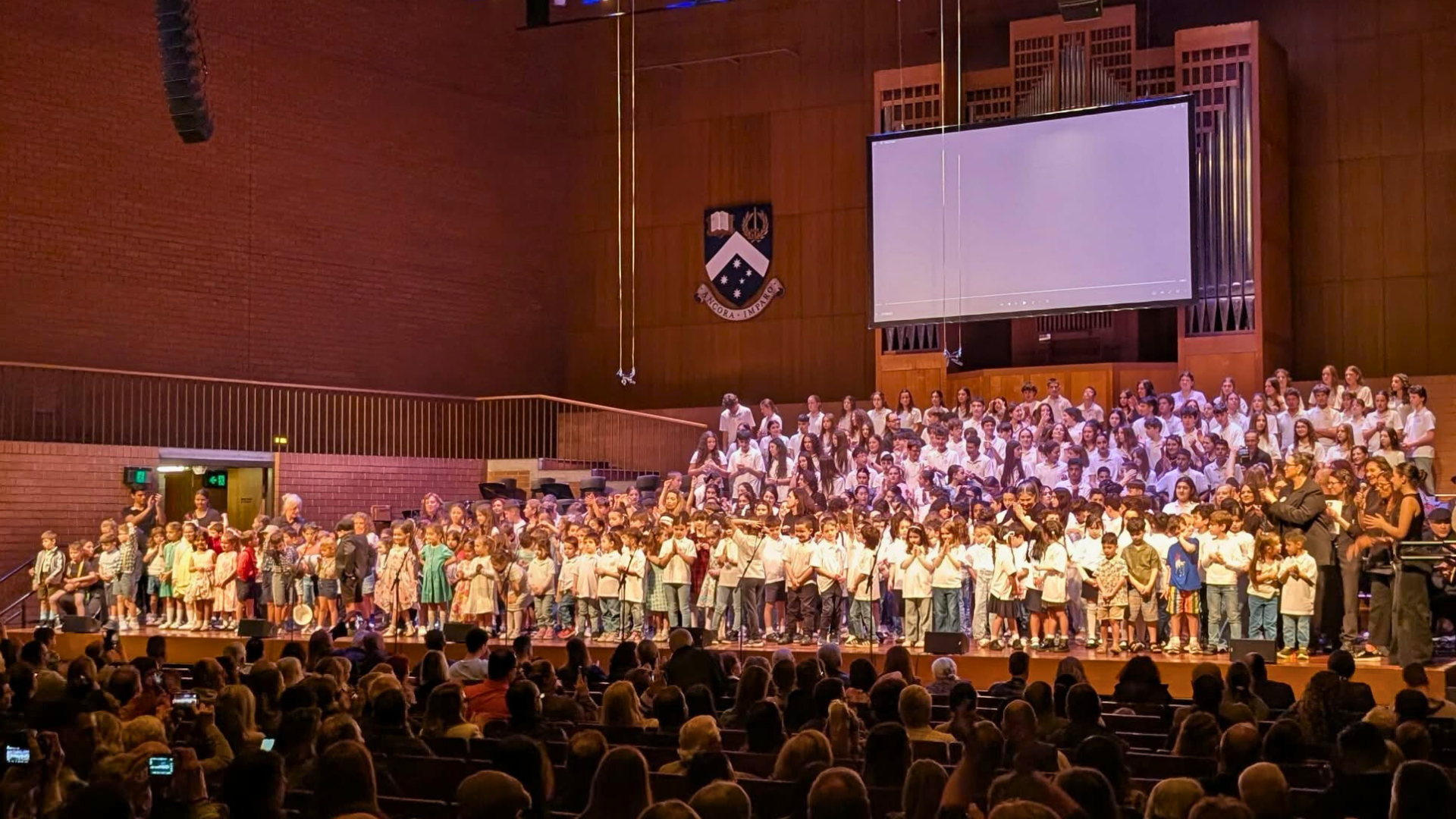
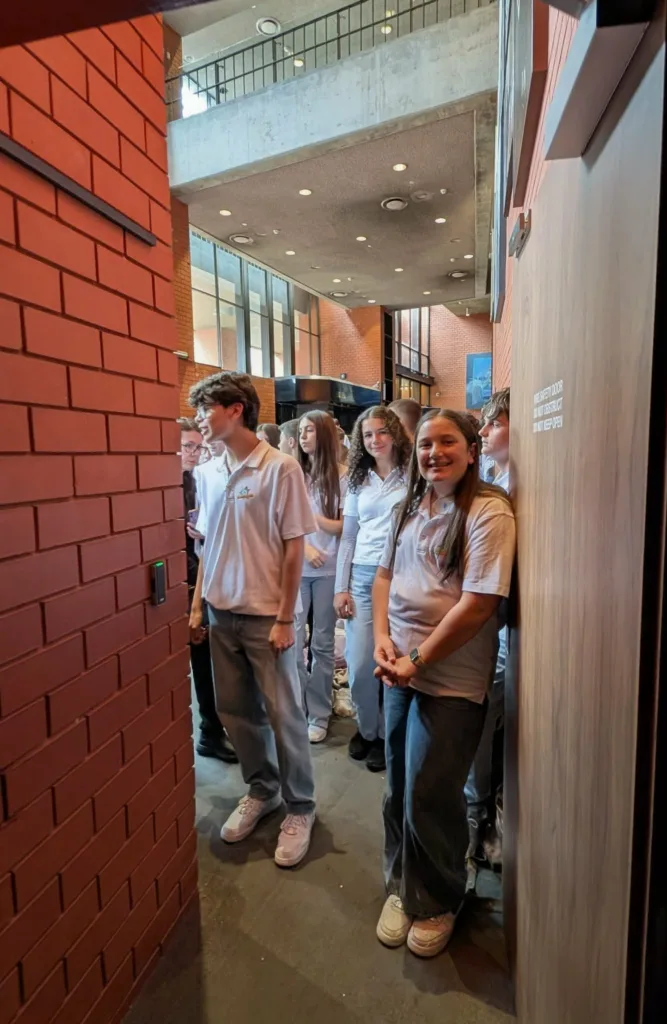
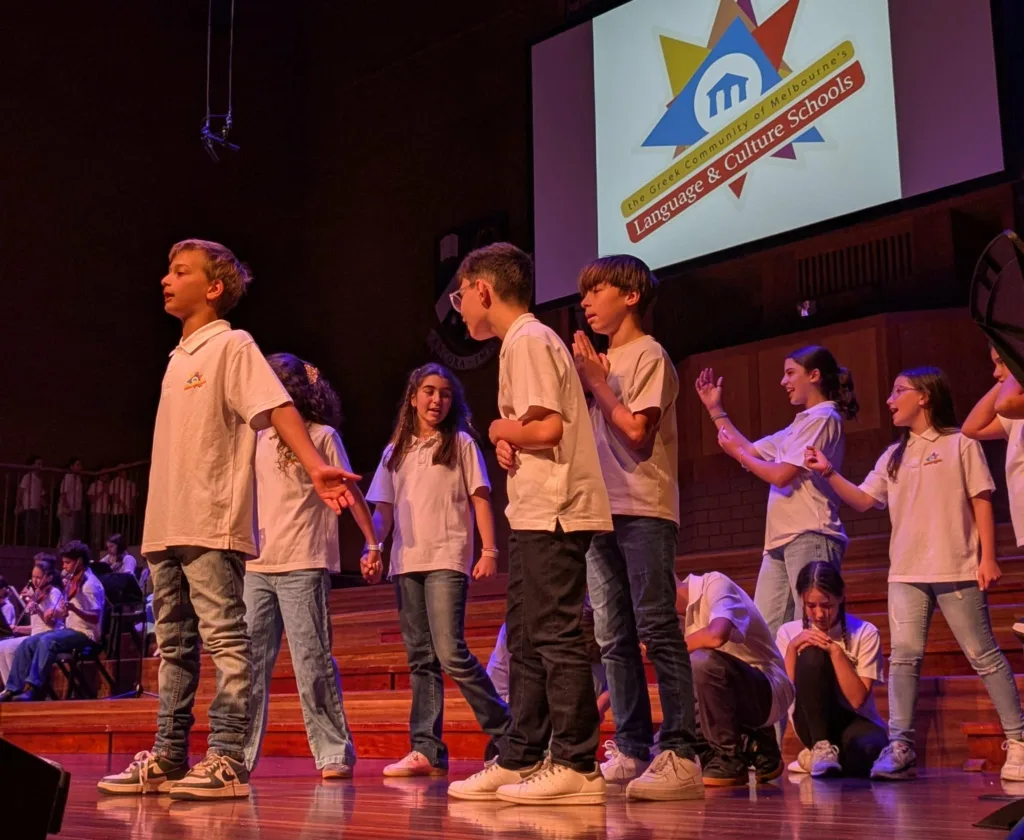
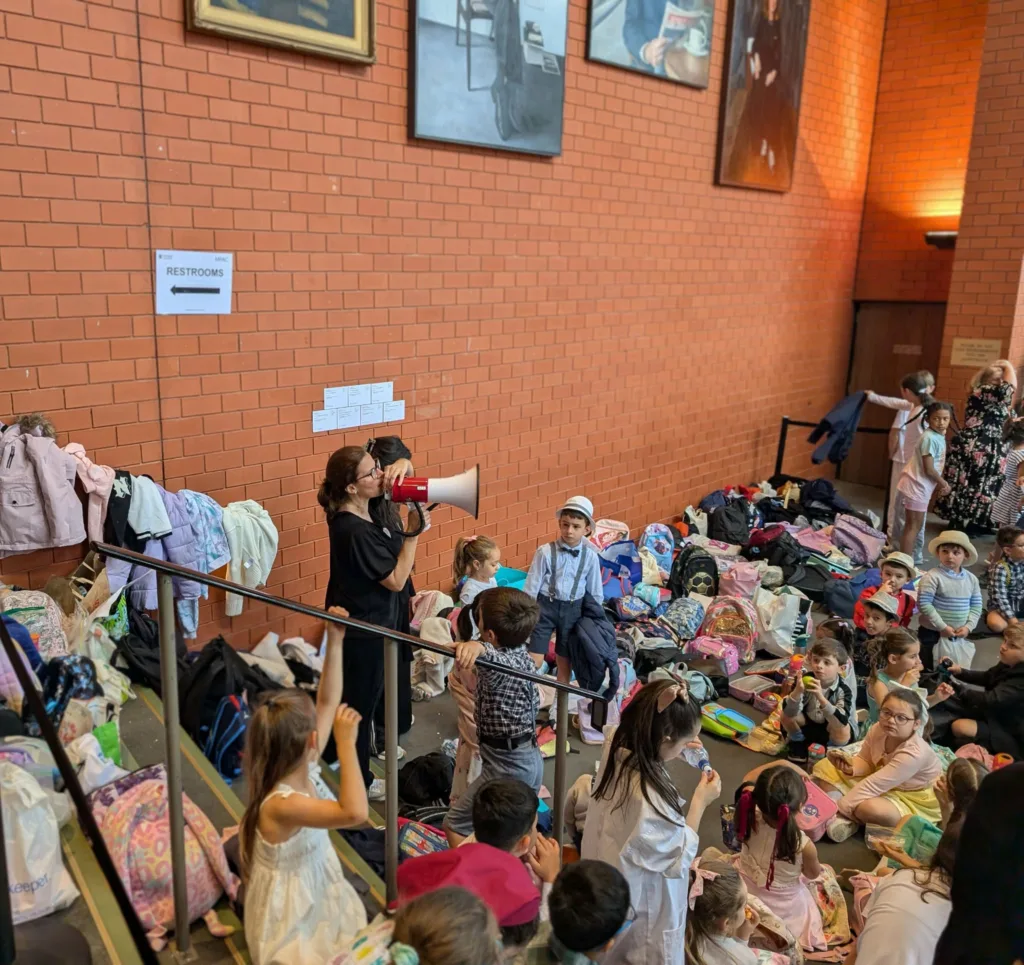
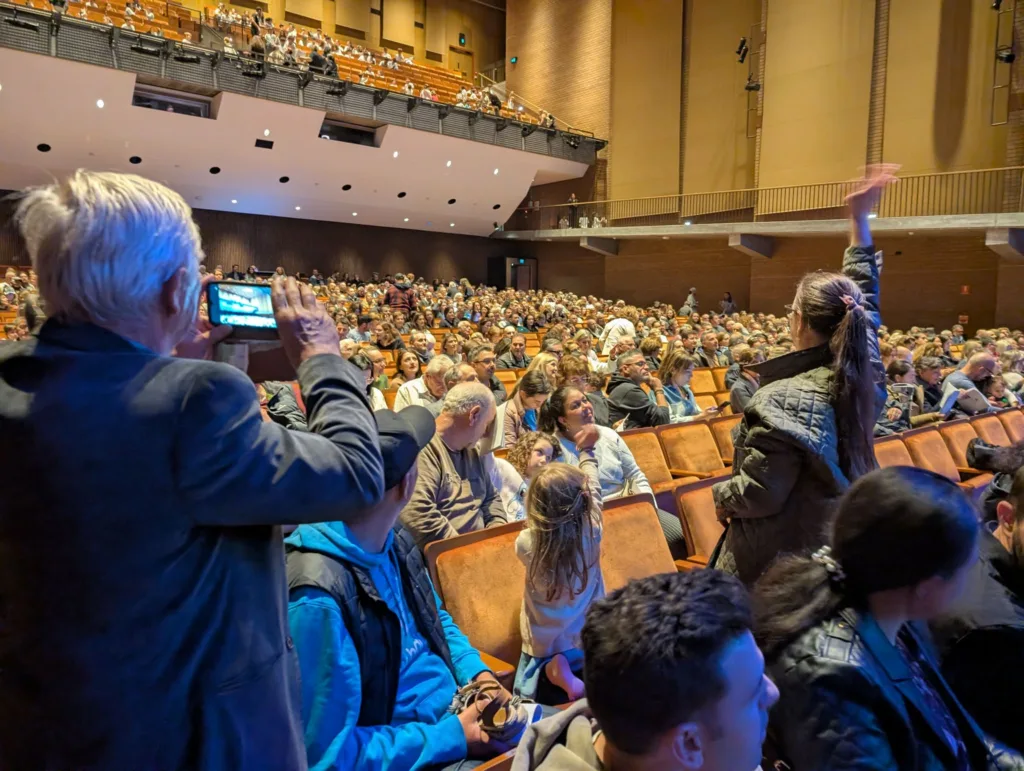
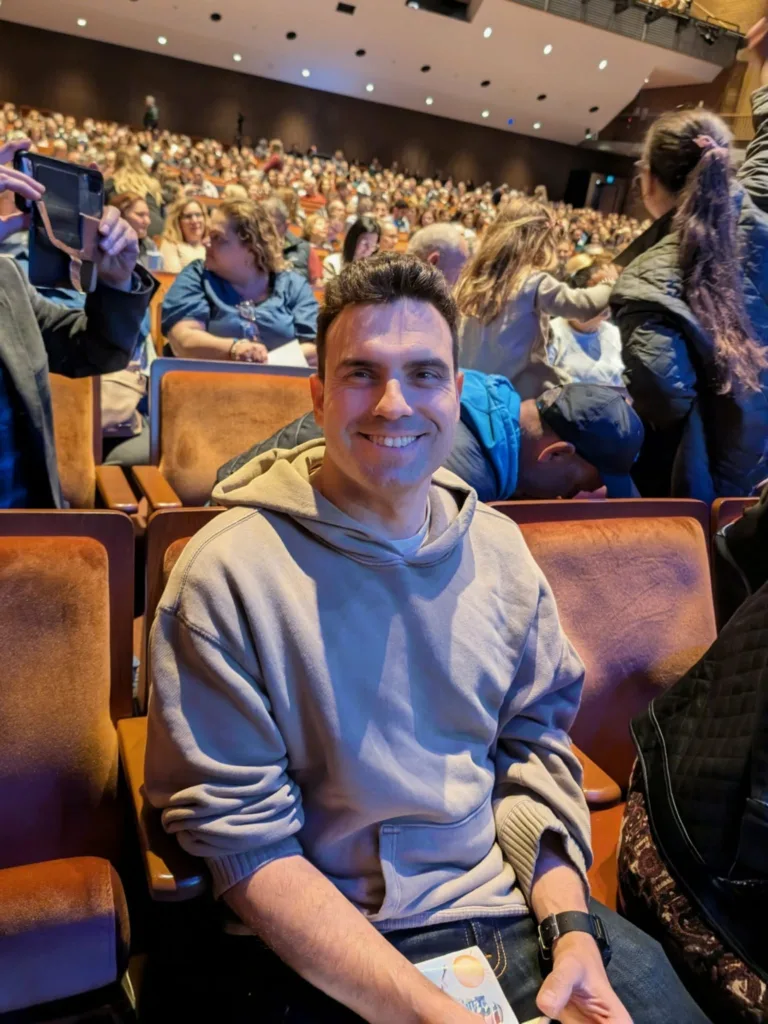
Five hundred students on stage, 1,500 seats filled, queues spilling outside Monash University’s Robert Blackwood Hall, and teachers with bullhorns trying to corral excited children.
The end-of-year celebration of the Greek Language and Culture Schools of the Greek Community of Melbourne (GCM) showcased the huge dynamic of a giant network of around 1,000 students, 58 teachers and 11 campuses.
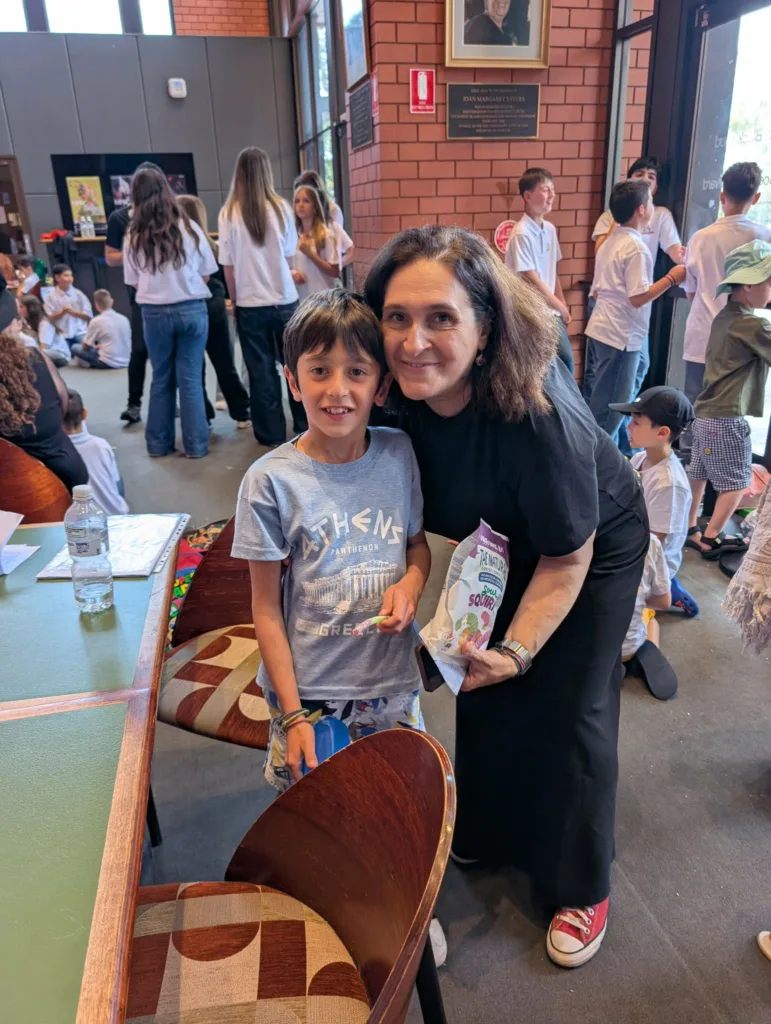
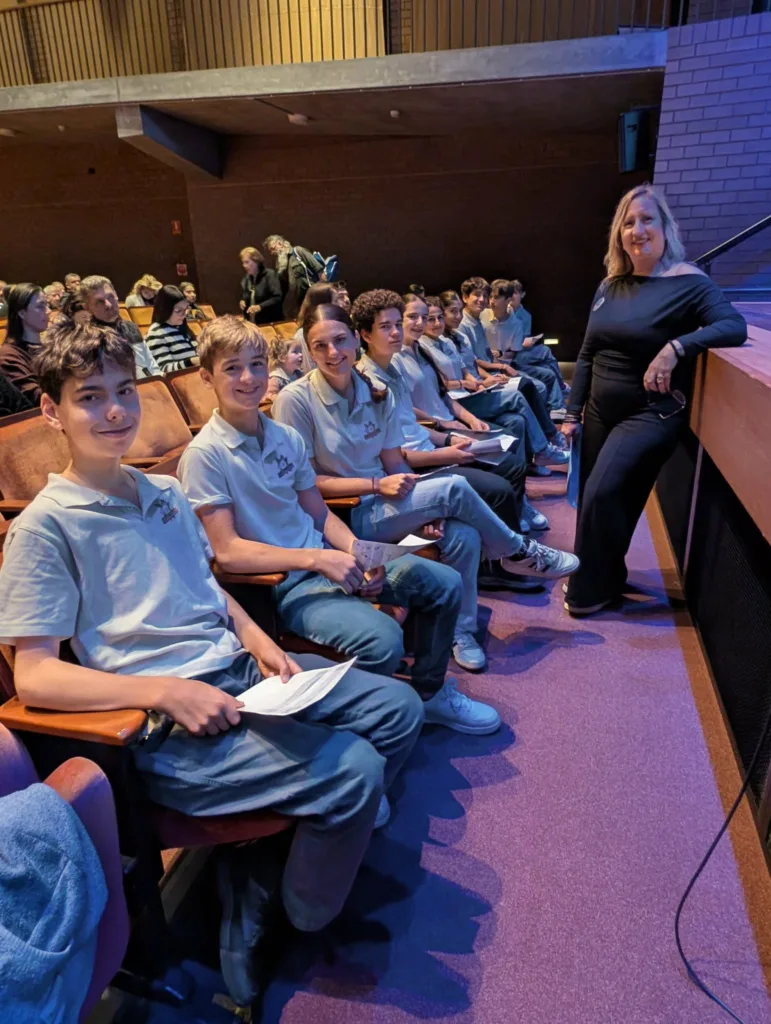
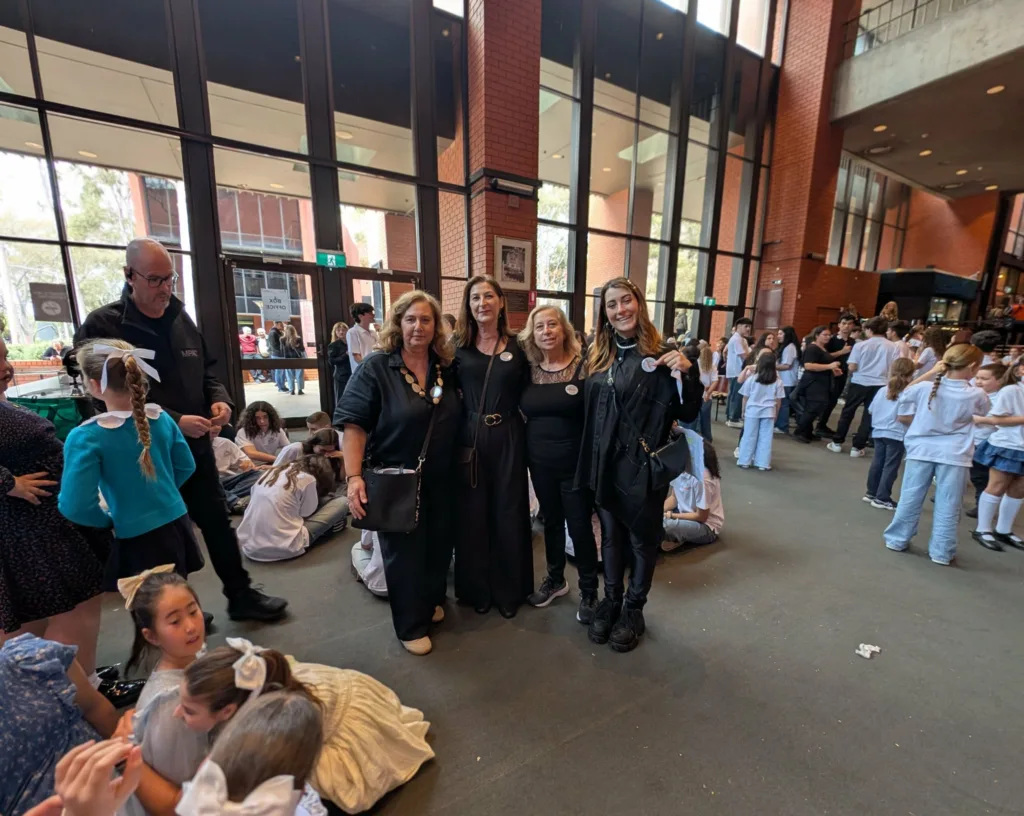
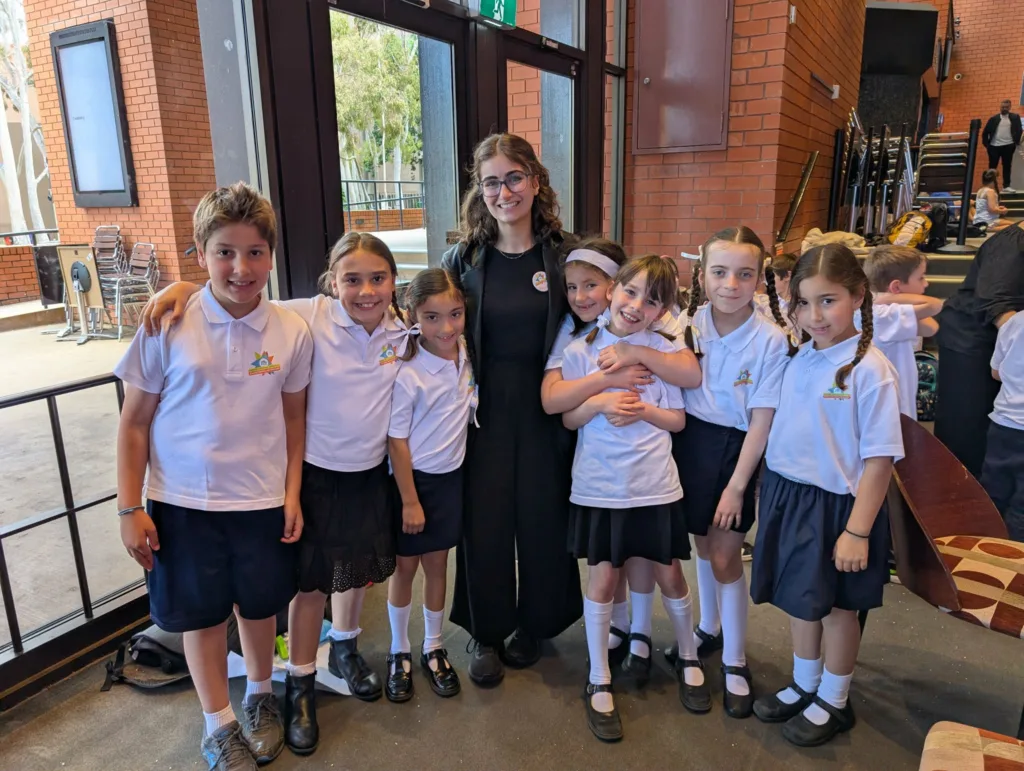
The ambitious mission of the performance: to have children live an entire century of Greek art, struggle, memory and beauty through the music of Mikis Theodorakis and Manos Hadjidakis, friends and rivals who elevated folk and rebetiko by setting them to high-quality Greek poetry, shaping the sound of post-war Greece.
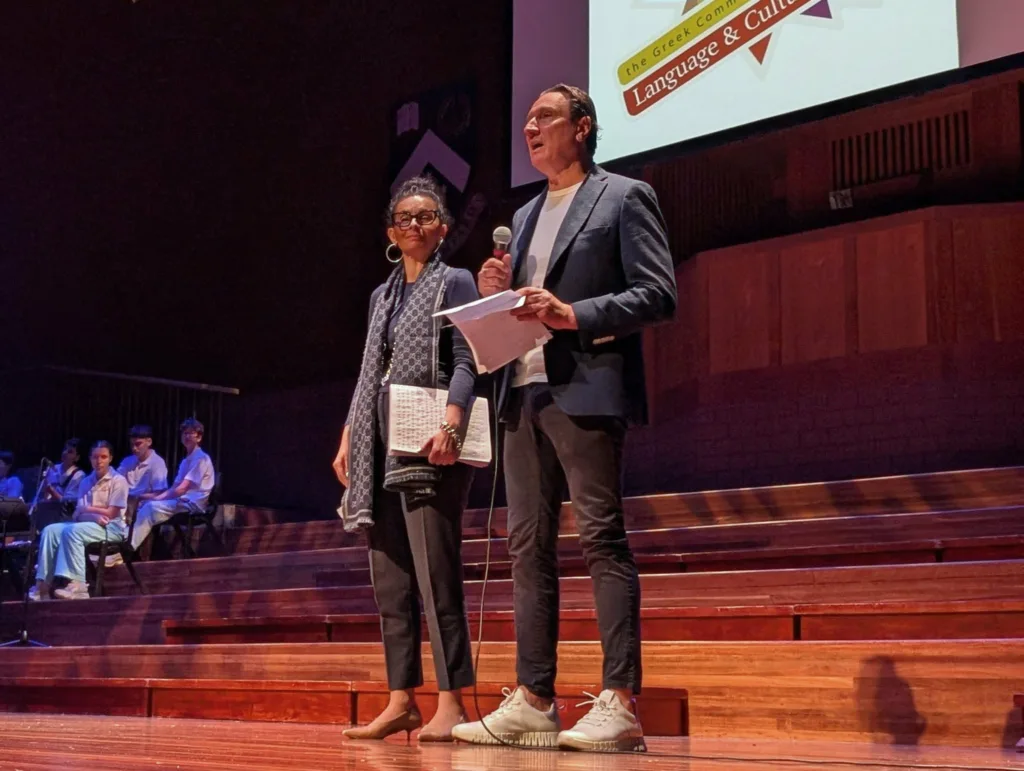
Principal Maria Bakalidou explained the decision.
“The year 2025 marks 100 years since the birth of two iconic Greek music creators who left an indelible mark on Greek culture. Though they followed different paths, both shared a profound love for Greece and for art,” she said.
“Through their melodies, they bridged classical music with folk traditions. This concert is dedicated to their work, and through our students, we reflect on the transformative power of their art. Our goal was ambitious: for students not just to perform the songs but to inhabit a century of Greek sound and story.”

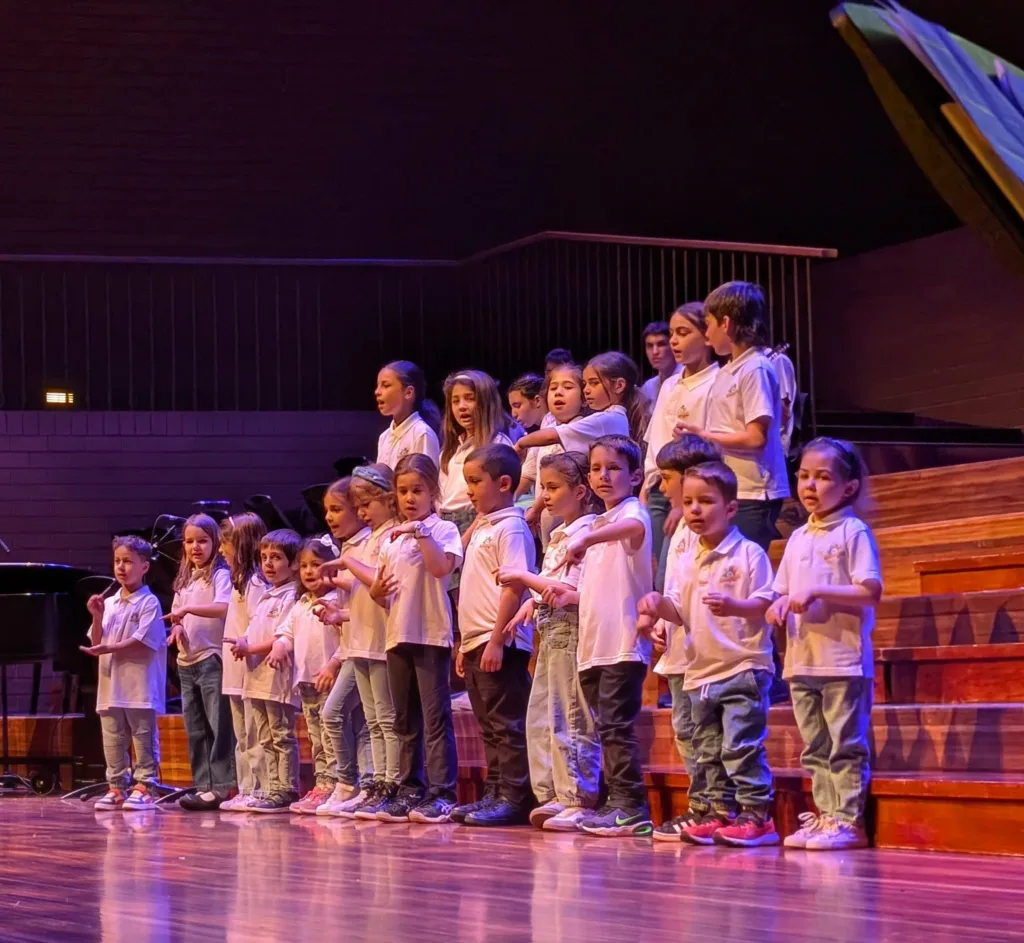
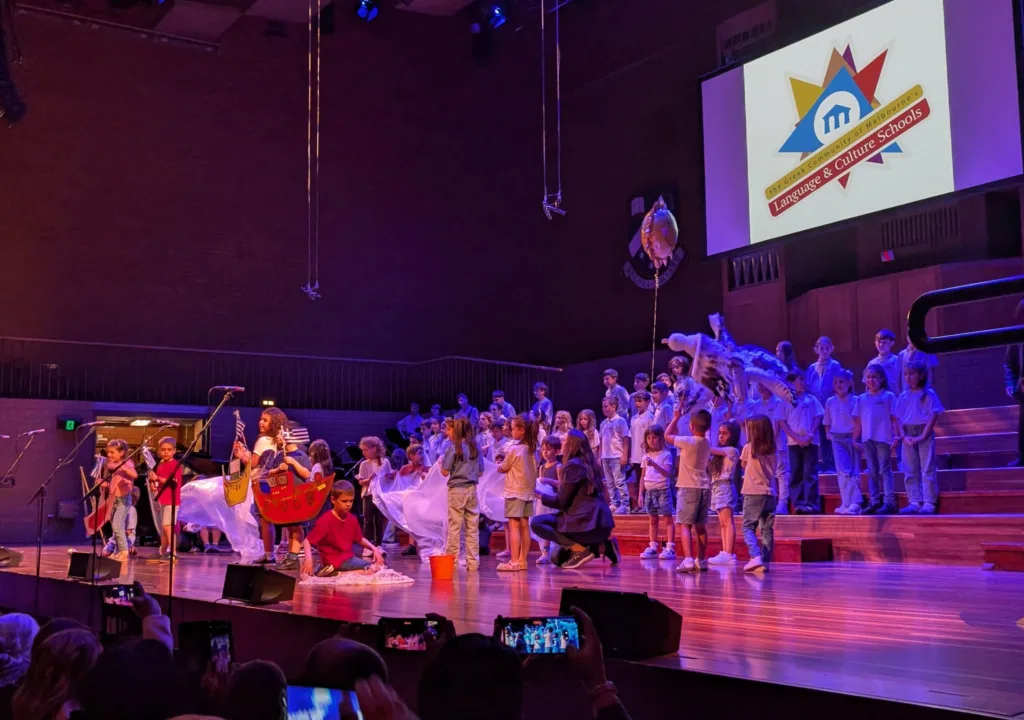
Organised chaos, electric energy
Thirty minutes before curtain, teacher Christina Soumi pleaded over a loudspeaker: “Children, stay with your class! Please!” Parents laughed knowingly.
“We knew it would be full, but this is beyond full,” said teacher Ourania Papageorgiou, handing out glossy programs filled with student artwork, rehearsal photos and QR codes to original recordings. “There are no seats left.”
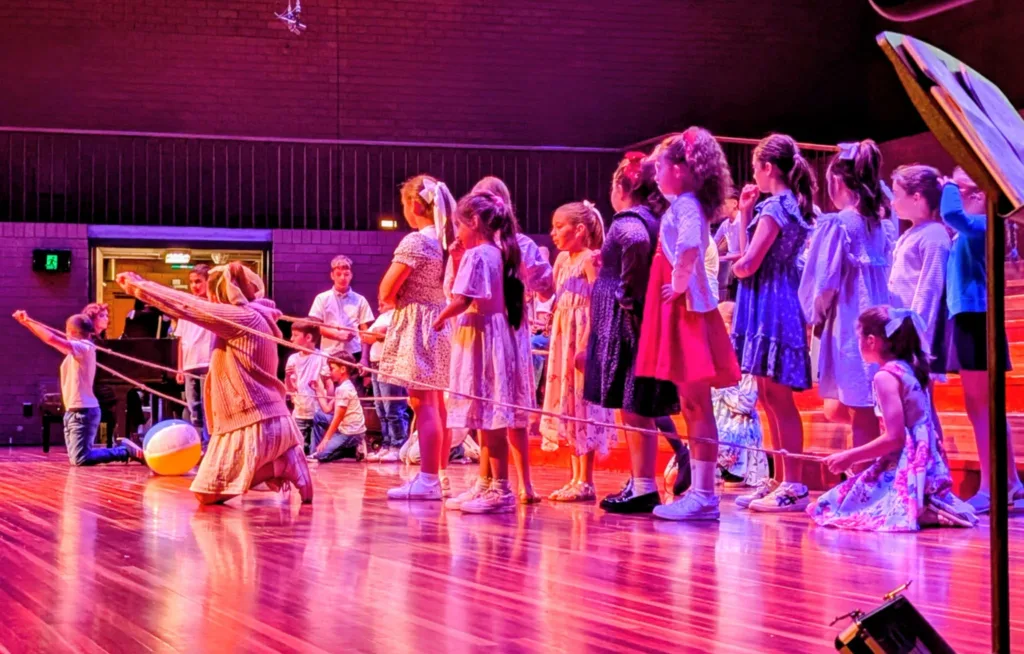
Inside, classic Greek film moments flickered across a large screen, Anthony Quinn as Zorba dancing on the beach, while the stage swelled with dancers, narrators, choirs and a student orchestra alongside community musicians Tony Iliou, Jacob Papadopoulos and Byron Triandafyllidis.
A polished live student orchestra, bringing skills learned in external music lessons into the Greek school environment, gave the night an integrated and unexpectedly professional feel.
Theatre director Katerina Poutachidou and music director Elizabeth Exintaris coordinated the spectacle. “Our students aren’t actors, they’re not dancers,” Bakalidou said. “But what they achieved is phenomenal.”
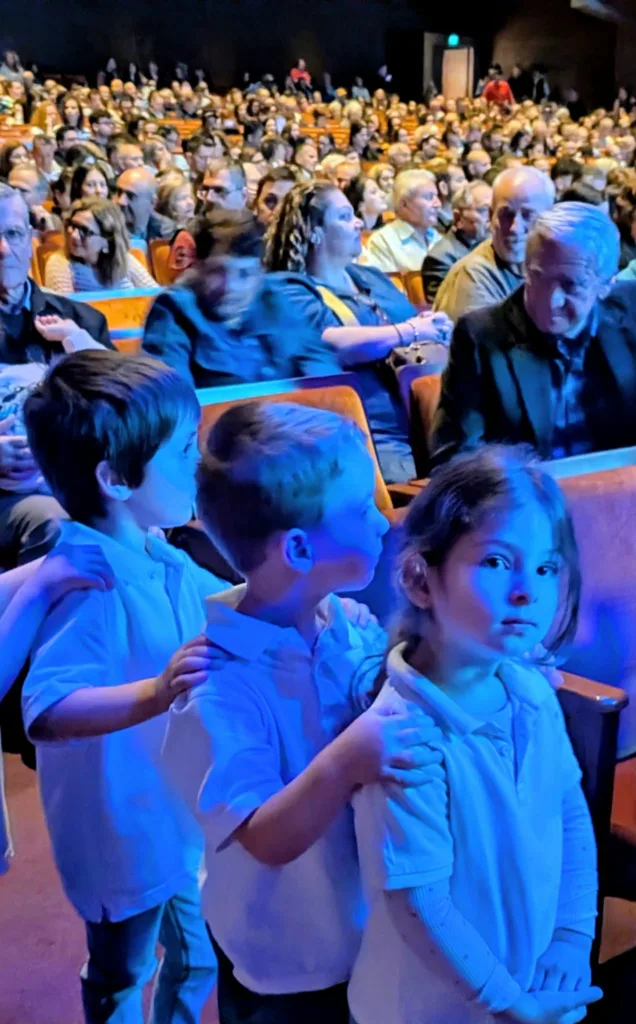

Children meet the greats
Some pieces were notoriously difficult.
“At first we hesitated,” Bakalidou admitted. “Hadjidakis and Theodorakis sometimes use complex language. But the children, they are tabula rasa. What you give them, they cultivate.”
After only two rehearsals of Odos Oneiron with Glen Waverley students, she said, “they were singing it with joy.”
Student narrator Nefeli Gioka, Year 8, normally listens to Mac DeMarco, ACDC and hip-hop, but embraced the challenge. “I grew up hearing this music in the car. This performance helped me understand it in a deeper way. We’re honoured to be part of this.”
Bentleigh teacher Vicky Lambropoulou said, “Our role as narrators is to guide the story and tie all sections together. My students rose to the challenge beautifully.”
Veteran teacher Mary Lefteriotis summed up the effort: “It took nine months to prepare. And we are ready.” Nervous? Not at all!


A community responds
Parents and grandparents filmed constantly, wiping away tears between recordings.
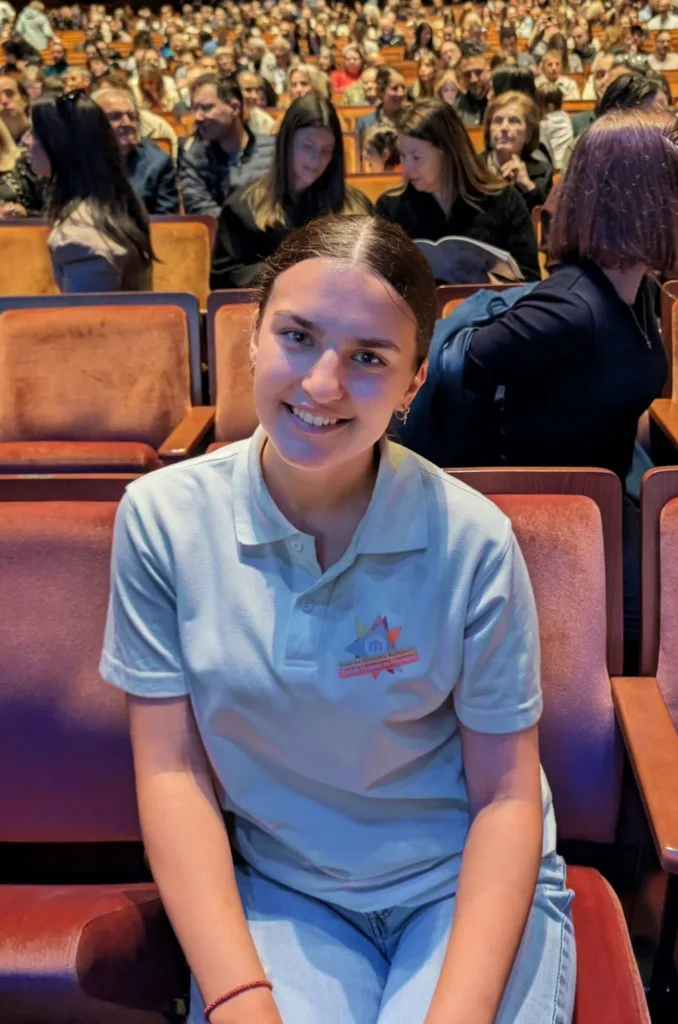
Dr Marinis Pirpiris, watching daughter Akrivi after finishing Year 12, wouldn’t have missed it.
Mother Maria glowed as she described her 17-year-old: “She always asks me to speak Greek with her. She has a bouzouki. Maybe tonight will inspire formal lessons. The connection to culture, to church, to community… it all helps with language.”
For yiayia Maria Vlahodimitropoulos, in Australia 61 years, the night felt like home. “I felt so good watching my grandchildren. Congratulations to the teachers. This is what Greece feels like. My little ones say, ‘Yiayia, se agapo poly.’ That is everything.”
Pointing to her son, George. “We didn’t have celebrations like this when my kids were young – just modest end-of-year Christmas shows with your class. This is next-level.”

Language, identity and legacy
Greek Consul General of Melbourne, Dimitra Georgantzoglou, highlighted the cultural weight: “Two different creators joined by one common element: Greece. Through their songs, we preserve our language. Language is inseparable from music.”
GCM president Bill Papastergiadis recalled hosting journalist Manolis Manis, who wrote on socials after hearing Melbourne children sing Elytis and Theodorakis that he met a Greece in Melbourne that does not exist within Greece.
Papastergiadis added, “Language isn’t just communication. It’s identity. What happens here matters for Hellenism everywhere.”


A joyous finale
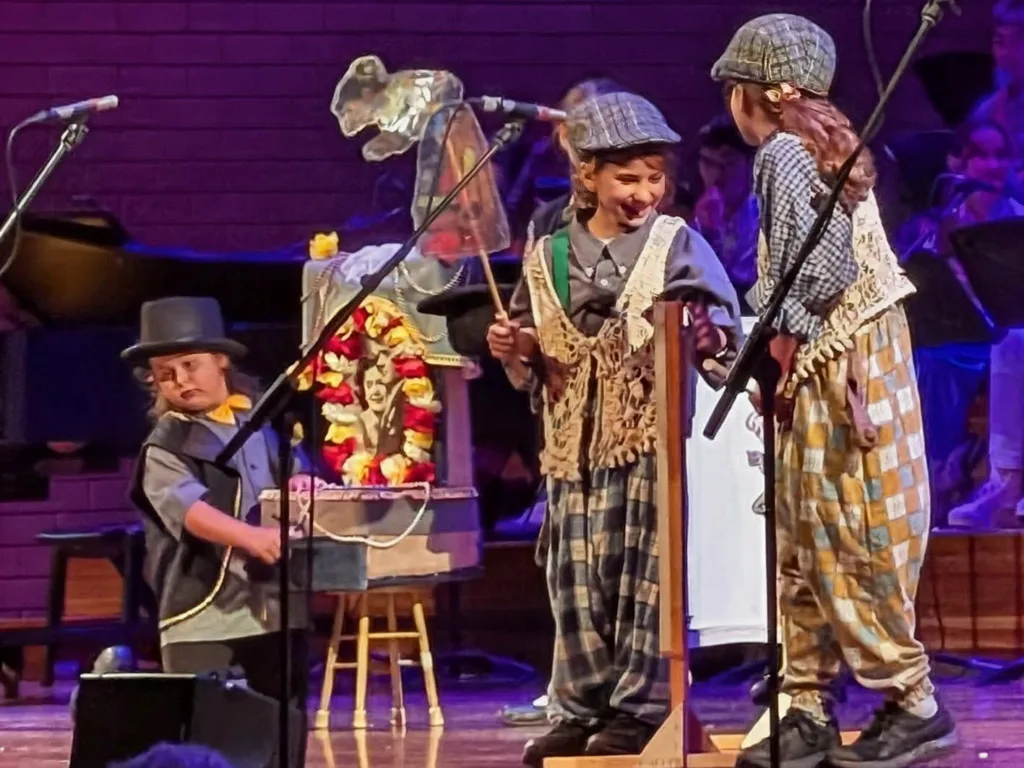
The performance travelled through eras: a condensed, playful Aliki sto Naftiko complete with ‘thalassopouloa’ props, Hadjidakis’ Odos Oneiron. and little Margarita who couldn’t read and threw her books, an innocence that melted the room.
When the choir reached the final lines of Kemal, the lines “Times don’t change” were followed by a hopeful counterpoint: a narrator gently insisting that times do change, especially when new generations carry culture forward.
Hundreds of students then joined hands in an enormous on-stage Zorba, as parents erupted.
When applause refused to stop, a tearful Bakalidou stepped forward: “Μπράβο σας.”
Within minutes, social media flooded with videos and thanks. The concert had succeeded -not only as a performance, but as a living bridge between generations, proving that teaching grammar and conjugation is one thing; bringing children inside a century of Greek music is profound.
