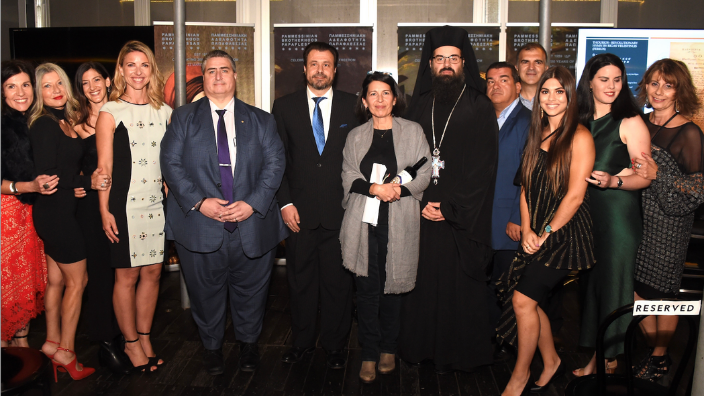
With a sold-out lecture about the contribution of Greek Diaspora to the Revolution of 1821, held at the Hellenic Museum in Melbourne on Saturday February 27, Pammessinian Brotherhood ‘Papaflessas’ initiated a series of events to commemorate and celebrate the Greek War of Independence bicentenary.
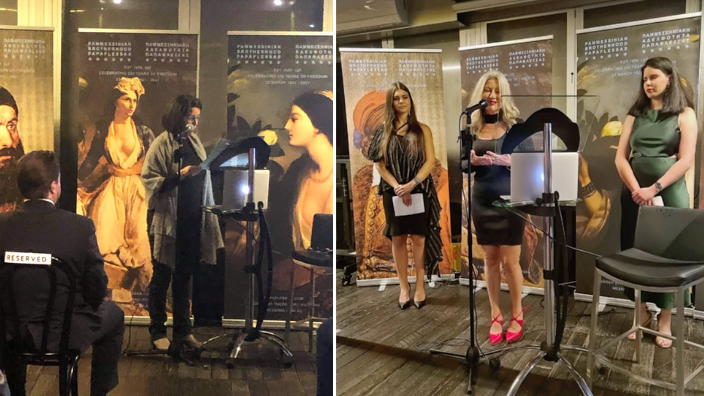
Keynote speaker, sociologist Juliana Georgia Charpantidou, took the audience on a historic journey, unravelling the events that led to the Revolution of 1821, exploring the key personalities of the War and examining how the Greek Diaspora influenced and contributed to the liberation of the country.
The presentation for the evening was conducted by author and journalist Despina Meris.
Consul General of Greece in Melbourne Emmanuel Kakavelakis, Archdiocesan Vicar of the Northcote district Fr. Evmenio Vasilopoulos, Chair of the Victorian Greek National Day Council Tony Tsourdalakis and Victorian Senator Lee Tarlamis addressed the audience and the long list of attendees consisted of distinguished guests such as former State Minister John Pantazopoulos.
“The crucial contribution of Greek Diaspora to the Revolution of 1821 is an indisputable fact. In the prosperous Greek communities of Diaspora, the conditions were created for the development of the first nuclei of preparation for the Revolution.
“The trading networks in addition to financial transactions also served as conduits for ideological and cultural transformations. However, their contribution was not limited to ideological preparation but proceeded with financial support and eventually life sacrifice on the battlefields,” said Ms Charpantidou.
The evening concluded with a Cocktail party, mezze and music.
READ MORE: Melbourne cancels Greek Independence Day March this year
“With this event and the ones to follow, we want to celebrate our history and roots and invite all Hellenes and Philhellenes to participate,” said Denise Zapantis who together with Mary Tsaganis volunteer to coordinate the Brotherhood’s bicentennial events.
Ms Zapantis also praised young members and MCs for the evening Cali Gotsis and Taxia Tsaganis for their efforts and contribution.
*The Brotherhood’s next event, Conversation with Despina Meris, will take place on Sunday March 21st. Click here for bookings or more details.

