
The Hellenic Australian Lawyers (HAL) is facing growing scrutiny over how its membership rules are being interpreted, following a National Committee decision that has significant implications for voting rights, committee eligibility, and leadership elections within the organisation.
At the heart of the issue is a long-standing distinction in HAL’s Rules between ordinary members, who are entitled to vote and stand for office, and associate members, who may participate in activities of the Association but are excluded from formal decision-making.
What the dispute is about
The uncertainty centres on the interaction between two provisions of HAL’s constitution.
Rule 8 restricts ordinary membership to individuals who are “admitted to practise law in an Australian jurisdiction.” However, the rule does not clarify whether this refers solely to formal admission to the legal profession, or whether it also requires a current practising certificate.
Rule 14, meanwhile, lists several categories – including judges, judges’ associates, patent and trade mark attorneys, and professional law teachers – as associate members, without explaining how that classification applies where a person in one of those categories is also admitted to practice law in Australia.
The core question has therefore been whether Australian-admitted lawyers who fall within a Rule 14 category should retain ordinary membership rights, or whether their occupational role automatically places them in the associate category.
On 17 December 2025, the HAL National Committee adopted an interpretation resolving this uncertainty. Under the Committee’s interpretation, ordinary membership now requires both admission to practise in the Australian legal profession and a current practising certificate. In addition, anyone who falls within a Rule 14 category is classified as an associate member regardless of their admission status or professional experience.
Why the decision drew attention
The timing and practical effect of the resolution attracted immediate attention because it directly affected Peter Tantalos, the long-serving South Australian Chapter Chair and member of the National Committee.

Tantalos has served as SA Chair for four years and is widely credited with transforming the Chapter into HAL’s most active nationally. During his tenure, the South Australian Chapter delivered more events and initiatives than all other State and Territory chapters combined, strengthened partnerships with peak professional bodies, and prioritised youth engagement and succession within the profession.
He also played a central role in steering the Chapter through the COVID-19 period, maintaining consistent programming and expanding membership at a time when many professional organisations experienced contraction. Among the Chapter’s flagship initiatives was the annual John Perry AO KC Oration, which has featured senior judicial figures from Australia’s highest courts and has become a nationally recognised event within HAL’s calendar.
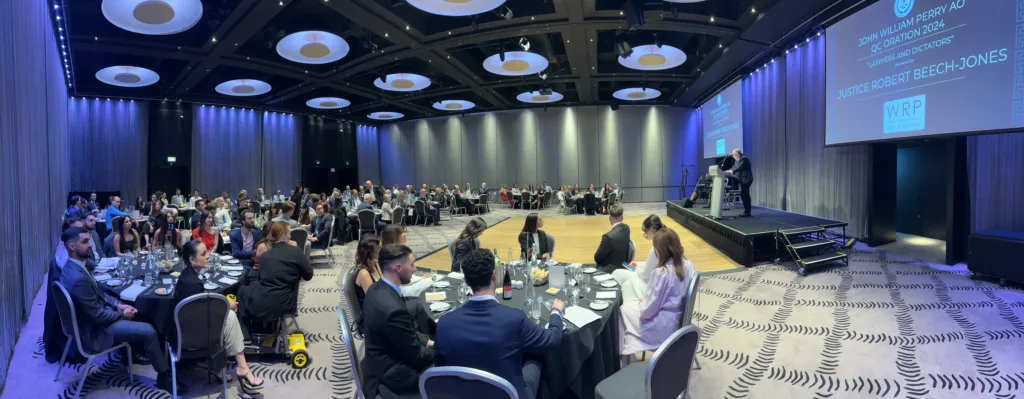


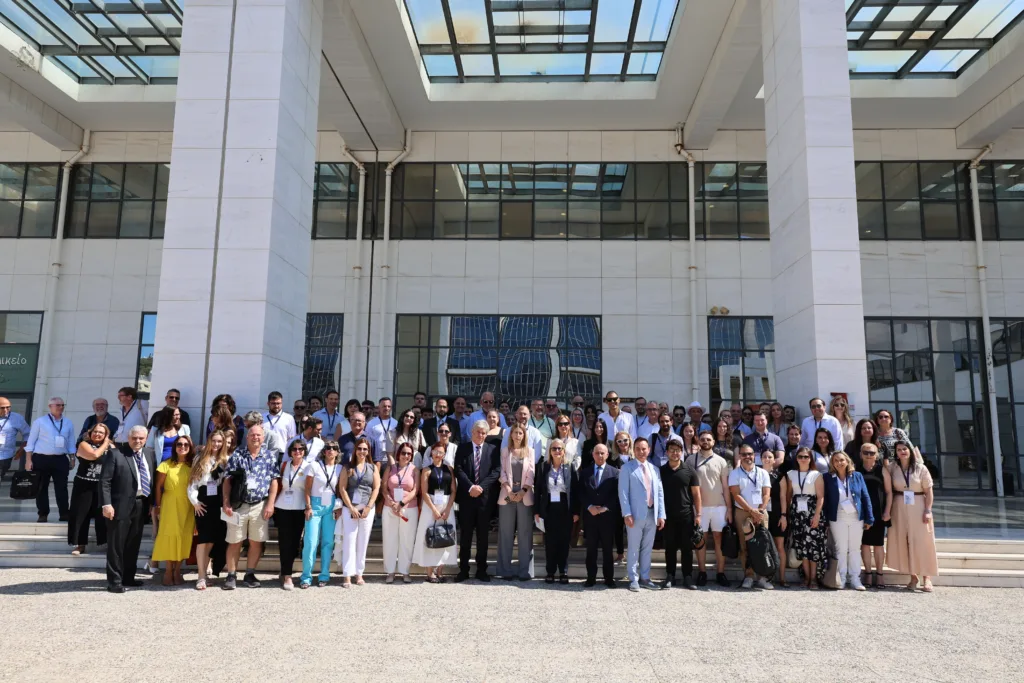
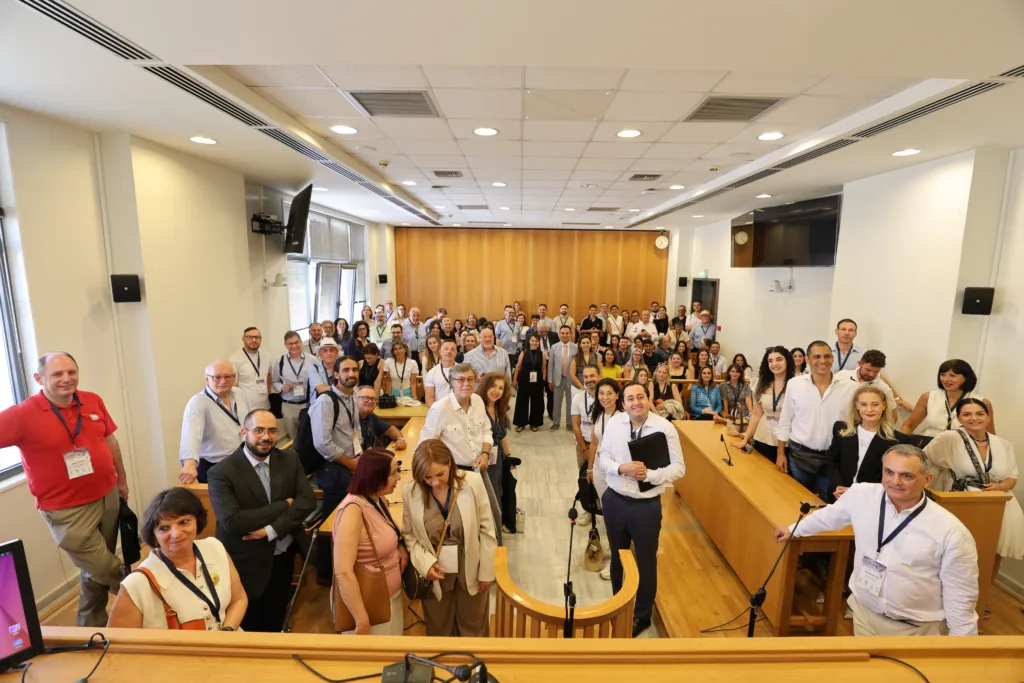
Beyond South Australia, Tantalos was a key organiser of the Global Summit of Hellenic Lawyers, the first international gathering of its kind, working closely with counterpart organisations in Greece, the United States and Cyprus to establish ongoing global cooperation within the Hellenic legal diaspora.
Despite being admitted to practice law, Tantalos currently works as a judge’s associate, placing him within a Rule 14 category. Under the Committee’s interpretation, this means he would be deemed an associate member and therefore would be excluded from voting, standing for national office and remaining as SA Chapter Chair.
The decision was made less than one day before nominations opened for HAL’s upcoming elections. Tantalos had been widely regarded as the sole potential challenger to the incumbent national president, Joseph Tsalanidis, who has held the role and chaired the Committee since 2020.
While the interpretation applies nationally, it is understood that Tantalos is the only current Committee member directly affected by the ruling.
Broader implications for the Association
Following the Committee’s decision, Tantalos said that he “deeply appreciated the trust” HAL had placed in him and described the initiatives and events delivered in SA during his tenure as a “testament to the trust and support of HAL members and the SA Committee,” and said it was “an honour” to serve the SA Chapter over the past four years.
While the long-term impacts remain unclear, the interpretation could have the effect that solicitors or long-term legal practitioners – who are admitted to practice law and hold a valid practising certificate – are rendered ineligible to hold membership with voting rights if they fall within particular categories, irrespective of their years of practice or professional experience. This includes judges, judges’ associates, patent or trademark attorneys, and professional law teachers.
Furthermore, it may conflict with one of HAL’s longstanding aims of encouraging the rise of young lawyers, associates, and junior practitioners by limiting their opportunities to participate in, and contribute to, the future direction of the Association.
Speaking to The Greek Herald, Tantalos said he was disappointed by the decision and that he disagreed with the Committee’s interpretation – expressing his concern that it could contribute to the trend of declining membership, exacerbate internal administrative inefficiencies, and run counter to the Association’s stated commitment to growth, member engagement, and future renewal. He added that Committee decisions should always be guided by the objects and mission of the Association.
Looking forward into 2026, the interpretation creates uncertainty into HAL’s current leadership and, in particular, casts a cloud on HAL’s participation in the 2027 Global Summit. The AGM is scheduled for Friday, 27 February 2026.
 is facing growing scrutiny over how its membership rules are being interpreted.)