For Anastasios Mazis, the past fortnight has been a test of patience and faith.
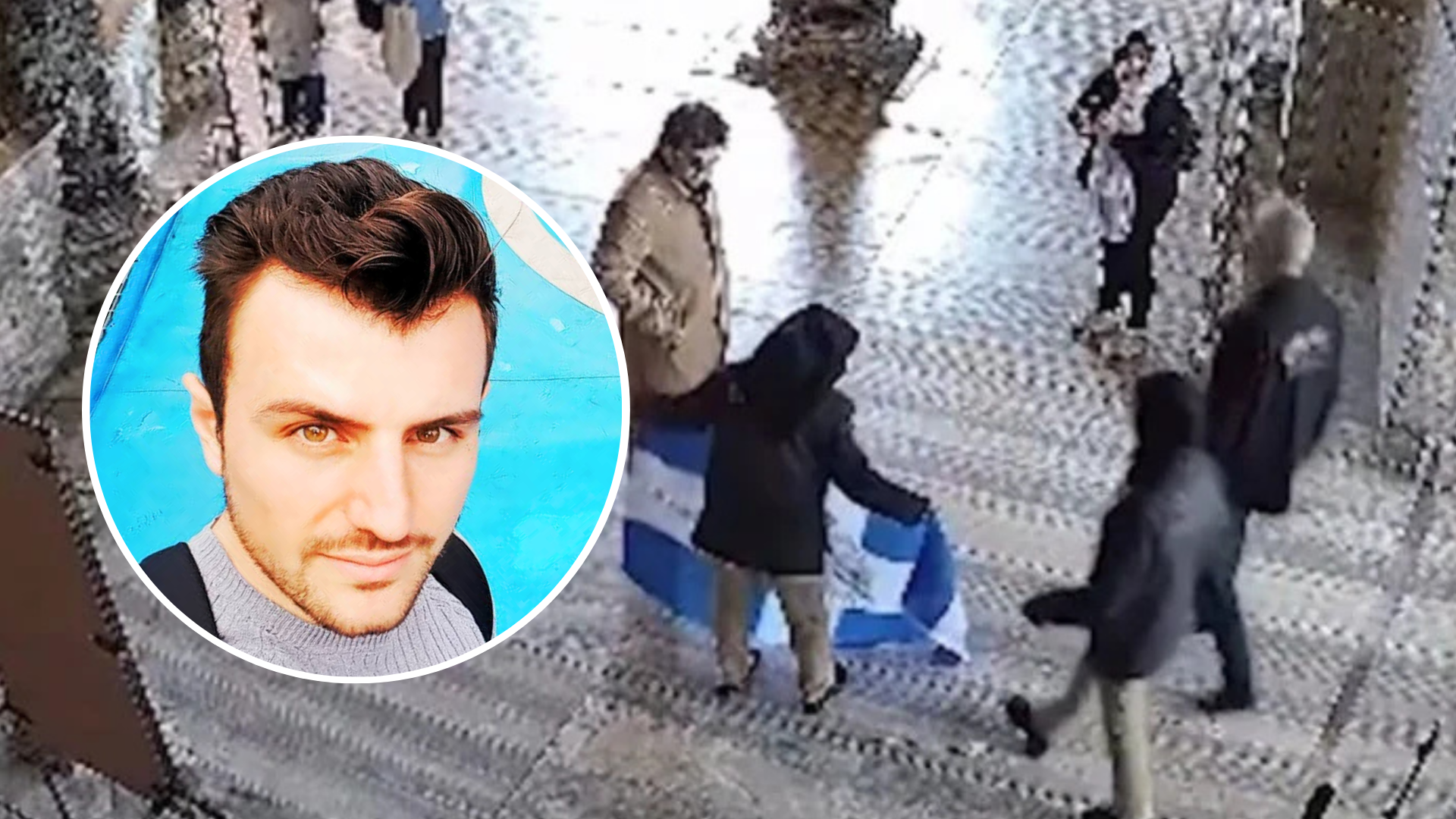
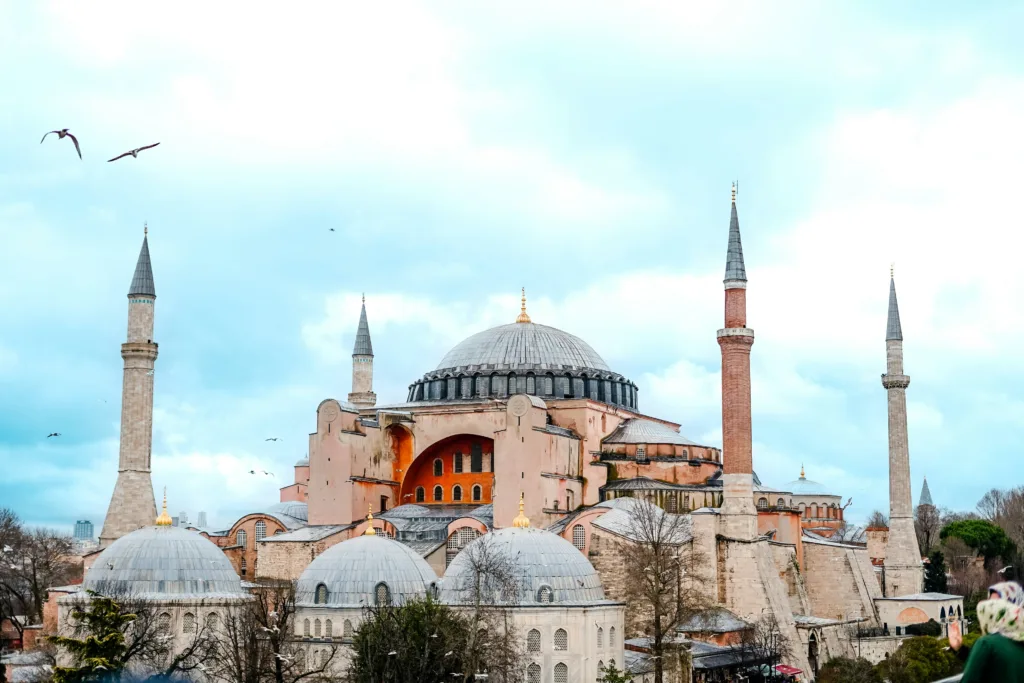
His son, Michael Mazis, remains in Turkey following an incident at Hagia Sophia on April 9 (Orthodox Holy Thursday), where authorities allege he and a relative unfurled a Byzantine-era flag inside the historic site.
The flag bore the words “Ορθοδοξία ή θάνατος” (“Orthodoxy or death”), a phrase long used in a devotional or identity-affirming sense.
“Something has been lost in the translation,” Anastasios tells The Greek Herald. “Reports say the flag said, ‘Be Orthodox or die,’ but that is not the case at all and the words had nothing to do with inciting violence.”
His family maintains there was no intent to offend, a point that has not altered the seriousness of the legal response.
“This was Michael’s first time in Turkey,” Anastasios says. “He didn’t understand how strict the rules are in such a place. He should have asked, yes, but there was no bad intention.”
Michael, 35, an economics graduate and chanter of Byzantine music, had travelled through Greece for the Easter period before continuing to Istanbul to experience Holy Week. With family roots tracing back to Sparta, the journey was a deep dive into his ancestral and spiritual heritage.
“He expected something spiritual, not trouble,” Anastasios says.
His cousin, Konstandina Mazis, who took the photo, was with him. The family says both complied immediately when approached by security.
“They cooperated. Then the next day they were surprised to be detained at their hotel. It became much bigger than they expected,” Anastasios explains.
They have since been charged under provisions relating to inciting public hatred and offending a segment of the public, serious offences under Turkish law, particularly given Hagia Sophia’s status as a mosque since 2020 and its Byzantine past.
“We respect the laws of Turkey,” Anastasios says. “We are not questioning that. We are asking that this be seen for what it was, a simple misunderstanding.”
Michael is being held in a migrant facility with around 60 refugees and asylum seekers as the legal process unfolds.
“He is okay. He has his health,” his father says. “We aren’t wealthy but can afford to send him money for basic things to buy at the camp’s supermarket. He is managing.”
His cousin is being held separately.
“People are helping her with essentials, like clothes. We are grateful,” Anastasios says.
Legal support is in place through a Turkish state-appointed lawyer, with both the Australian and Greek embassies informed.
“The state lawyer is doing what he can. Now we wait,” Anastasios says. “My wife is distraught, but I am holding up.”
The family describes themselves as ordinary, raising four children, working as migrants, renting, now navigating an unfamiliar legal system from afar.
A preliminary hearing is expected in the coming weeks. Penalties can range from six months to three years’ imprisonment, but the family hopes Michael will be deported.
Vaios Anastasopoulos of Aniston Lawyers, who knows Michael through their shared involvement in Byzantine music, says the response from Australia has been measured but active.
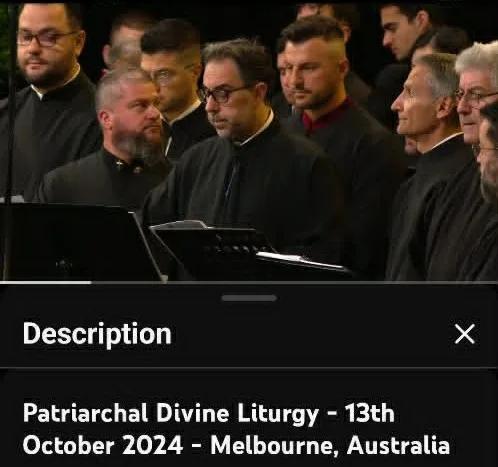
Vaios Anastasopoulos (with glasses) and Michael behind him in the Byzantine choir, during the Patriarch’s visit to Melbourne.
“His case has moved people,” he says. “Messages have gone to federal MPs. There has been engagement; careful, respectful engagement.”
He confirms the legal outlook remains uncertain.
“Both the Greek and Australian embassies are aware of the situation,” he says. “The court will look closely at intent and impact.”
There are also early discussions, subject to Turkish approval, about whether any sentence could be served in Australia.
“For now, everything depends on the prosecutor,” he says.
The family will reach out to federal MP Julian Hill, Assistant Minister for Immigration and member for Bruce, where Michael is active in the Dandenong community and St Panteleimon Church. They have also contacted local MP Steve Dimopoulos.
“We are not here to escalate anything,” Anastasios says. “We just ask for understanding. A mistake was made. We hope it will be seen with fairness.”
Context and sensitivity
The incident sits within a broader pattern of strict enforcement around national and historical symbols at Hagia Sophia.
In 2023, Greek tourist Mike Kondylas made Turkish headlines after posting a video of himself on Twitter with a Greek flag outside Hagia Sofia. The video was posted following his trip, however it was seen as a provocation. Other similar cases have reinforced what observers describe as a zero-tolerance approach to such acts.
In Turkey, Byzantine symbols, particularly the double-headed eagle, have been interpreted as political provocation rather than cultural expression.
Charges in such cases are typically brought under Article 216 of the Turkish Penal Code, which prohibits inciting public hatred, alongside laws regulating the display of flags and symbols.
The timing has also drawn quiet attention, coinciding with a separate cultural flashpoint: Greece’s recent decision to deny Turkish singer İsin Karaca entry following a nationalist performance in Western Thrace.
A quiet call for support
Back in Michael’s Australian home, support is building, steady and restrained.
“Michael is one of ours,” a message circulating among friends reads. “Right now, he needs prayer, and calm, collective action.”
Supporters are urging people to contact Australian federal MPs to ensure continued consular assistance and fair treatment.
“Every message matters — not to inflame the situation, but to make sure he is safe and not forgotten,” they say.
The letter’s tone is one of respect for the laws of Turkey with calls for understanding.
For Anastasios, the message is simple.
“Keep him in your prayers,” he says. “And, if you can, quietly support the process.”
For now, everything rests on what comes next, and the hope that a misunderstanding can still find its way to resolution.
