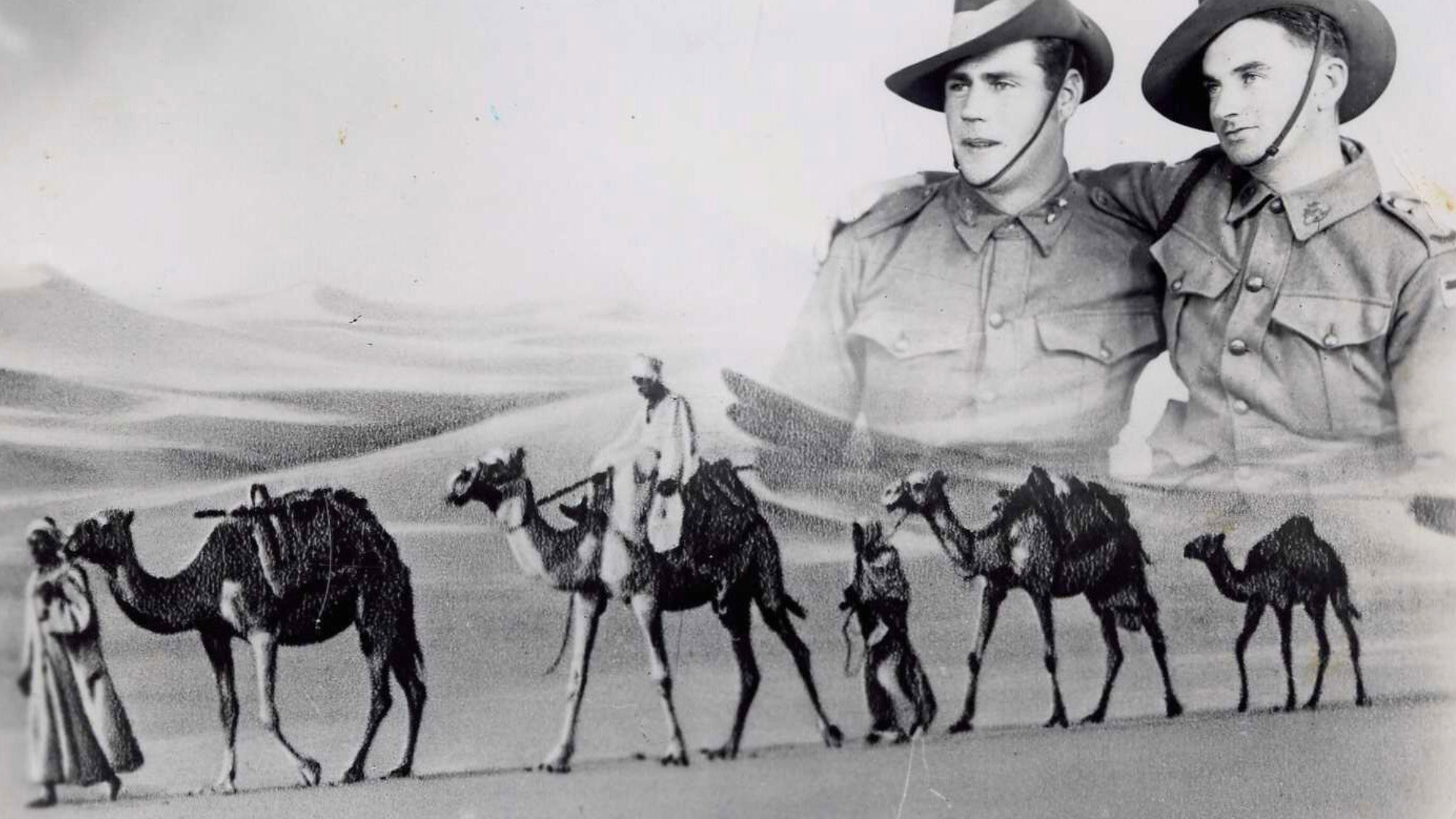
By Phil Cleary
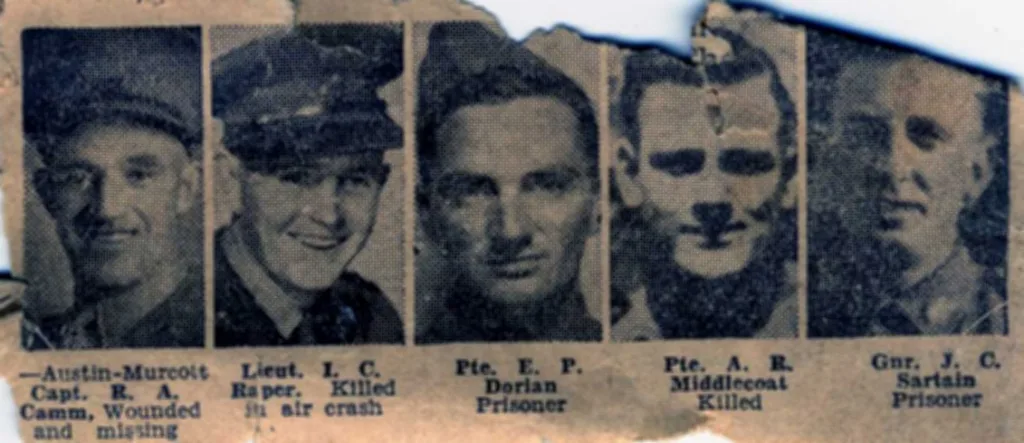
I was 11 years of age when I watched my grandfather, Teddy Dorian, stumble away from the kitchen table on route to the bungalow that had become his sleeping place in the Brunswick home he shared with his factory worker wife, Gladys.
It was Christmas Day 1963 and 18 years had passed since Teddy returned home from four years as a prisoner of the German Reich. Five months later, he died at the very table where I’d pored over his troubled face on Christmas Day.
The sad truth was that he never recovered from the trauma of his years at war and had sought to alleviated the pain of posttraumatic stress with ‘cheap plonk’.
While he struggled with nightmares and alcoholism, Gladys relentlessly pursued the government for a full pension for her soldier husband. Only weeks after she won that battle, her husband died. He was a mere 49 years of age.
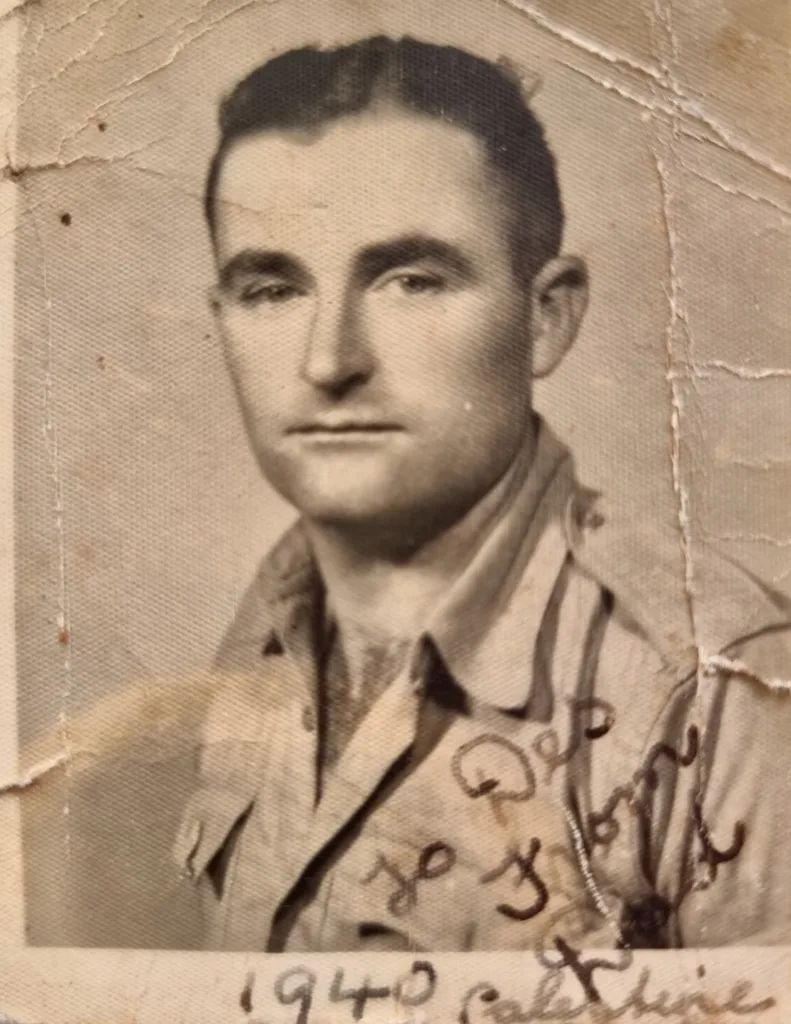
How different life had looked when he and his brother, Roy, and their Brunswick mates left the Middle East in April 1941 to take on the Germans. Feted for their defeat of the Italian enemy in the battle of Bardia in Libya, my grandfather and his mates thought thwarting the Nazi march towards Greece would be a push over.
Unfortunately, there was no stopping the Nazi army. So, by late April, ‘The Brunswick Boys’ were frantically in retreat.
On 28 April, my grandfather’s brother and his 2/7th Battalion steamed out of Kalamata on the Costa Rica destined for Crete. The story goes that amidst the chaos, Roy had searched of his younger brother but couldn’t find him. Such was the life of an army driver. Teddy was too busy shuffling men back and forth to join his brother.
Despite the Costa Rica being sunk by the Luftwaffe, Roy and his battalion managed to scramble aboard another ship and escape to Crete. While Roy was counting his lucky stars, his brother Teddy was forlornly preparing for a stint in the horrific Corinth transit camp. Here, disease would take a heavy toll on the captured men.
A couple of weeks after my grandfather’s arrival at Corinth, he was joined by one of his Brunswick mates, Billy Ottaway.
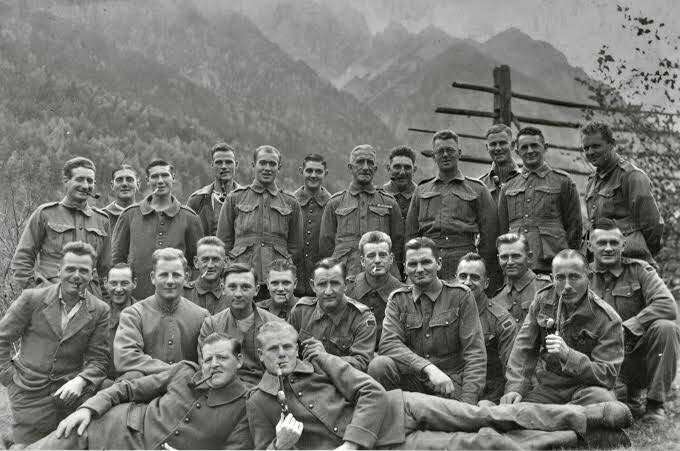
At the Corinth camp, 22-year-old Ottaway would describe how, despite the risk of execution, a Greek family had taken him in. In 1994, he would tell me how he spent weeks ‘lying in the sun’ in clothes provided by the family, as German soldiers marched passed. Not wanting to put the family at risk, he decided to ‘put his uniform back on’ and surrender.
The story of Greek civilians protecting Allied troops was legendary during the Nazi invasion of Greece. When Crete fell on 1 June 1941, leaving thousands of Australian troops stranded in Sfakia, Roy rowed 11 hours overnight to the island of Gavdos with four mates.
In a letter home, he described how villagers on Gavdos had ‘wiped tears from their eyes’ as they wished him well and pointed to a cove where a boat skippered by an Australian had dropped anchor. That boat would take Roy and his mates to Egypt in one of the most miraculous escapes of the war.
Since beginning work on my documentary film, ‘Gladys and the Brunswick boys’, I’ve visited every place my grandfather, his brother and their mates traversed in Greece. I’ve travelled across Brallos Pass, where my grandfather trekked some 30 miles in late June 1941. I’ve walked in his footsteps through the streets of Thessaloniki, where he and his mates were greeted with cheers by local people as they marched to the railway station where a train would take them on a near-death 6-day rail trip to the Prisoner-of-War camp in Austria.
On Gavdos, I’ve talked to a local man, Mr Babis, and a priest, who heard the story of four Australians escaping across their island after the fall of Sfakia.
In Australia, I interviewed the late George Rerakis – father of restaurateur, John – who talked about gun running for the Cretan resistance as a teenager.
So too have I visited villages in Crete where the Nazi army committed barbaric war crimes. In one of those villages, Kondomari, some 17 civilians were executed on 2 June 1941. On that very day, villagers on Gavdos were helping my grandfather’s brother, Roy, flee the Nazi invasion.
Not surprisingly, I’ve fallen in love with the Greece that ‘Gladys and the Brunswick Boys’ defended in 1941. It’s a Greek Australian story that deserves, and I hope, will come to life on film.
