By Michael Peters Kyriacou, Honorary President of the Cyprus Community of NSW
There are moments in history when a people refuse to accept the terms imposed upon them. For Cyprus, 1 April 1955 marks that moment. It was the day the Cypriot people rose against British colonial rule and declared, in unmistakable terms, that foreign domination would no longer be accepted. It stands as Cyprus’ Day of Liberation — its equivalent to 25 March for Greece and 4 July for the United States — a defining assertion that freedom is not granted by empires, but claimed by nations.
In the early hours of that day, coordinated attacks were launched across the island against the machinery of colonial control. Under the leadership of Georgios Grivas, the Ethniki Organosis Kyprion Agoniston (EOKA; Greek for “National Organisation of Cypriot Fighters”) a nationalist guerrilla organisation was founded. Its primary objective was to end British occupation and achieve Enosis — the union of Cyprus with Greece.
This was an act of liberation, a response of a people denied sovereignty in their own land.
History offers no shortage of parallels. The American colonies rejected British rule on the principle that governance without consent is tyranny. The Greeks of 1821 rose against Ottoman domination to reclaim their identity, faith and nationhood. The Irish refused to accept permanent subjugation. The people of India dismantled one of the largest empires in modern history. In each case, the conclusion was the same: empire yields only when confronted by the unwavering will of a people determined to be free.
Cyprus belongs firmly within this tradition. Its struggle was not an anomaly; it was part of the global dismantling of empire in the twentieth century. Yet for the Cypriot people, this was not an abstract historical process — it was immediate, lived and deeply personal. It was a struggle rooted in the enduring Greek ideal of eleutheria: freedom as dignity, participation and self-determination.
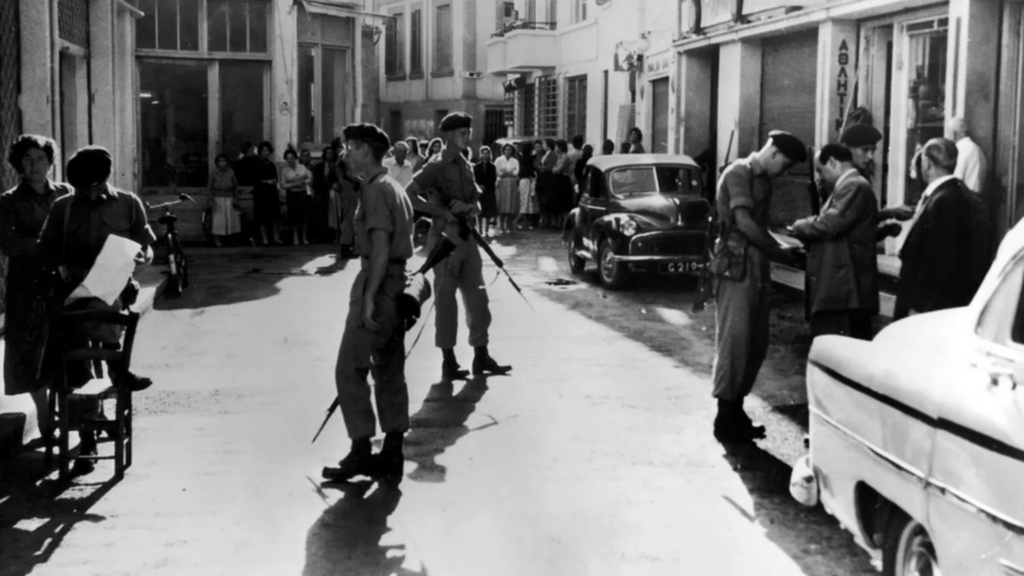
The response of the occupying forces was predictable and consistent with the playbook of history.
Repression, detention, executions and the full force of imperial authority were deployed to suppress the movement. But as history has repeatedly shown, force can delay freedom — it cannot extinguish it. The execution of young fighters such as Evagoras Pallikarides did not weaken the cause; it strengthened it, exposing the moral limits of colonial power and reinforcing the legitimacy of the struggle.
The cost was high, as it has been in every great liberation movement. But the outcome was equally clear. Within a few years, the structures of occupation gave way, leading to the establishment of the Republic of Cyprus in 1960.
As in America, Greece, Ireland and India, the lesson was unmistakable: no people can be held indefinitely against their will.
Yet 1 April is not only about what was achieved. It is also about what remains. It is a reminder that freedom, once won, is never permanently secured. It must be defended, renewed and upheld in every generation.
Today, as Cyprus and its diaspora commemorate 1 April, we do so not in nostalgia, but in recognition of a continuing obligation.
The struggle of 1955 affirms a universal truth: that the desire for freedom is inherent, and that attempts to suppress it will ultimately fail.
1 April 1955 marks more than the beginning of an armed campaign. It marks the point at which a people asserted their place in history and rejected the legitimacy of foreign rule. Like the great liberation movements that shaped the modern world, it stands as a permanent reminder that freedom is never conceded willingly by power — it is secured by those prepared to claim it.
And that truth remains as relevant today as it was then.
