By Dr Panayiotis Diamadis.
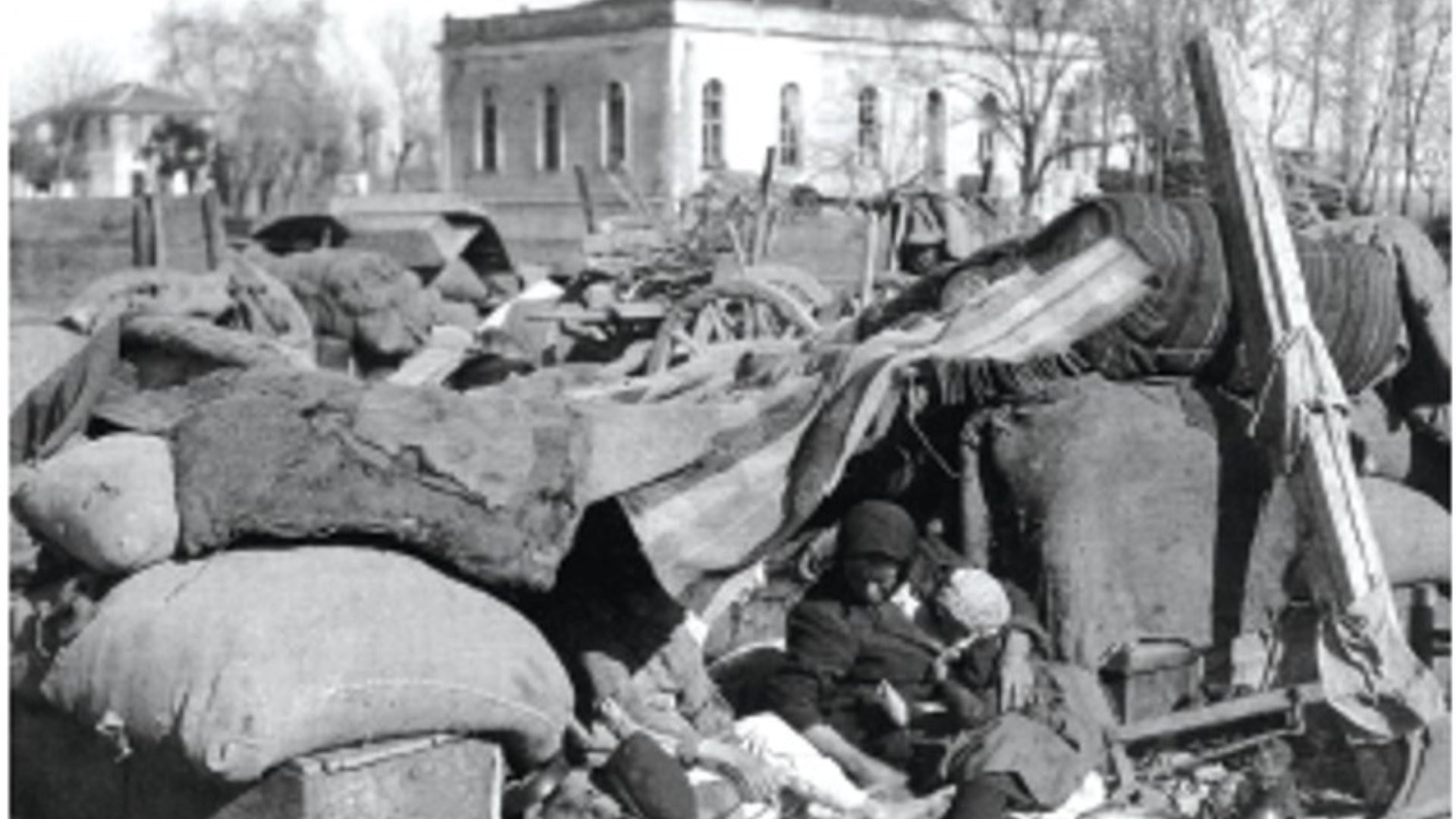
Throughout 2022, Hellenism around the world has been marking the Centenary of the holocaust of Smyrne, the single most violent episode in the decade-long Genocides of the Hellenes, Armenians and Assyrians by the Ottoman Empire and its successor, the Republic of Turkey between 1914 and 1924. A bright light in the darkness of those days was the relief mission of the League of Nations, led by Dr Fridjtof Nansen and his Commissioner in northern Hellas, George Devine Treloar.
In his memoir Tim Harington Looks Back, British General Sir Charles Harington says that in early October 1922, he landed at Moudania (modern Mudanya) on the southern shore of Sea of Marmara, with the French and Italian generals. He recorded: ‘Dead Greek bodies, recently pushed off the pier by the Turks, were washed up against it’.
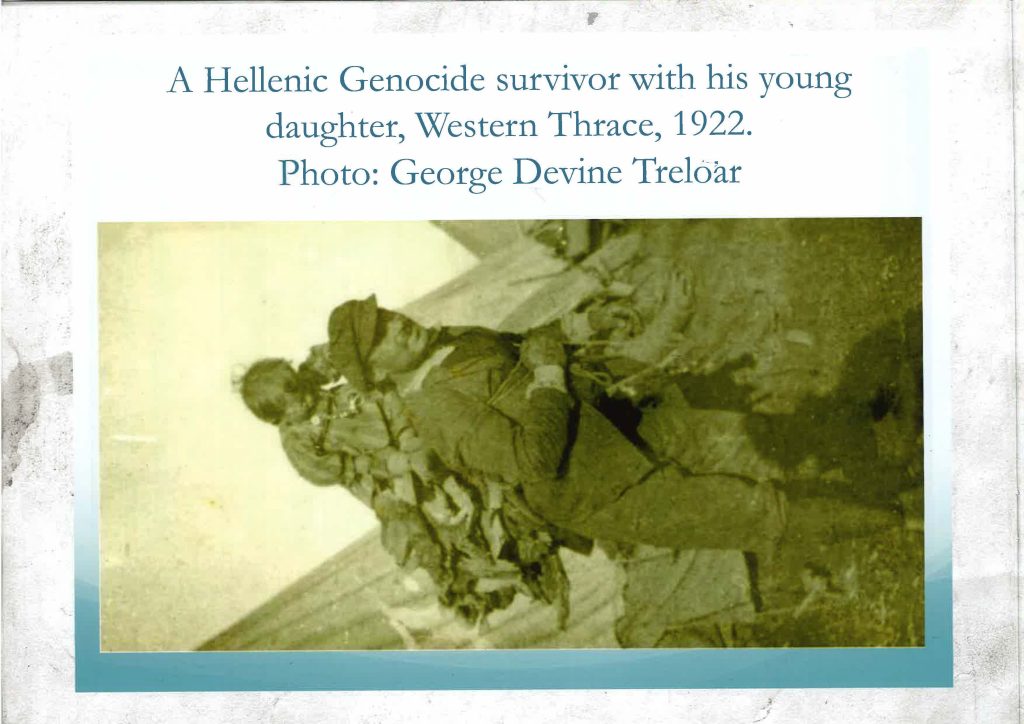
Recently demobilised from the British army, Treloar was appointed by Nansen in early October 1922. Treloar’s assignment was to report to Nansen on the condition and prospects of the genocide survivors in eastern Thrace. The League foresaw the dreadful problems that were emerging, as the leader of Turkish Nationalists, Mustafa Kemal pressed for the expulsion of all surviving non-Muslims from his ‘Republic of Turkey’.
Within days, the Australian-born British officer was issued with a visa by the Hellenic military authorities at Prousa (modern Bursa) for travel to Constantinople, via the ports of Moudania (modern Mudanya) and Raedestos (Rodosto, modern Tekirdağ) on the Propontis, the Sea of Marmara).
Out of the chaos of hundreds of thousands of people fleeing the forces of Mustafa Kemal in October and November 1922 – exactly a century ago – the 28-year-old Treloar was called upon to bring some semblance of order. Applying a combination of military experience and common sense, Treloar and his team utilised the meagre resources available from the disheveled Hellenic state and the League of Nations to establish feeding stations, transport routes and refugee camps.
Through the fierce winter of 1922-1923, Treloar had developed a long-term plan for addressing the multiple problems at hand. His plan was presented in a report to the Governor-General of western Thrace, Spyros Dasios, summarized in this extract:
“Our plan foresees the settlement [of] new villages, under tents of the Greek Government, assisting those being settled to erect dwellings for themselves as rapidly as possible so that the tents may be evacuated for use in the settlement of other refugees in other villages. … The principle of giving without receiving is erroneous. Under this system, the refugees adapt rapidly and are becoming, very simply, parasites, losing every desire to work and are rapidly reaching the conclusion that donated relief is a right from merciful God. Exchange in the form of work is of benefit whenever this is possible. No relief of any kind should be extended to those who refuse to work or to move where there is a possibility of finding work.”
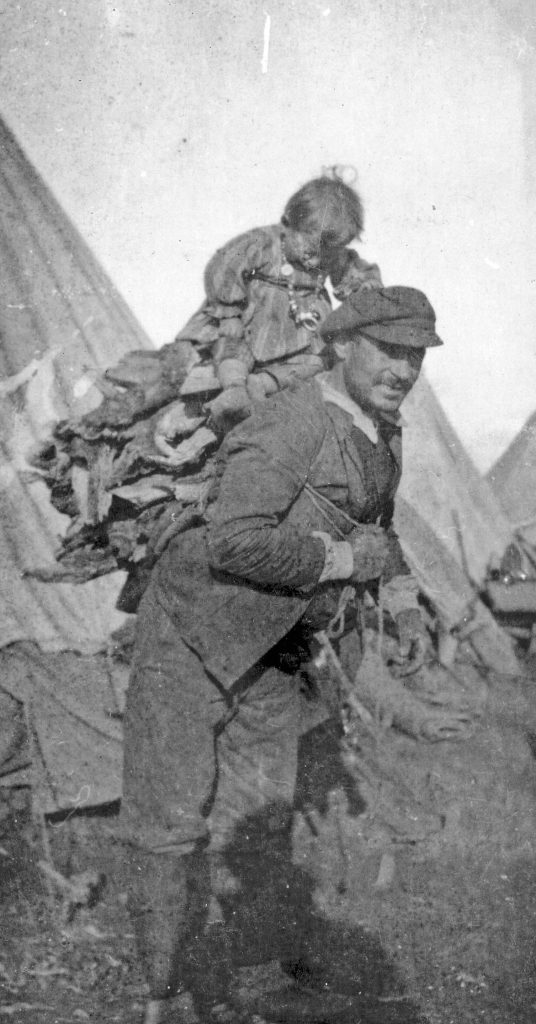
As the northern winter of 2022-2023 begins, let’s remember the almost unbelievable circumstances George Devine Treloar and the League of Nations’ Mission faced in rescuing the survivors of the Genocides of the Hellenes, Armenians and Assyrians a century ago.
While 1922 was arguably the darkest year of the 20th Century for Hellenism, even 1922 held a few points of light, shoots of rebirth. In 2023, the villages Treloar and his team built out of pastures celebrate their centenaries. As Australian Hellenism, let’s celebrate with them. In 2023, let’s celebrate Australian helping hands to our ancestors in their hour of need.
For many years, Dr Panayiotis Diamadis has been working with the Treloar family on research into the Mission and legacy of George Devine Treloar. They are in the final stages of preparing a publication of Treloar’s never-before-published photographs from his time in Macedonia and Thrace between 1922 and 1927.

