“I don’t think many soldiers spoke about their war experiences and I never really asked my father about his,” Jennifer Gorrie says honestly as we sit down for our exclusive chat.
Despite this, Jennifer has recently begun to dig deeper into her family’s military history and what she’s found is a deep and long-running connection to Greece and the islands of Lemnos and Crete through her grandfather, father and uncle.
Frederick Harvey Gorrie:
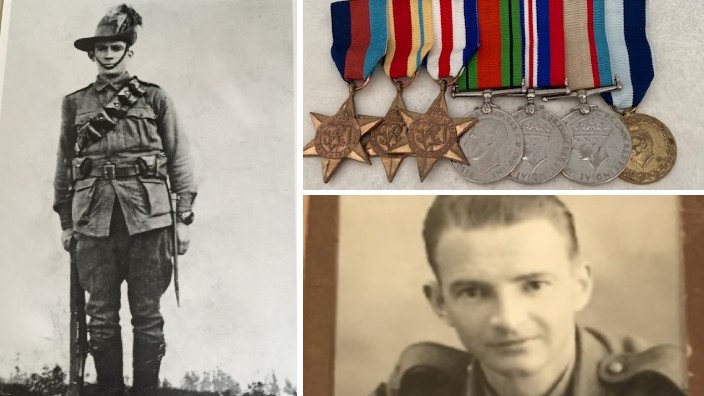
Jennifer’s grandfather, Frederick Harvey Gorrie, was in the Australian Light Horse during WWI and passed through the Greek island of Lemnos on his way to fight in the Gallipoli Campaign.
According to the Secretary of the Joint Committee for the Commemoration of the Battle of Crete and the Greek Campaign, Nick Andriotakis, Lemnos became the headquarters of the Gallipoli Campaign, where ships were anchored, water and food was sourced and hospitals were set up to look after the wounded.
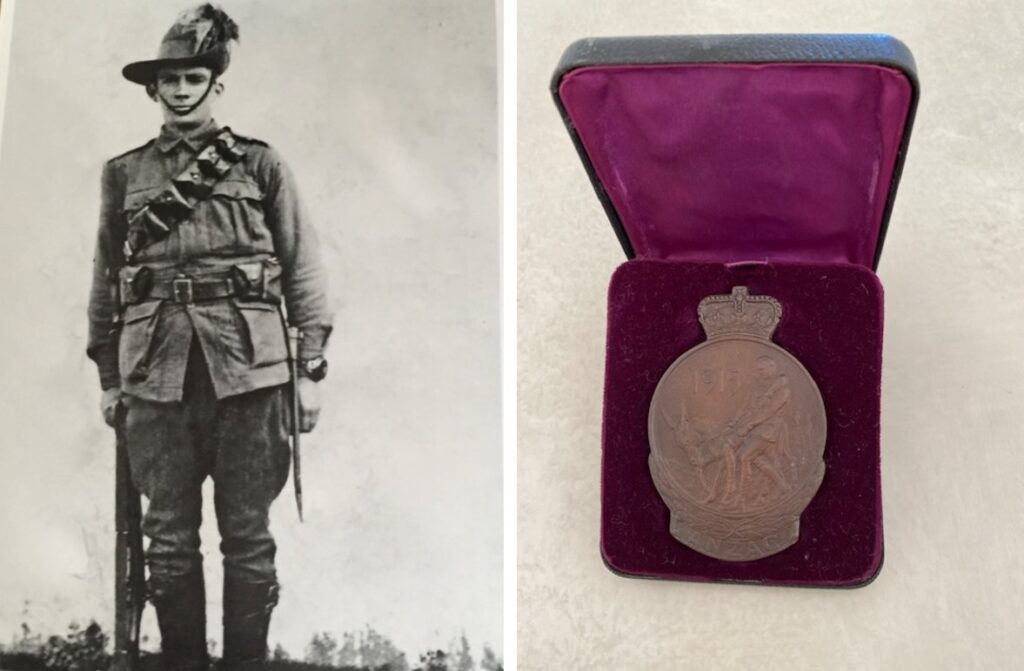
After Frederick left this island restocked and prepared for fighting at Gallipoli, his contingent became involved in several defensive actions on the battleground and suffered catastrophic losses. But Jennifer says that for her grandfather, his biggest loss was that of his horse.
“The Light Horse were not allowed to bring their horses home, so he had to shoot his own horse before he came home and he said that was the worst thing he ever had to do in his entire life,” Jennifer tells The Greek Herald.
Harvey “Bill” Gorrie:
Jennifer’s father, Harvey “Bill” Gorrie, followed in Frederick’s footsteps in 1939, when he decided to enlist with the 2/1st Australian Infantry Battalion. This battalion played a significant role in the Battle of Crete, particularly in its defence of Rethymno.
According to the Australian War Memorial website, the German airborne invasion of Crete began on May 20, 1941, but a tenacious defence by the Australian battalion and their Greek comrades meant the Germans weren’t able to take Rethymno airfield until May 30.
“Their courage and spirit in the defence of Rethymno is unsurpassed in the annals of Australian arms,” war veteran, Peter Firkins, said in the book, Australians in Nine Wars, to support this initial Allied success on Crete.
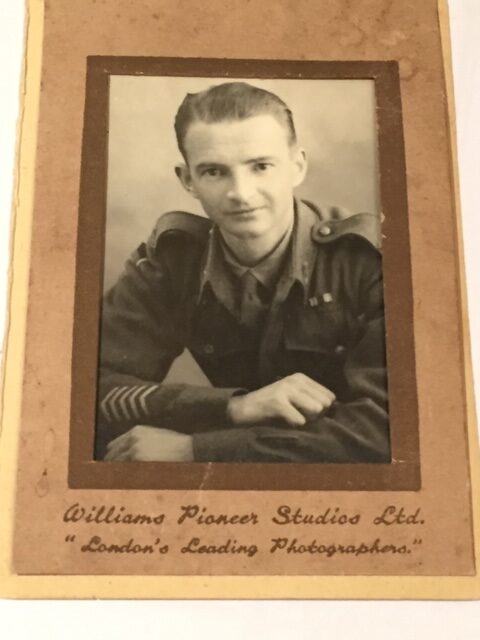
But of course, German victories elsewhere on Crete allowed them to concentrate overwhelming force against Rethymno and, short of rations and ammunition, the 2/1st eventually surrendered and became prisoners of war.
Jennifer says that in the case of her father, not only was he one of the prisoners of war, but he was also wounded in the battle for Rethymno.
“My father was shot and I remember him telling me that he was wounded, leaning up against an olive tree and this German paratrooper was approaching him. My dad thought he was a goner and that the German would shoot him again. But instead, the German just gave him a cigarette and moved on,” Jennifer recalls.
“[From there] he was taken as a prisoner of war and ended up in a stalag (prisoner of war camp) in Poland. But he escaped and met up with the Polish underground and ended up fighting with them.”
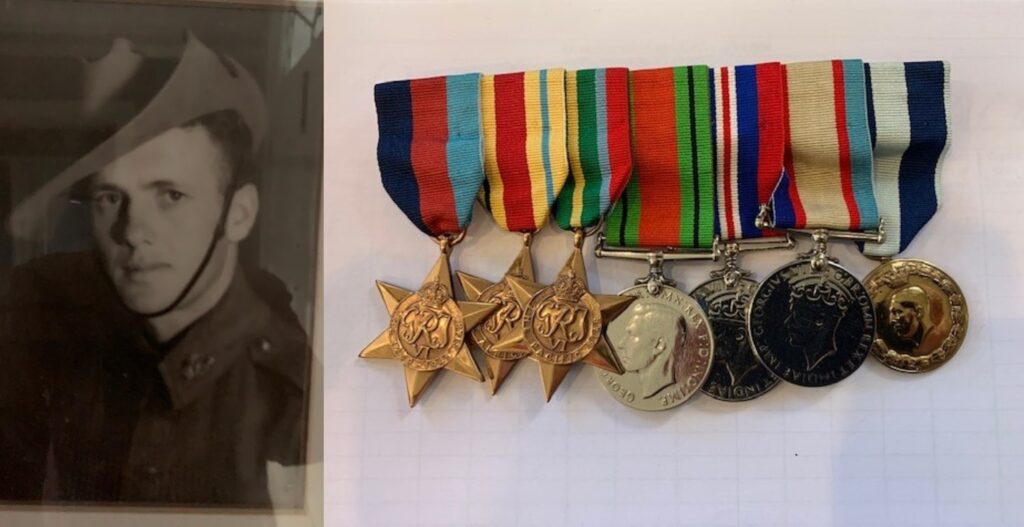
These heroic actions are also replicated by Rollo “Pick” Binsted, Harvey’s brother-in-law who, Jennifer says, should also be remembered for his actions fighting with the 16th Brigade of the 6th Australian Division during the Greek Campaign.
“He fought in the Battle of Brallos Pass in snow 3 feet deep. His Brigade… evacuated to Kalamata where they sheltered under olive groves while being strafed by Luftwaffe Messersmitts,” Jennifer says.
“Rollo was finally evacuated on 26 April 1941 at 3am on a British destroyer, which he believes was the last allied ship to enter the port of Kalamata until after the war.”
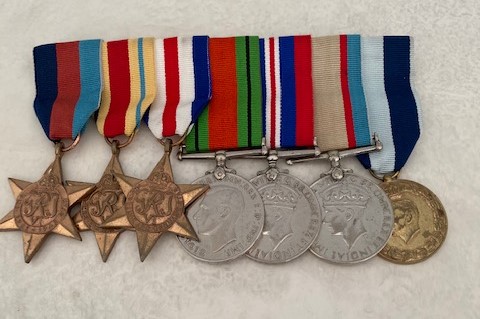
Since then, both Harvey and Rollo have received the Greek War Medal 1940-41 from the Greek Government for their service in Crete and Greece, while Harvey was one of only 4,800 Australians who were awarded the France Germany Star. Jennifer says this is something Harvey was very proud of.
And he should be as it’s clear that the entire Gorrie family, as well as Pick, made significant sacrifices to keep Greek people safe during both WWI and WWII.