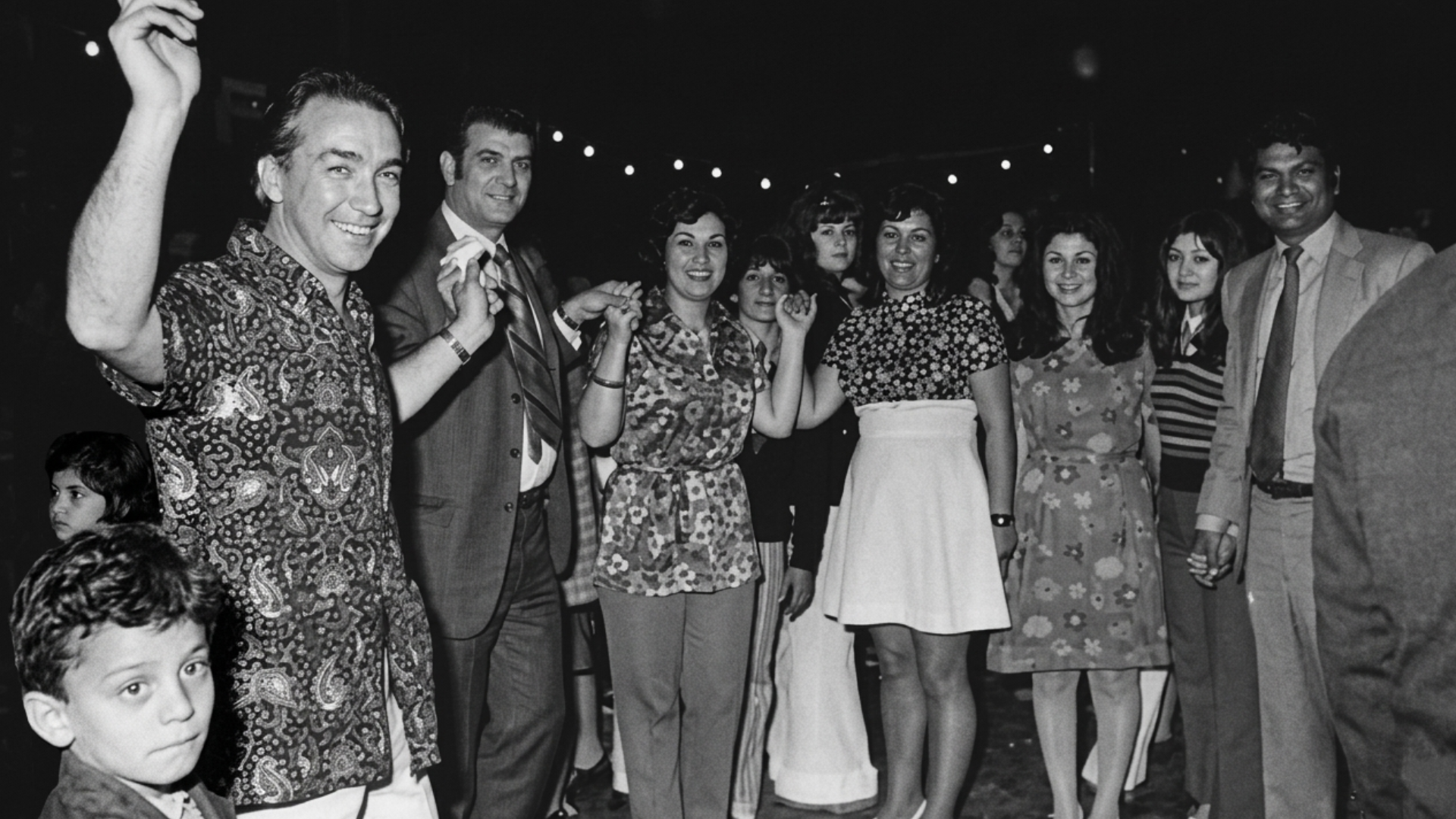
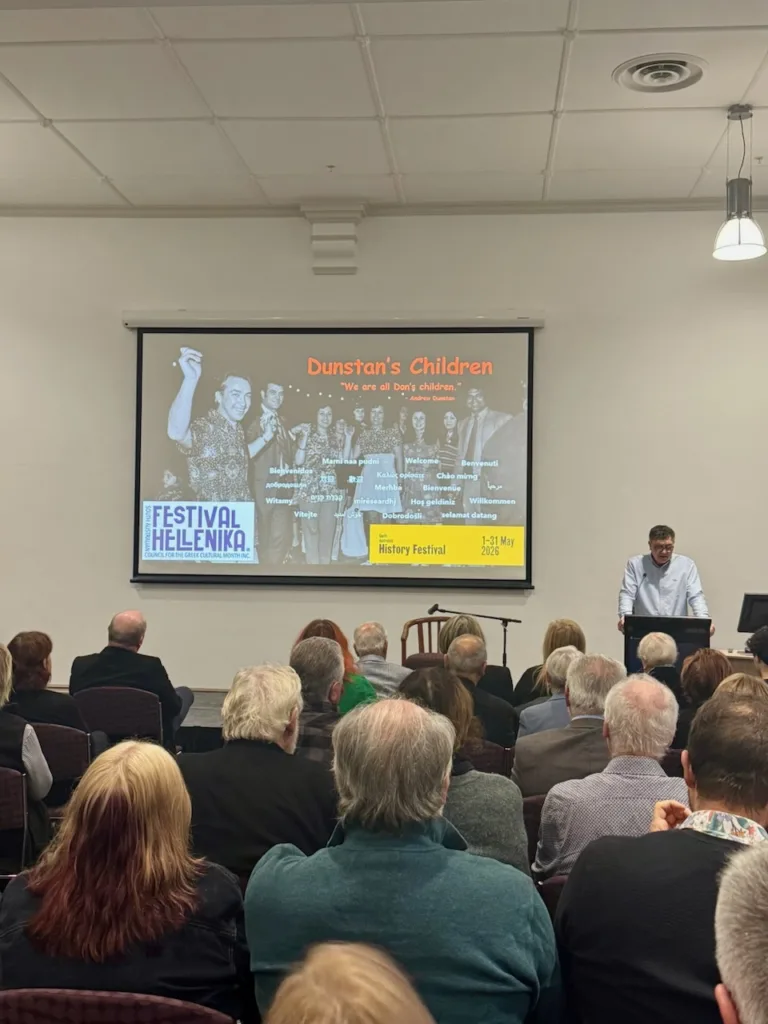
On Sunday, 24 May 2026, at the Hetzel Lecture Theatre, State Library of South Australia, Festival Hellenika proudly presented a special event titled “Dunstan’s Children,” paying tribute to the late Premier of South Australia, Don Dunstan (1967–68 and 1970–79).
During his time as a state government minister and premier, Dunstan shattered the status quo, enacting pioneering social and political reforms that helped redefine modern Australia. His government introduced numerous national firsts, including groundbreaking anti-discrimination and sex discrimination laws, the decriminalisation of homosexuality, a Ministry for the Environment, a container deposit scheme, and advanced protections for consumer rights and heritage.
South Australia’s political landscape was fundamentally transformed under Dunstan. He lowered the voting age to 18, introduced true one-vote-one-value electoral boundaries, abolished the infamous rural gerrymander, relaxed censorship laws, and reformed the state’s liquor licensing legislation.
Dunstan also made sweeping advancements for women’s rights. He appointed Australia’s first female Supreme Court judge, Dame Roma Mitchell, as well as the nation’s first government women’s adviser.
A strong advocate for Aboriginal rights, Dunstan introduced the nation’s first Aboriginal land rights legislation and appointed the first Indigenous governor, Sir Douglas Nicholls. He regarded his contribution to Aboriginal rights as his most important set of reforms and greatest legacy.
Multiculturalism was elevated and cultural exchanges with Asia actively encouraged during Dunstan’s time in office. The government appointed Greek Inquiry Officers to assist migrant communities and pioneered the introduction of Greek language education in public schools.
Dunstan also made the arts a cornerstone of government policy. He founded the South Australian Film Corporation, the State Theatre Company of South Australia, and the JamFactory craft and design organisation. He strongly supported the Adelaide Festival Centre, expanded the Adelaide Festival of Arts, and championed “cultural tourism” long before it gained mainstream recognition, promoting South Australia’s food, wine, lifestyle, heritage, arts and festivals.
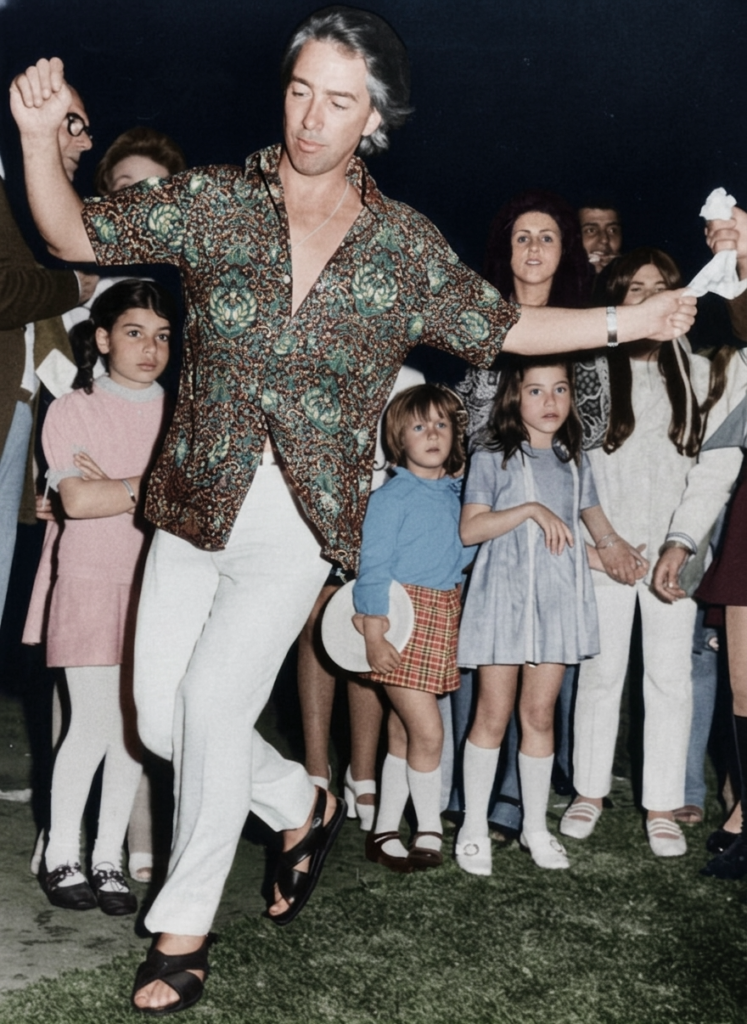
A committed philhellene, Dunstan was classically educated, admired Hellenic history, enthusiastically learnt Greek, and enjoyed Greek dancing. He warmly engaged with the Greek communities of South Australia and famously dubbed Adelaide the “Athens of the South,” drawing parallels with the cultural and democratic flourishing of ancient Athens and what he saw as a golden age for South Australia.
Three distinguished speakers delivered engaging presentations during the event.
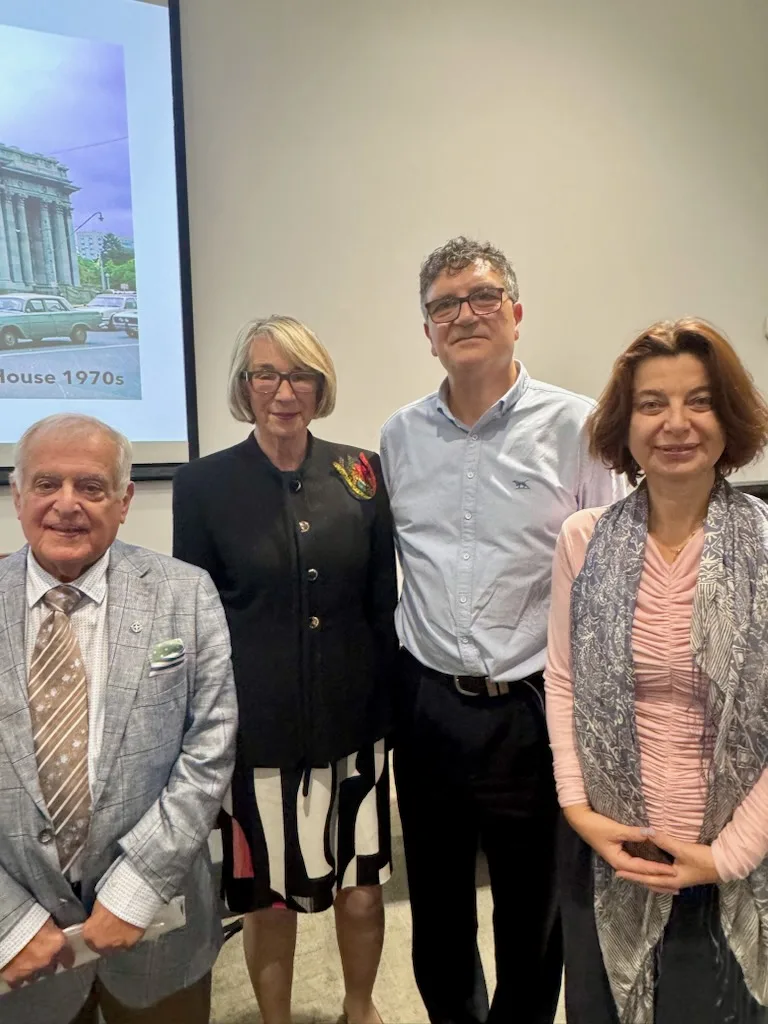
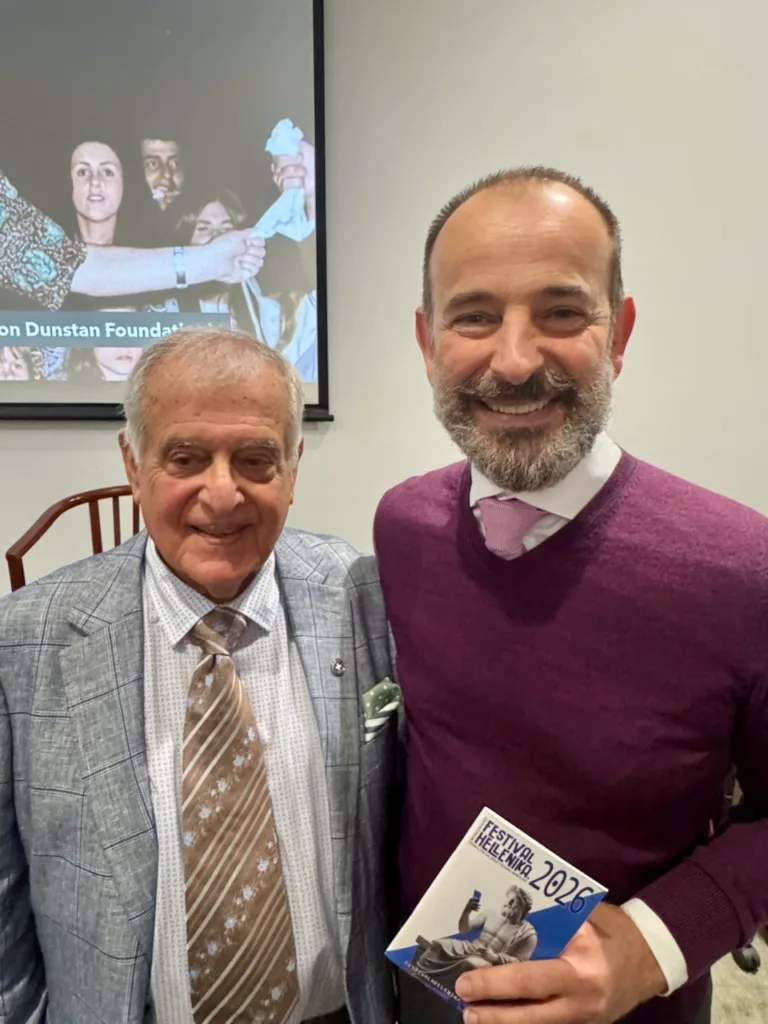
The Right Honourable Lord Mayor of Adelaide, Dr Jane Lomax-Smith AM, who chairs the Don Dunstan Foundation, offered a passionate overview of Dunstan’s trailblazing policies and their lasting impact on Australians. She also spoke about her recent meeting with the Mayor of Athens, Haris Doukas, and Adelaide’s Memorandum of Understanding as a sister city with Athens, aimed at fostering cooperation in culture, tourism, innovation, commerce and environmental sustainability.
Mr John Kiosoglous MBE, KSA, AE, SM, who acted as a liaison between the Greek communities of South Australia and the Dunstan government during the 1970s, spoke from the heart, presenting a captivating and comprehensive recollection of the era.
Mr Kiosoglous, who also served as a lawyer and magistrate for many decades, highlighted Dunstan’s groundbreaking legal reforms while weaving in personal anecdotes and rare insights into government operations, ethnic schools, and the Greek and Greek Cypriot migrant communities during those transformative years.
Emeritus Professor of Classics at the University of Adelaide, Han Baltussen, spoke about Don Dunstan as a “cultural icon.” He explained how Dunstan believed the arts and culture were essential components of quality of life and social equity, to be accessible and celebrated by everyone.
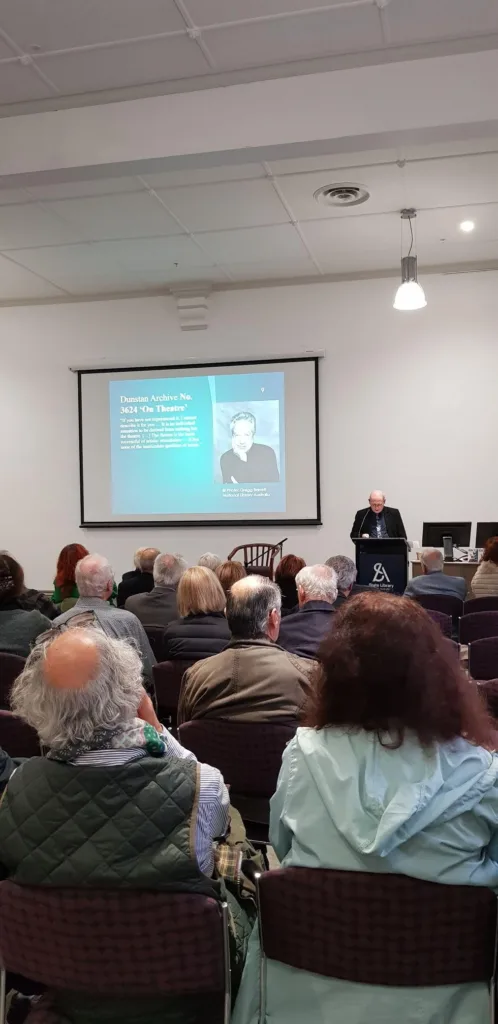
A philosophically astute and theatre-loving leader, Dunstan often used theatricality to advance progressive ideas. In 1972, he famously broke with convention by wearing pink shorts in South Australia’s Parliament, challenging conservatism and championing diversity.
As part of South Australia’s History Festival 2026, the event aligned strongly with the festival’s “Connections” theme, reflecting Dunstan’s enduring legacy as a leader who connected people to government and fostered a socially inclusive society.
Following the presentations, attendees enjoyed food, wine and live music. Wines were generously provided by Paul Georgiadis from Paulmara Estates in the Barossa Valley.
Proceeds from the event will go towards the Don Dunstan Foundation, a South Australian non-profit think tank dedicated to advancing social justice and human rights inspired by Dunstan’s enduring legacy.
“We are all Don’s children.” These words, spoken by Don Dunstan’s son Andrew during his father’s eulogy, continue to resonate today as Australians still benefit from Dunstan’s visionary reforms, policies and ideas.
