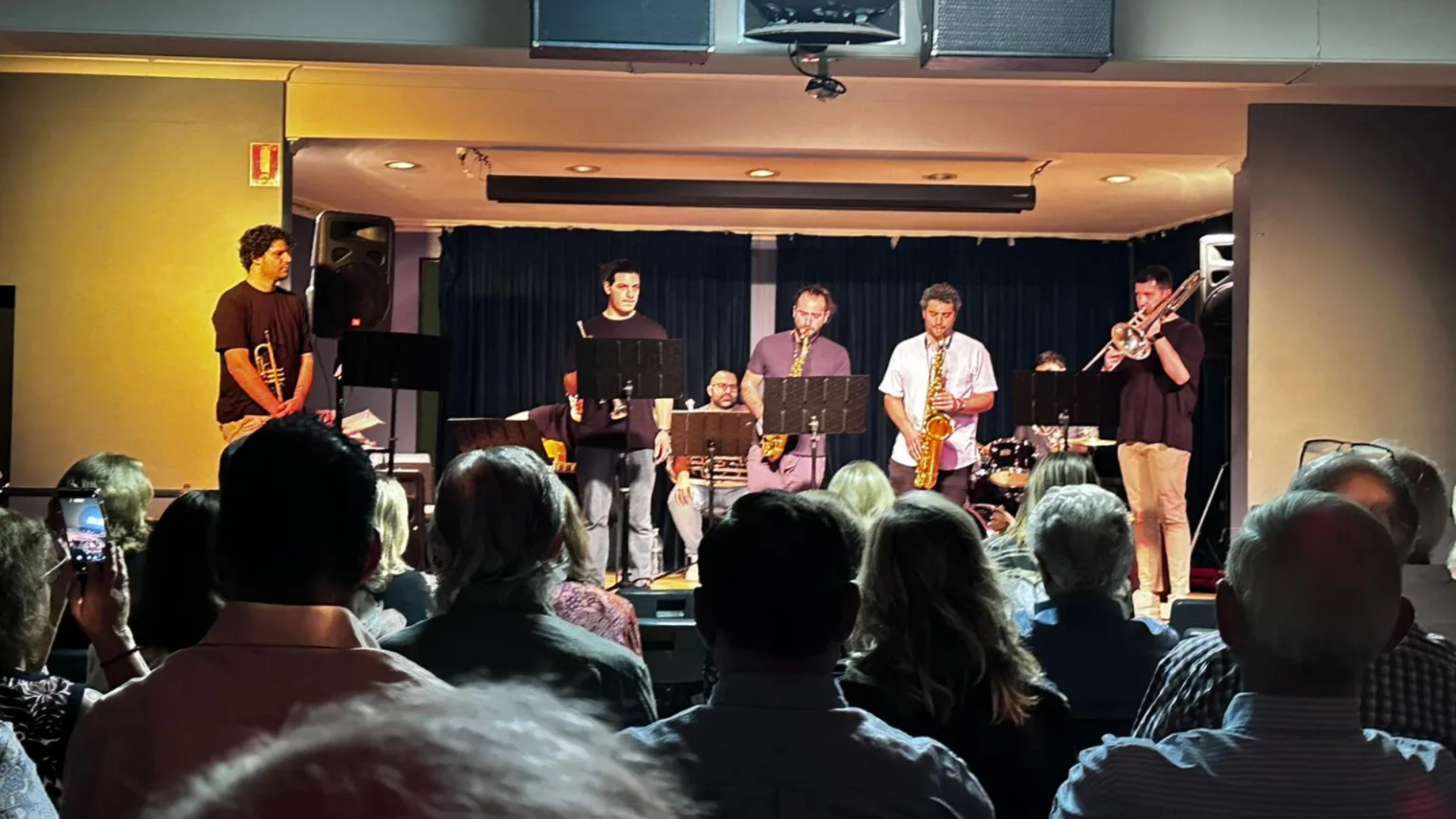
The Cyprus Community of NSW is embracing a renewed cultural direction that reflects Cyprus’ contemporary European identity, according to Honorary President Michael Kyriacou, following the acclaimed Australian performances of Krama Jazz Brass Band.
Speaking to The Greek Herald, Mr Kyriacou said the Community’s vision was to move beyond familiar stereotypes and present Cyprus as a confident, modern cultural hub within Europe.
He described Cyprus as a “dynamic and diverse cultural factory,” signalling a shift away from viewing culture solely as heritage preservation and toward recognising it as a living, evolving force of creativity, innovation and artistic excellence.
Mr Kyriacou said this vision was being pursued on two complementary fronts.
The first is structural reform. Alongside cultural renewal, the Cyprus Community of NSW is modernising its internal foundations, including governance, management, marketing, communications, funding and financial structures, to ensure long-term relevance, transparency and sustainability in a contemporary environment.
The second is cultural curation. The Community is increasingly focusing on programming that reflects Cyprus as it exists today – cosmopolitan, European and artistically forward-looking – while continuing to respect and complement traditional cultural expressions.
The recent Australian appearances of Krama Jazz Brass Band provided a clear example of this approach. Founded in 2023 by Cypriot musicians Andreas Theocharous and Nicholas Georgiou and now partly based in Amsterdam, the ensemble blends Mediterranean musical traditions with jazz and Western classical influences.
Their international presence, Mr Kyriacou said, reflects how Cypriot culture today thrives not only on the island, but across Europe and the global diaspora. By highlighting a contemporary brass jazz ensemble performing at a high European level, the Community is reframing cultural identity beyond folk dance alone and toward genres that resonate with modern audiences.
At the same time, the ensemble’s work reinforces Cyprus’ place within the broader cultural landscape of the European Union and its contribution to Europe’s artistic life.
This approach is also aimed at bridging generational expectations within the Community. While traditional music and dance remain central for many long-standing members, younger Cypriot Australians are increasingly seeking a more contemporary and sophisticated connection to their heritage.
By balancing tradition with innovation, the Community is positioning itself as inclusive, relevant and forward-looking, without losing its historical grounding.
Mr Kyriacou said the performance formed part of a broader strategy to present both Cyprus and the Community as living and evolving, while continuing to respect heritage.
He told The Greek Herald that the Community was actively engaging with a new wave of cultural performers, including theatre, music and broader artistic initiatives from across the European Union, with several projects already in development and announcements expected soon.
Honorary Assistant Secretary Andrew Paschali said the Community needed to broaden its horizons. While traditional Cypriot dance and music had formed the backbone of the organisation for more than nine decades, he said many younger members, along with a wide cross-section of the Community, were keen to experience music and theatre that remained rooted in Cypriot tradition while also reflecting the contemporary evolution of the arts in Cyprus and across Europe.
By emphasising Cyprus’ contribution to the European Union and engaging in high-level artistic exchanges, Mr Kyriacou said the Community was also redefining its role – from a local migrant organisation to a cultural bridge between Australia, Cyprus and Europe.
Artists such as Monsieur Doumani have become leaders in reimagining traditional Cypriot music through progressive arrangements and modern instrumentation. Groups like Nābu Pēra fuse Mediterranean traditions with electronic rhythms and contemporary classical influences, capturing the evolving sonic identity of cities such as Nicosia.
Other ensembles, including Sounds of Cyprus, the TratSik String Quartet and Abettor, continue to push boundaries by blending folk melodies with jazz, rock, hip-hop and contemporary classical forms. Many have gained international recognition for their innovative and often award-winning work.
Taken together, this reimagined “cultural factory” represents a strategic shift aimed at ensuring Cypriot cultural pride endures not only as memory and tradition, but as an active participant in the modern European and global cultural landscape.
