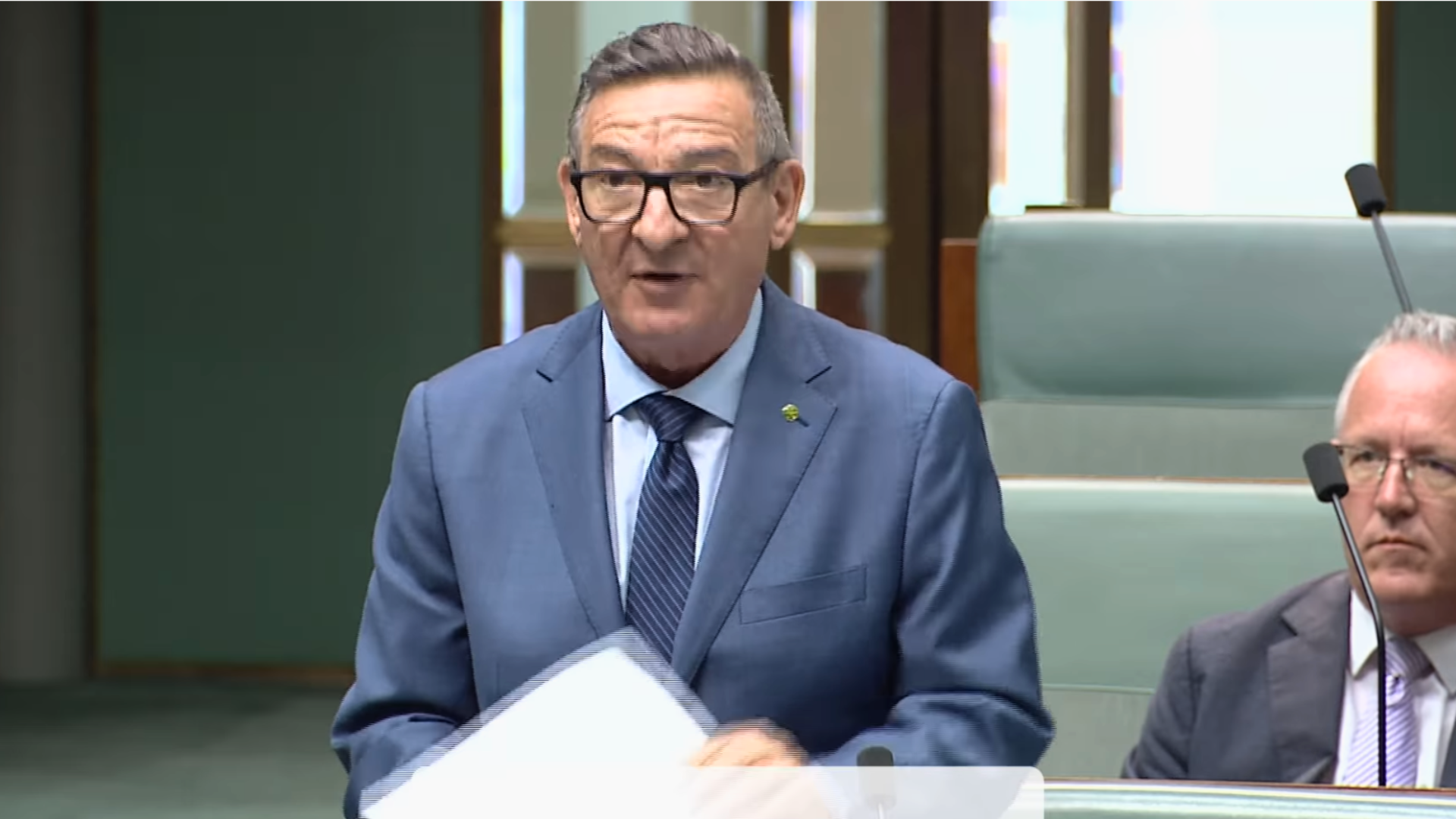
Federal MP Steve Georganas has marked World Greek Language Day in the House of Representatives, using his remarks to acknowledge the enduring global significance of the Greek language following its recognition by UNESCO.
Speaking in Parliament on February 9, Mr Georganas noted that UNESCO’s recognition of World Greek Language Day highlights the deep relationship between Greek and many of the world’s modern languages, as well as its contribution to culture, philosophy, science and democratic thought.

“It is fitting today to celebrate the Greek language not only for its ancient history, but for everything it continues to contribute,” Mr Georganas said, before proceeding to deliver part of his address in Greek, with a full English translation provided for the official parliamentary record.
In the translated portion of his remarks, Mr Georganas reflected on the global observance of February 9 as World Greek Language Day, describing it as a tribute to one of humanity’s oldest and most influential languages.
He noted that Greek has been spoken continuously for approximately 4,000 years, making it the longest continuously spoken and written language in the world, with an unbroken literary tradition spanning from Homer and the philosophers of classical antiquity to the New Testament and modern Greek literature.
Mr Georganas also emphasised that Greek has provided humanity with a language capable of expressing complex ideas and fundamental questions about justice, ethics and society -concepts that continue to shape modern thought.
“Greek words and concepts live in almost every modern language,” he said, pointing to the language’s lasting influence across disciplines including medicine, science, philosophy and law.
World Greek Language Day is observed annually on February 9, the anniversary of the death of Greek national poet Dionysios Solomos, and is recognised internationally through cultural, educational and diplomatic events.
Mr Georganas’ remarks were welcomed by members of the Greek-Australian community, for whom the day represents both cultural continuity and recognition of the Greek language’s enduring contribution to global civilisation.
