Home Blog Page 883

Creative writing workshops at Melbourne’s Greek Centre for aspiring storytellers

An engaging six-week creative writing workshop, hosted by The Greek Community of Melbourne (GCM), will commence on February 6.

The aim is to guide participants through a transformative creative writing journey, helping them shape their personal stories into compelling works that challenge prevailing narratives of self.
Through dynamic writing exercises and literary examples, participants will acquire the skills and confidence to craft stories or poems drawing on the distinctiveness of their cultural and personal experiences.

The workshop will commence on February 6.

With a wealth of experience in teaching creative writing and her own accomplishments as a poet, writer, editor, and broadcaster, Dr Tina Giannoukos will lead participants to develop their creative expression through prose or poetry.

Expressing her excitement for the upcoming workshop, Dr Giannoukos states: “In a diverse literary culture where dominant narratives still predominate, this workshop will guide participants to tell their own distinct stories.”

The aim is to guide participants through a transformative creative writing journey

“It will explore the art of transforming the personal into the imaginative. It’s not exclusively for writers but welcomes individuals from all walks of life. Whether you are an aspiring writer or simply curious about storytelling or poetry, this workshop will provide a welcoming space for creative discovery and expression,” Dr Giannoukos added.

Participants will receive a certificate of attendance. Workshop will be conducted in English. Registrations are limited.

For registration and additional information, please visit:
Writing the Personal: Telling Our Own Stories | Greek Community of Melbourne

Dr Tina Giannoukos

ABOUT THE PRESENTER
Dr Tina Giannoukos is the author of two collections of poetry. Her second collection, Bull Days, was shortlisted in the 2017 Victorian Premiers Literary Awards and longlisted for the 2017 ALS Gold Medal. She has a PhD in Creative Writing from the University of Melbourne. She is a presenter on the Spoken Word program on 3CR Community Radio.

Crete among top destinations to inspire holidaymakers in 2024

0

The Greek island of Crete has been included in the “Destinations to Watch in 2024” report released by ABTA – The Travel Association.

According to news.gtp.gr, it showcases 10 countries and regions, aiming to inspire vacationers and assist them in making decisions about their 2024 holiday destinations.

The report released by ABTA, suggests that Crete is poised to “guarantee” a revival of travelers’ love for life. “Its most famous creation ‘Zorba the Greek’ star of book and film, fully expressing the Cretans’ irrepressible joie de vivre and warm hospitality to guests,” the report notes.

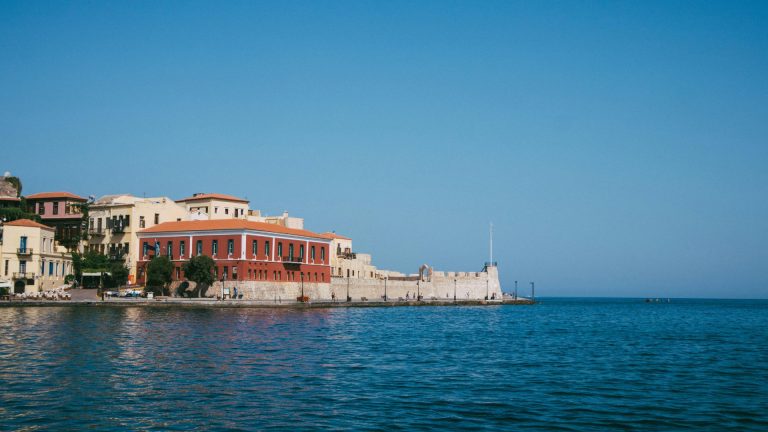
Balos, Crete

ABTA’s team of experts suggests starting the journey in the capital, Heraklion, with the Archaeological Site of Knossos being a designated “must-see” attraction. Additionally, the towns of Rethymno, Ierapetra, and Sitia, with their historical coastal charm, are highly recommended for exploration.

The report also highlights Cretan food, which is based on the freshest of local ingredients.

ABTA’s “Destinations to Watch in 2024” report, listed in alphabetical order, features Albania, Aruba, Extremadura, Mauritius, Saxony, Shropshire, The Tyrol, Vietnam, and Zambia.

Source: news.gtp.gr

Greek police recover dozens of historically significant religious icons

0

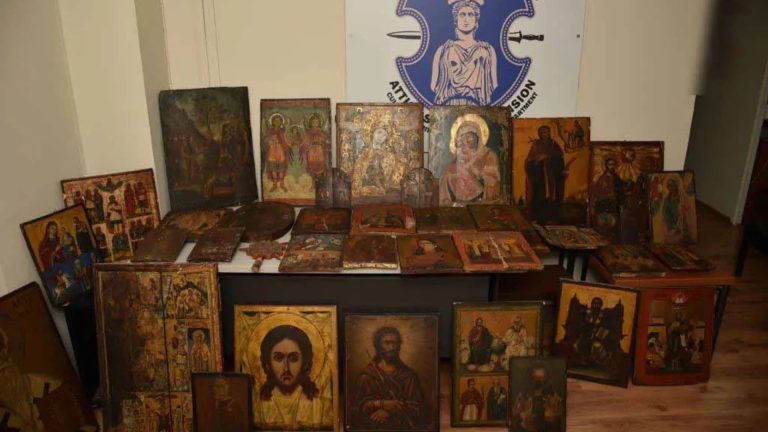
Over 50 religious icons have been seized by police in Greece with experts identifying at least 20 of them as historically significant and protected by cultural heritage laws.

According to ekathimerini.com, the icons were seized in the southern Athens suburb of Moschato from a 43-year-old man who claimed to have acquired them from a woman, aged 74, who has also been arrested.

Photo: Pixabay

Piraeus Antiquities Authority has verified the importance of 20 icons while the task of assessing the historical significance of the remaining 36 icons has been entrusted to the Archeological Museum of Piraeus.

Source: ekathimerini.com

First successful liver transplant from a living donor completed in Greece

0

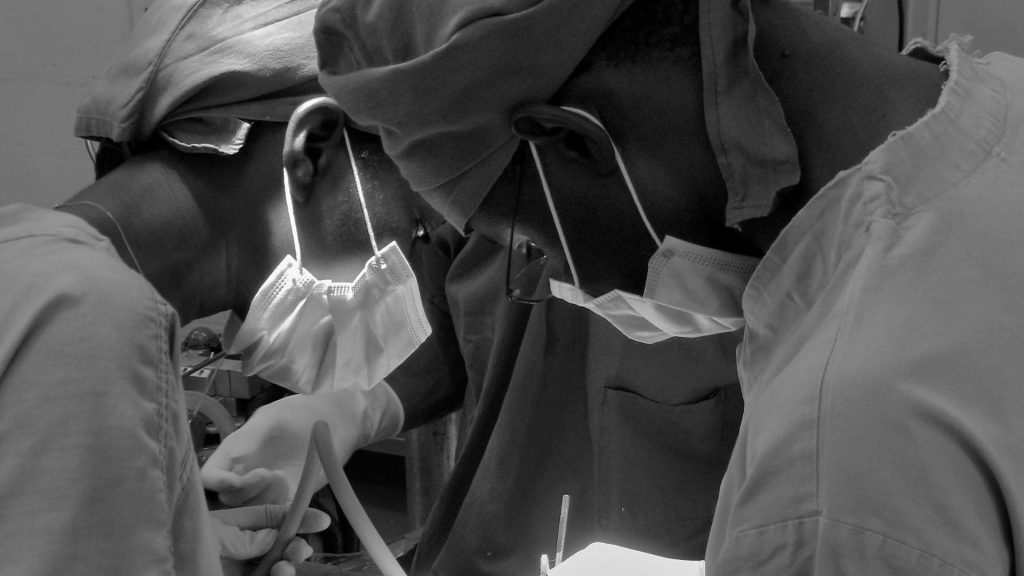
A milestone was achieved at Laiko Hospital in the city of Athens, with the first-ever successful liver transplant from a living donor, a father to his daughter. Deputy Health Minister Irene Agapidaki shared the news in a social media post.

According to ekathimerini.com, surgeon professor Georgios Sotiropoulos led the procedure with the contribution of German Professor Dieter Broering. 

Photo: Mike Yeats

Agapidaki conveyed her optimism for the health and recovery of both the father, highlighting the significant development that brings hope to many in the country.

Source: ekathimerini.com

Palace of Aigai: Greece reopens restored Alexander the Great monument

0

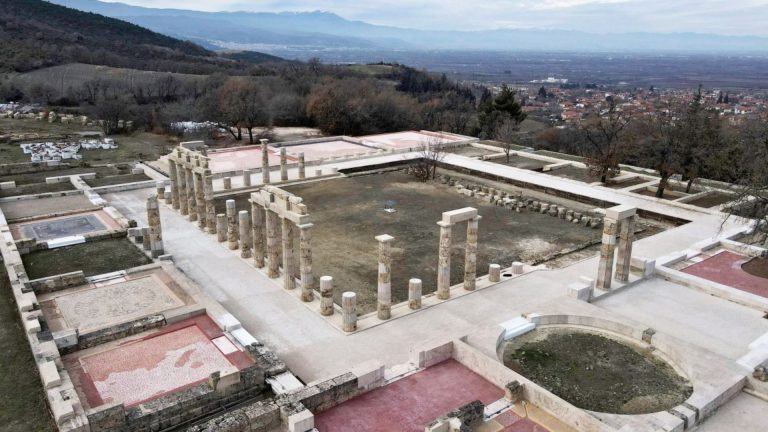
A restoration of 16 years has been completed, allowing the reopening of the Palace of Aigai in Greece, a site of immense historical significance from classical antiquity.

According to BBC, the palace, where Alexander the Great was crowned king, is situated near Thessaloniki and was originally constructed over 2,300 years ago. The Romans destroyed it, but extensive excavations in the 19th Century brought it back to light.

The renovation project, totaling over €20m (£17m; $22m), was supported by the European Union. Greek Prime Minister Kyriakos Mitsotakis emphasized the global importance of the palace, characterising it a “monument of global importance.”

Kyriakos Mitsotakis visited the site of the Palace of Aigai. Photo: AP

“The significance of such monuments becomes the heritage of the entire world,” he said. “We must highlight it, promote it, and expand the horizons revealed by each new facet.”

Constructed by Philip II, the father of Alexander the Great and the ruler of the formidable Macedonian kingdom, the palace, designated as a UNESCO World Heritage Site, stood in Aigai, located in what is now the town of Vergina, serving as its capital.

As the largest structure in classical Greece, the palace covered an expansive 15,000 square meters (160,000 square feet) and included grand banquet halls, places of worship, and courtyards within its architecture.

The Palace of Aigai is set to welcome the public once again starting this Sunday.

Source: BBC

Greek singers coming to Australia in 2024

By Evelyn Karatzas

Are you looking to get your Greek music fix here in Australia?

Well, you’ve come to the right place as The Greek Herald has put together a list of some of the artists taking the stage and touring all around Australia early this year.

Whether you’re after traditional, rock, pop or laika-style music, we’ve got the scoop on who, when and where some of your favourite Greek performers will be visiting in 2024.

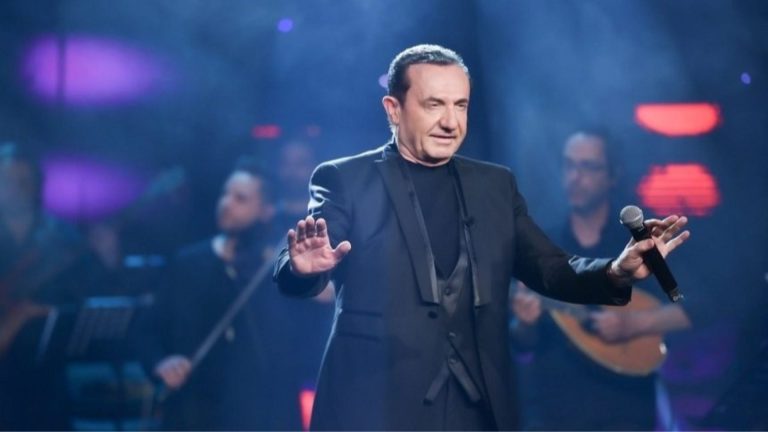
Christos Dantis

After five years, the legendary singer, song writer and producer, Christos Dantis is returning to Australia to perform in several cities across the nation.

The beloved figure in Greek music, has been around since the late 80s and his songs, which include ‘To Palio Mou Palto’ and ‘Ena Tragoudi Akoma’ have topped charts countless times.

His first appearance was on Friday, January 12 at the Semaphore Greek Festival in Adelaide, South Australia as part of their ‘Bouzoukia by the Sea’ event. He will be joined by singer and violinist Georgia Rappou. Tickets can be purchased here.

He will be performing on Saturday, January 13 and Saturday, January 20 at Trak Live Lounge at Kinisi in Melbourne. For tickets to the Melbourne shows, call 0422 472 006.

On Friday, January 19 he will be performing at The Arena at the Canterbury Hurlstone Park RSL in Sydney. With less than 70 tickets remaining, this will be an event you won’t want to miss. For tickets, call 0418 451 481. Each ticket purchase is inclusive of meze.  

Lefteris Pantazis

One of Greece’s most iconic performers, Lefteris Pantazis (aka LePa) is coming back to Australia after 10 years, for a performance in Sydney this March. His music, which has been popular since the 70s, is bound to be known by people from all generations.

The ‘Filakia,’ ‘Po Po Po,’ and ‘Erota Erota’ singer will be performing many of his laika, tsifteteli and pop-style hits on Saturday, March 9 at the Diamond Venue in Punchbowl. He will also be joined by Greek singer, Konnie Metaxas.

The show will kick off at 8:45 pm. To purchase your ticket, click here.

Nikos Zoidakis

The Greek singer and lyra player from Crete, Nikos Zoidakis is also coming down under in 2024.

Most known for performing mantinades (short narratives accompanied by a lyra and other musical instruments), Nikos Zoidakis will showcase some of his classic songs including ‘Tha Girisei o Trohos,’ ‘Sousta,’ ‘Maleviziotis’ and more.

He will be performing alongside Angela Dimitriou and be making an appearance in Sydney, Melbourne and Adelaide. More details can be expected soon.

Kaiti Garbi

One of the Greece’s most iconic female singers, Kaiti Garbi is also set to take the stage in Australia.

With a music career spanning more than 35 years, Kaiti has sold over 2 million records in Greece and around the world. She has also won 11 Pop Corn Music Awards, including for Album of the Year awards.

Although details haven’t been confirmed for dates, the ‘To Kati’ and ‘Tha Melanholiso’ singer will be performing in Sydney, Melbourne and Adelaide.

Greek spark added to Novak Djokovic’s charity match ahead of Australian Open

An impressive show with a Greek twist was prepared by the organisers of the Australian Open as part of Novak Djokovic’s charity match ‘A Night with Novak and Friends’ in Melbourne, Victoria on Thursday night.

On the night, Novak presented a tennis celebration alongside world No. 6 and AO 2023 finalist Stefanos Tsitsipas, fellow AO 2023 champion and world No.2 Aryna Sabalenka and world No. 8 Maria Sakkari. A number of other special surprise guests will join in the fun.

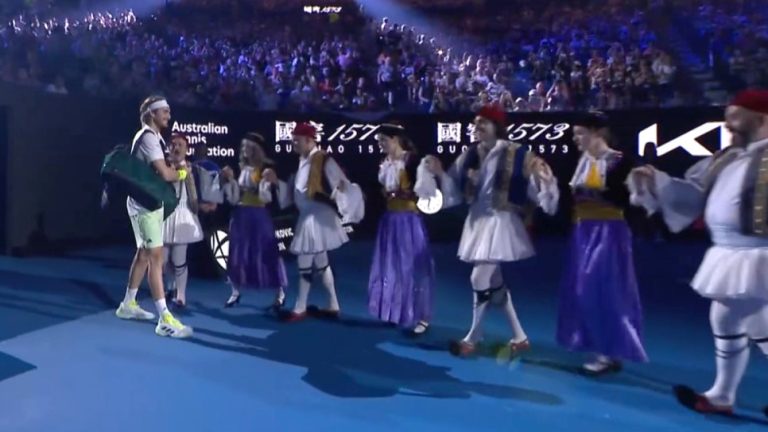
Tsitsipas made an impressive entrance to the packed Rod Laver Arena on Thursday, after a short dedication video. In the midst of loud applause from the audience, he was welcomed by youth from the Pegasus Dance Academy dressed in traditional costumes and Greek dancing.

“My last time on this court was with Novak. It is just as exciting today. The set up is different today, with Greek dancers. I never expected Rod Laver Arena to be so alive. I feel at home here. They keep coming from 2014 onwards. I feel Australia as my home,” Tsitsipas said.

Even more impressive was the entrance of Djokovic who grabbed his fellow Serbian dancers and danced with them, creating pandemonium in the stands.

Later, Tsitsipas and Djokovic played a one-set friendly, which the Serb won 6-3 in 36 minutes. The Greek tennis player was “caught” by a camera during the match feeling discomfort in his troubled back.

Throughout the charity match, Grand Slam record holder Djokovic also engaged in fun sporting activities with notable names like Olympic middle-distance runner Peter Bol, American basketball player Alan Williams, Aussie gymnast Georgia Godwin, and cricketer Steve Smith.

Djokovic and Sabalenka also played mixed doubles against Tsitsipas and Sakkari, as well as wheelchair tennis where he was helped by Tsitsipas and Sabalenka.

Why is Australia an Earthly Paradise?

By Anastasios M. Tamis*

Australia, mutatis mutandis and with specific restrictions, remains, perhaps uniquely, an earthly paradise, a shining example of human cohabitation of cultures; a model of peaceful coexistence of nationalities whose metropolis countries are torn apart by inhuman wars.

Australia remains a model of stable democracy, where dictatorships, movements, insurgencies, and uprisings are absent. Australia is a safe haven for refugees and exiles, a remarkable case of a peaceful country where crime remains under control, and the masked men, the anarchists, the squatters, the so-called fan violence are absent (this is also a pretext for the weak state to control the safety of its citizens with laws and safeguards). Australia is a peaceful, most liveable (without romances and idealisations) country, a microcosm of what the planet could be afflicted by the illusions and the tricks of the ruthless and hyper-ambitious leaders who rule our world.

The big challenge is how can the various peoples, races, nationalities, as well as the bearers of various religions and cultures and ideologies coexist, cohabit, cooperate, collaborate, sympathise or co-act in Australia, while around them the planet is torn apart by constant irredentist, religious, political wars in Asia, Africa and South America?

The great lesson, the great truth, is that if in Australia various peoples and religious groups can live together and go hand in hand, why are their brothers and sisters in the countries from which they came from slaughtered mercilessly and for no real reason, just for a shirt, for ‘a Helen’ as Seferis said?

The great lesson and the great truth, then, is that people can function together, as in Australia, live without their differences, as in Australia, have a common homeland for all of them, without their nationalist outbursts and incompatible and heretical ideologies. Australia is showing the way to the peoples of the earth. It gives them the model of coexistence, a coexistence that is tried, harmonised, without deviations and setbacks.

Australia is a model of coexistence, politically recognising a sovereign country, a polity, without their religions having much weight (religion is a private way of life, has no place in the public space, beyond its apostolic and spiritual role). Australia tolerates and encourages cultural events, promotes and enhances the diversity of culture and language. It tolerates and promotes diversity, to the extent that social cohesion is not affected.

Although freedom is a political value, it is utopian to believe that we can be completely free simply because we humans cannot be completely free. We are free by convention and through myriad restrictions. However, in Australia you feel the virtue and value of being free to express your opinion, even when what you express often goes beyond accepting the other’s diversity.

Greece is a nation-country, with racial and ethnic homogeneity, a common language and religion, history, common customs and a single cultural heritage.  Australia is a country of immigrants, with heterogeneous cultural events, with different languages, multiracial, multiethnic, multicultural. However, socially and politically, Australia is more solid, more unbreakable, more compact and less divided. This is an oxymoron, which generates in Australia unity and a feeling that all heterogeneous citizens belong to this country.

In Greece, you often feel like a “foreigner” in your homeland, and you cannot recognise the gaps caused by the inability of the modern Greek citizen to define what is important and essential in their life.  This social inability of the Greek to distinguish what will “fill” his life as a value, has essentially relaxed family education and family tradition, and has given birth to a disinterest adolescence with delinquency and violence. It has also given birth to a lack of moderation and worthiness, and instead of self-criticism, the Greek attempts to discover the cause of national decline in external factors.

In Australia there is also crime and misconduct, but there is also the rule of law, there is police, the bodies that ensure the safety of citizens, the bodies that enforce the law. Once upon a time in Greece, children played in the streets and the elderly took walks. Now out are the knives, the flares, the poles, the broken marbles, the stones, the Albanian mafia, the Romanian, the Bulgarian and, of course, the Greek mafia, of night and drugs. You’re afraid to go around, you’re terrified until your child comes home.

On Vouliagmeni Avenue the irrational youth run at 200 kilometres per hour when the limit is 50 kilometres; on the highways they speed at 240 per hour and boast to their friends, without the nemesis ever coming to cut off heads. Greece lost more of its citizens on the asphalt than during the war. Dishonest, unruly, bullies and dumb dudes ignore the laws and insult the police, whom they eventually beg to offer them safety. In Australia, infringements are detected spontaneously. On its comfortable road network, with its freeways and wide roads, the speed limit is rarely 110 p.h., in cities 40 to 60, with the number of victims being less than one-sixth of the number of our small country.

In Greece of ours, where we all get sick if we do not visit it, in our homeland where our love is given in the form of self-denial and self-sacrifice, after two months of pleasant stay (in the form of pilgrimage), we feel tired, and we want to return to Australia. What is it that tires and traumatises us every time we leave Greece to return to Australia. It is a multitude of causes. Causes that make life in Australia calm, comfortable, safe, unscrupulous and qualitatively rebaptised and sustainable.

For years now, Australian cities have been included in the top five most liveable cities in the world, because they provide basic social virtues, safety, cleanliness, easy access and high-quality public services. In Australia, what we call “civil conscience” operates to a high degree (it is a derivative of the education and the way of upbringing offered). Students wear their school uniforms, carry the emblem of their school in their bags and jacket. They learn not to be private individuals, not to take care of their skin, to show solidarity and not bullying to their classmates. They learn to be sensitive citizens, through sports and competition. The education system emphasises learning rather than teaching. At school, they follow sports activities, learn to respect friendship, mateship, so when they enter adolescence and later integrate into society, the majority of them are distinguished by self-respect and a social mildness and sensitivity. They learn to respect the state and the laws, to participate in public events.

Learning is not limited to school teaching, students participate in social rescue, firefighting, sports teams. In most independent schools there are special departments of military training, cadetships, scouting, participation by membership in social solidarity organizations. Young people learn to participate in the events of the society in which they are participating.

In the next issue, I will refer to other facts that make Australia the earthly paradise. I have deliberately taken care not to mention economic issues, because monetary comparisons cannot stand or justify the aims of these articles.

*Professor Anastasios M. Tamis taught at Universities in Australia and abroad, was the creator and founding director of the Dardalis Archives of the Hellenic Diaspora and is currently the President of the Australian Institute of Macedonian Studies (AIMS).

‘I’ve never done a show like this’: Christos Dantis takes to the stage in Australia

Iconic Greek singer-songwriter Christos Dantis will take to stages in Adelaide, Melbourne and Sydney this January.

The musician kicks off his visit with a performance at Bouzoukia by the Sea in Adelaide, South Australia, as part of this year’s Semaphore Greek Festival. He will be supported by violinist Georgia Rappou.

Next, he will be performing on Saturday, January 13 and Saturday, January 20 at Trak Live Lounge at Kinisi in Melbourne. On Friday, January 19 he has a concert at The Arena at the Canterbury Hurlstone Park RSL in Sydney.

Visiting Australia for his fourth time, Dantis told The Greek Herald he was thrilled to be back. He described his experiences of visiting Australia unlike any other in the world.

“Australians are very different to the Americans,” he said.

“America is a lot closer to Greece, so they get the opportunity to see more singers, and in Australia, as it’s quite far away, the Australians are always so excited when singers come and perform from Greece.

“The scene in Australia is so wild in the best way… they really know how to party, and they love their Greek singers.”

The 57-year-old singer, who was born in Athens, Greece, said he has been singing since he was five years old.

“Ι have been singing professionally since 1986, and since 1990, have been releasing albums,” Dantis said.

“My first official concert after releasing an album was in Serres, Greece. It was a summer disco, in a venue that was meant to fit 2,000 people, but in the end over 3,500 people turned up.

“I was in shock when the taxi driver dropped me off at the venue. I never expected something like this to happen to me, to be able to perform in front of so many people at that time, it was such an unforgettable experience.”

The Greek Herald asked Dantis how he became a singer and why he decided to get into music.

“I have no answer as to why I chose this career,” he said. “But I didn’t choose it, it chose me.

“Music is my calling, it’s something I’ve always wanted since I was young, and I just knew I was destined to perform.”

The legendary Greek singer said his favourite type of music is laika (old traditional Greek music). For his upcoming concerts in Australia, he said people can expect to enjoy a wide variety of music.

“I’m going to be performing a lot of my older tracks, as well as some of my popular, most recent ones and some songs from a few of my favourite artists,” he said.

“I think these four shows are going to be amazing and everyone who comes along is guaranteed to have a great time. I’m really looking forward to it.”

Dantis said he can’t wait to put on a show for his Australian fans.

“I’ve never done a live show like this before, not in America or Australia,” he said. “To be by the sea, in a bouzoukia setting in Adelaide is something really unique and special.”

When asked for his thoughts on being able to perform around the world, Dantis said, “I feel so complete.”

“I am so happy and grateful for my fans all around the world who have supported me,” he added.

“This year has got so much travelling and shows to come, and I can’t wait. Being able to perform is the best feeling and it gives me the opportunity to visit new places that I’ve never seen before too.”

Performance dates:

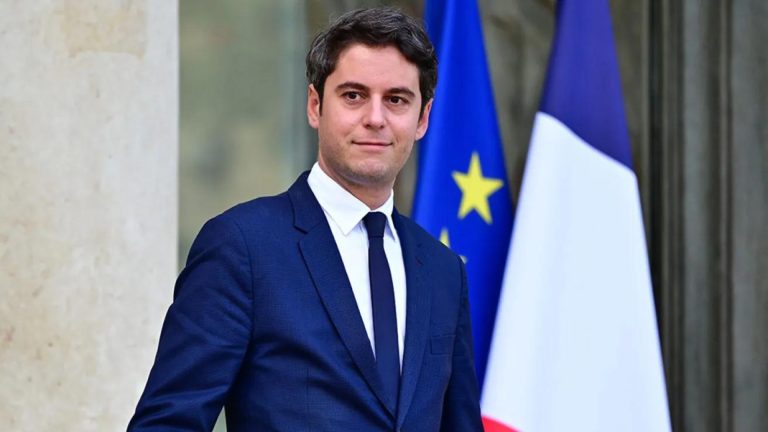
Gabriel Attal: France’s new Prime Minister with Greek roots

Did you know the new Prime Minister of France Gabriel Attal has Greek ancestry?

The Orthodox Prime Minister, who was appointed to the role on Wednesday, January 10, has Greek roots on his mother’s side, as she was a Greek-Russian woman from Odessa in the Ukraine.

The 34-year-old, who is the son of the lawyer and film producer Yves Attal and mum Marie de Couriss, took over as French PM from Elisabeth Borne.

In the past, he has served as the Minister for Education in France and is now known as the youngest Prime Minister ever elected in France and the first openly gay leader of the French Government.

The Guardian also shared that Mr Attal was elected as he stood out from the pack as he has a willingness to speak out in public on any issue thrown at him, and he has exceptional communication skills and the ability to think and speak up in parliament.

As well as working in the education department, Mr Attal also had previous experience in France’s health ministry.

The French Prime Minister grew up in Paris with his three younger sisters and studied at École Alsacienne, which is a private school known for kids of high-profile parents in politics. Later on, he studied at the prestigious Sciences Po University, gaining a masters degree in public affairs.

Mr Attal has held several high-profile political jobs throughout his life too, including the head of LREM, a government spokesperson, and a public accounts minister. He was also elected to the Assemblée National in June last year.

The new Prime Minister also goes by his full name, Gabriel Attal de Couriss.

Source: The Guardian.