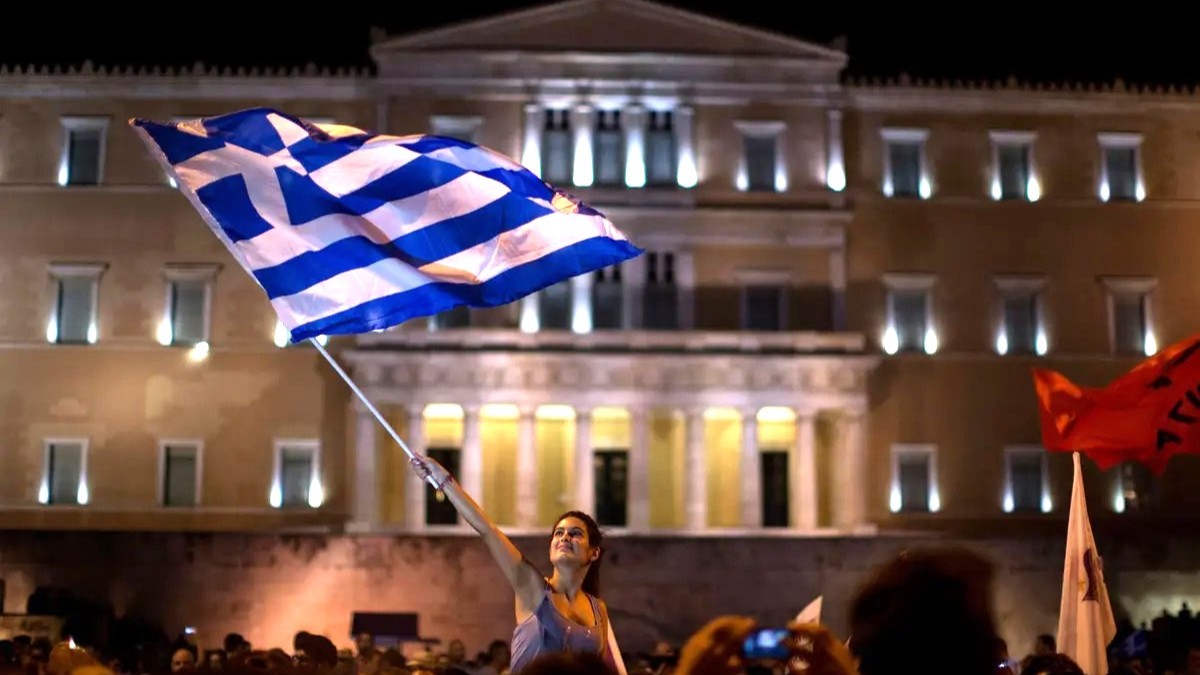
The decade between 2007 and 2016 marked one of the most transformative and emotionally charged periods in the history of modern Hellenism. While Greece entered a devastating economic, political and social crisis, Greek Australia emerged as a mature, politically influential and institutionally established diaspora navigating a rapidly changing global and digital era.
Throughout the decade, The Greek Herald documented not only the collapse of confidence within Greece itself, but also the resilience, activism and adaptation of Greek Australians responding to one of the most difficult periods in modern Greek history.
The period began during a moment of relative optimism and institutional confidence. In May 2007, Prime Minister Kostas Karamanlis arrived in Australia for the first official visit by a Greek Prime Minister to the country since the beginning of organised Greek settlement. The Greek Herald devoted extensive coverage to the visit, welcoming him with the front-page editorial “Now or Never – The End of the Schism in Australia,” reflecting hopes that long-running divisions within the Greek Orthodox community could finally be resolved.
Thousands of Greek Australians gathered in Melbourne and Sydney during the visit, while the Howard Government simultaneously recommitted itself to the long-delayed bilateral Greco-Australian Pension Agreement.
Education, language and Hellenic studies
The decade also witnessed ongoing efforts to preserve and expand Greek language education at a time when younger generations were becoming increasingly English-speaking and digitally connected.
In January 2007, the Open University of Sydney commenced operations at the AHEPA Kostis Palamas Centre, while the same year Professor Michael Osborne and Professor Anastasios Tamis supported the appointment of Matoula Maheras-Douvartzidou as inaugural lecturer of Modern Greek at Beijing Foreign Studies University, introducing Modern Greek studies into China for the first time.
The newspaper closely followed educational initiatives across Australia. Conferences on Hellenic studies, language preservation and Greek identity became increasingly prominent, while committees involving academics such as Vrasidas Karalis, Michalis Tsianikas, Savvas Papasavvas and Anastasios Tamis attempted to strengthen cooperation between universities and diaspora institutions.
At the same time, concerns surrounding the decline of Greek studies remained constant. In April 2009, The Greek Herald strongly criticised the decision by the University of New South Wales to terminate Modern Greek studies, describing the development as a major setback for Greek education in Australia.
The period nevertheless produced major educational achievements. In November 2010, Greek was officially included among the eleven languages incorporated into the Federal Government’s National Curriculum Program. Ancient Greek classes for adults also emerged in Melbourne through the Greek Community of Melbourne, while large educational seminars organised through the Paedeia Omogenon Program attracted strong participation from teachers and educators throughout Australia.
Philanthropy also became increasingly important in sustaining Hellenic education and research. In December 2013, Brisbane medical specialist Paul Iliadis donated more than one million dollars toward the establishment of a Chair in Ancient Greek History at the University of Queensland.
The Macedonian issue and diaspora activism
Questions surrounding Macedonia, Cyprus and Greek national identity remained among the most emotionally charged issues within the Greek Australian community throughout the decade.
In April 2007, South Australian Premier Mike Rann publicly declared that “Macedonia is Greek,” while later that year tens of thousands of Greek Australians assembled in Melbourne to protest against the use of the name Macedonia by FYROM.
The Greek Herald extensively covered reactions to comments by UN mediator Matthew Nimitz, whose statements regarding Alexander the Great generated outrage throughout the diaspora. In October 2007, Australian Foreign Minister Alexander Downer publicly declared that Australia would never recognise FYROM under the name Macedonia.
Academic conferences, public lectures and cultural events connected to Macedonian history also expanded significantly during the decade. In 2016, the Australian Institute of Macedonian Studies celebrated its thirtieth anniversary with the large-scale “Alexander the Great” symphony concert at the Melbourne Recital Centre before an audience of more than one thousand people.
The newspaper also followed ongoing campaigns connected to the recognition of the Pontian Greek genocide. In 2009, the Parliament of South Australia officially recognised the genocide of the Pontian Christians by Turkish Kemalist forces, while centenary commemorations in 2016 drew large participation in Sydney and Melbourne.
SAE and the changing structure of the diaspora
The period also marked the gradual decline of the World Council of Hellenes Abroad (SAE), once envisioned as the primary global institution representing the Greek diaspora.
In December 2006, Prime Minister Kostas Karamanlis described SAE as a unifying global forum for Hellenism during its sixth World Congress in Thessaloniki. Yet within only a few years, the organisation increasingly struggled with financial instability, declining support and structural uncertainty.
The Greek Herald documented repeated attempts to revive and restructure SAE as the organisation increasingly struggled with declining support, financial instability and uncertainty surrounding its future role within the global diaspora.
By 2014, former Deputy Foreign Minister Dimitris Dollis publicly acknowledged that SAE had effectively “finished,” symbolising the broader institutional and financial crisis affecting both Greece and diaspora organisations internationally.
Greece’s economic crisis and the new migration wave
The Greek financial crisis rapidly became the defining issue of the decade.
Beginning in 2010, The Greek Herald documented growing international criticism of Greece’s economic collapse, austerity measures and political instability. Australian media increasingly portrayed Greece as financially broken, while the newspaper reported on the emotional toll the crisis was having on Greeks worldwide and the growing anxiety felt throughout the diaspora.
Prime Minister George Papandreou repeatedly appealed to diaspora communities for support, describing the economic emergency not simply as a Greek crisis but as a broader European crisis affecting the future of Hellenism internationally.
At the same time, Australia experienced a significant new wave of Greek migration. Unlike the factory workers and labourers who dominated the post-war migration era, many of the new arrivals were university graduates, engineers, architects, doctors and professionals fleeing economic uncertainty in Greece.
In July 2011, Greek Community of Melbourne President Bill Papastergiadis stated that thousands of highly educated Greeks were seeking opportunities in Australia as the crisis deepened.
The newspaper also documented the large-scale repatriation of Greek Australians who had previously settled in Greece before returning permanently to Australia in search of stability and economic security.
Questions surrounding migration policy became increasingly prominent. In August 2013, Theo Skalkos publicly urged Australian political leaders to open Australia’s doors to new Greek migrants escaping the economic crisis.
Throughout the period, The Greek Herald also followed major political developments in Greece itself, including the rise of Alexis Tsipras and the growing political polarisation surrounding austerity, the European Union and economic reform.
The Greek referendum of July 2015 became one of the defining moments of the decade. The newspaper extensively covered the overwhelming “No” vote by Greek citizens rejecting European bailout conditions before the eventual political reversal that followed negotiations in Brussels.
The rise of a confident Greek Australian generation
While Greece struggled economically, Greek Australians increasingly emerged in positions of political, academic and professional influence throughout Australia.
In 2006, Stavroula Pavlidou became the first Greek woman elected Mayor of the City of Whittlesea in Melbourne.
The decade witnessed the growing prominence of Greek Australian parliamentarians including Steve Georganas, Nick Xenophon, Maria Vamvakinou, Petros Georgiou and Sophia Mirabella within Federal Parliament.
In 2010, Nikos Kotsiras was appointed Victoria’s Minister for Multicultural Affairs, while in 2012 Greek Australian jurist Chris Kourakis was appointed Chief Justice of the Supreme Court of South Australia.
The emergence of a younger political generation also became increasingly visible. Steve Kamper appeared as an Australian Labor Party candidate in Sydney in 2015, while Jenny Mikakos became the first Greek Australian woman appointed minister in Victoria.
The decade also reflected the growing institutional maturity and philanthropic capacity of Greek Australia. Governments increasingly supported Greek Australian cultural and educational initiatives, while major community donations strengthened welfare, education and research institutions across the country.
In Melbourne, the opening of the Greek Community Cultural Centre in 2014 symbolised the confidence and permanence of the community, while philanthropists including Brisbane medical specialist Paul Iliadis and the Vournazos family contributed significant funding toward university programs, welfare organisations and medical facilities serving the wider community.
The newspaper additionally highlighted the achievements of Greek Australian academics, scientists and diplomats. In 2014, Professors Christos Pantelis and Athanasios Christopoulos were recognised among the leading scientists in the world, while Jenny Bloomfield was appointed Australian Ambassador to Greece during one of the country’s most difficult periods.
The Greek Herald enters the digital era
The decade also marked a major transition for The Greek Herald itself as the newspaper increasingly adapted to a changing media landscape and a bilingual, digitally connected readership.
Since 2005, the newspaper had introduced English-language sporting pages targeting younger Greek Australians. By 2008, The Greek Herald was regularly publishing dedicated English-language pages featuring community news, social events and business coverage aimed at second and third-generation readers, reflecting the reality that younger Greek Australians were increasingly English-speaking, digitally connected and consuming media differently from earlier migrant generations.
Commercial partnerships with institutions such as Bank of Sydney increasingly reflected efforts to connect younger Greek Australians with community organisations, financial services and broader professional networks.
The role of ethnic media itself was increasingly recognised politically. In October 2011, Prime Minister Julia Gillard invited ethnic media leaders to a special reception in Sydney emphasising the importance of multicultural media in maintaining communication between government and Australia’s ethnic communities. Theo Skalkos attended the event representing The Greek Herald.
Throughout the decade, the newspaper remained deeply engaged in major communal and ecclesiastical debates. The Greek Herald continued advocating for transparency surrounding negotiations between the Greek Orthodox Community of NSW and the Archdiocese, while also publishing strong editorials regarding leadership, governance and the future direction of Hellenism in Australia.
The paper also maintained its longstanding tradition of strong editorial intervention on issues affecting diaspora Greeks directly. In 2012, The Greek Herald strongly criticised proposed Greek taxation measures affecting expatriate property owners, arguing that Greek Australians should not be unfairly penalised during the economic crisis.
Loss, remembrance and continuity
The decade also witnessed the passing of several major personalities connected to Greek Australian journalism, culture and public life.
Journalists and commentators including Takis Kaldis, Kostas Nikolopoulos and Theodoros Patrikareas passed away during the period, marking the gradual passing of a generation deeply connected to the post-war migrant experience.
The newspaper also commemorated the deaths of major cultural and public figures including theatrical personality Petros Printezis, cartoonist Tony Rafty, poet Dimitris Tsaloumas and former Prime Minister Gough Whitlam, whose longstanding philhellenism had left a deep impression on Greek Australians.
At the same time, the Greek Australian community increasingly displayed its institutional maturity through philanthropy, education and welfare initiatives. Major donations to welfare organisations, educational institutions and cultural centres reflected the growing economic and organisational strength of the diaspora.
By the end of the decade, Greek Australia was no longer defined primarily by migration and survival, but by institutional confidence, political influence and a multi-generational identity increasingly independent from Greece itself.
The Greek Herald stood at the centre of that transition, documenting the Greek financial crisis, the emergence of a new migration wave, the digital transformation of media and the continuing evolution of one of Australia’s most enduring multicultural communities.
