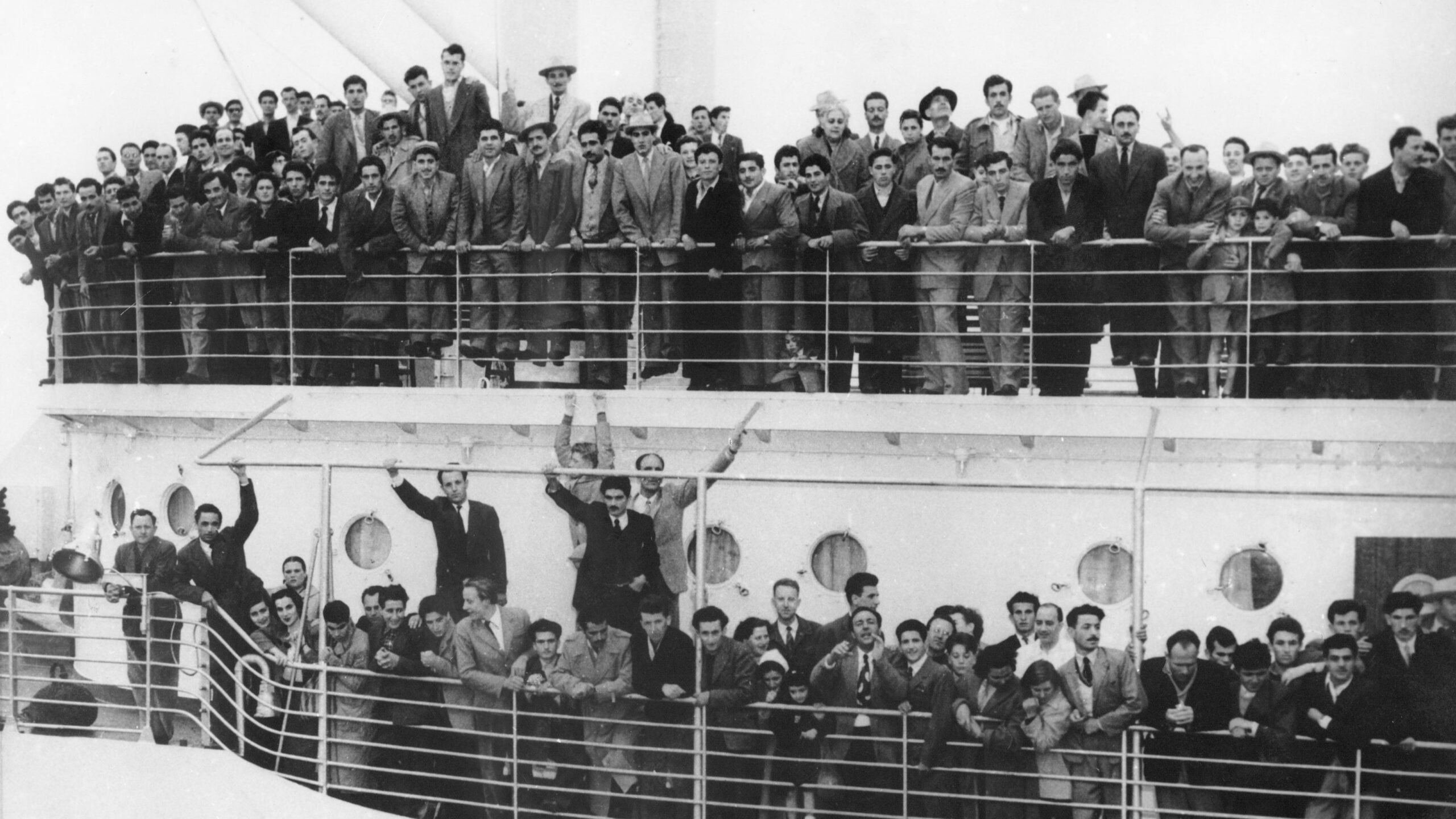
The decade between 1947 and 1956 transformed both The Greek Herald and Greek Australia itself.
The Second World War had ended, but Greece remained consumed by civil conflict, political instability and economic devastation. At the same time, Australia’s post-war migration programme triggered the largest wave of Greek migration the country had yet experienced.
The Greek Herald stood at the centre of these upheavals.
Through its reporting, editorials and campaigns, The Greek Herald chronicled every aspect of post-war Greek life in Australia: migrant ship arrivals, anti-communist campaigns, community elections, church disputes, school concerts, sporting clubs, theatrical productions, racism in Australian society, fundraising drives for Greece and the rapid emergence of a permanent Greek Australian community.
The newspaper itself also became increasingly interventionist.
It campaigned against xenophobia and the White Australia mentality, publicly criticised exploitative migration agents, advocated for Greek schools and cultural centres, promoted the creation of federated communal structures, encouraged Greek participation in Australian political life and attempted to shape the ideological direction of the diaspora during the early Cold War.
By the beginning of the 1950s, The Greek Herald was no longer simply documenting Greek Australian history. It was actively helping shape it.
A newspaper entering a new era
The immediate post-war years marked a significant structural transition for the newspaper.
Following the retirement of Demetrios Lalas in 1945, Alexandros G. Grivas emerged as the dominant force within the paper, assuming full proprietorship and management. Alongside him stood M. Kosmas Andronikos, who served as shareholder, deputy manager, columnist and technical manager between 1945 and 1955.
The post-war editorial team reflected the increasingly sophisticated operation of the newspaper.
By late 1947, the core journalistic group producing the paper included Grivas, Andronikos, Oscar Georgoulas, Panagiotis Kritharis and Christos Angelinos. The paper also relied upon an expanding interstate network of correspondents and representatives spanning Melbourne, Adelaide, Brisbane, Townsville, Mackay, Perth, Wellington and regional centres.
This national network was crucial.
The enormous wave of post-war migration fundamentally altered the geography of Greek Australia. Greek and Cypriot settlers were now appearing in regional and industrial centres across the country in far greater numbers than before. The paper responded by broadening its interstate coverage and increasingly presenting itself as a genuinely national publication.
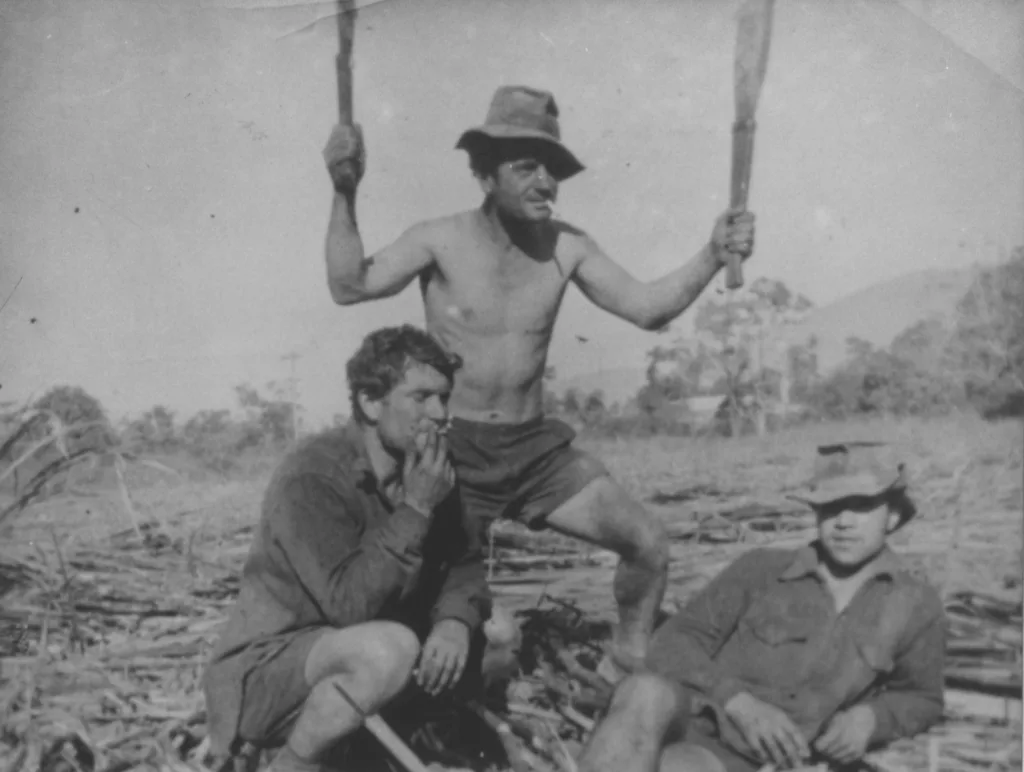
Its pages documented every aspect of communal life: elections, dances, school concerts, church disputes, weddings, deaths, theatrical productions, ship arrivals, fundraising drives, sporting clubs and the establishment of new associations.
At the same time, the paper experimented structurally and stylistically.
From March 1947, it began regularly publishing English-language reports and editorials on the front page. New English-language social columns emerged, including “The Voice of Adelaide” by Rose Taliantzis and later “Life of Sydney” by Eunice.
The paper also introduced summaries of major Athenian newspapers including Acropolis, To Vima, Kathimerini and Rizospastis, further connecting diaspora readers to developments in Greece.
These innovations reflected Grivas’ understanding that the newspaper’s readership was changing. A younger, Australian-born generation increasingly spoke English fluently, while the arrival of thousands of new migrants created demand for both practical information and ideological guidance.
The Greek Civil War and the newspaper’s anti-communist crusade
No issue shaped the identity of The Greek Herald during this decade more than the Greek Civil War.
From the opening weeks of 1947, the newspaper adopted a fiercely anti-communist editorial position that would define its political orientation throughout the post-war years.
The paper framed the conflict not as a civil dispute between Greeks, but as an international conspiracy against Greece orchestrated by Moscow, Yugoslavia, Bulgaria and Albania. Throughout 1947 and 1948, headlines repeatedly accused neighbouring communist states of supporting rebel forces and attempting to partition Macedonia.
Grivas increasingly portrayed Greece as the frontline of a wider global struggle between communism and Western civilisation.
The paper enthusiastically supported the Truman Doctrine and the expansion of American aid to Greece and Turkey, celebrating the United States as the new protector of Greece against Soviet expansionism.
The anti-communist orientation of the newspaper became structurally embedded within its editorial operations.
As later observed within the paper itself, Grivas consciously operated on three separate levels: a strongly anti-communist editorial line, a more aggressive and polemical tone within his Semeiomata columns, and a commercially focused voice through Harakies.
The newspaper’s rhetoric frequently escalated into crusading language.
Atlas in Sydney and Democritus in Melbourne — organisations associated with left-wing Greek migrants — were repeatedly denounced as agents of Moscow. Grivas regularly accused communist sympathisers within Australia of spreading propaganda designed to undermine Greece and divide the diaspora.
At times, the paper’s language became openly inflammatory.
In 1948, the newspaper praised the Australian government’s decision to move against communists domestically and demanded the deportation of communist activists associated with Atlas and Democritus. By late 1948, communist supporters within Sydney were being publicly described by the paper as “alites” and “lestoalites.”
Yet the anti-communism of The Greek Herald was not merely ideological. It was deeply emotional.
For many within the diaspora, the Civil War reopened wounds created by occupation, resistance and wartime trauma. Thousands of migrants arriving in Australia after 1947 carried direct memories of violence, hunger, political persecution and displacement.
The newspaper became the central vehicle through which these fears, loyalties and anxieties were articulated.
Paedomazoma and the emotional politics of the diaspora
No issue generated stronger emotional responses within the newspaper than the alleged abduction of Greek children during the Civil War — the paedomazoma.
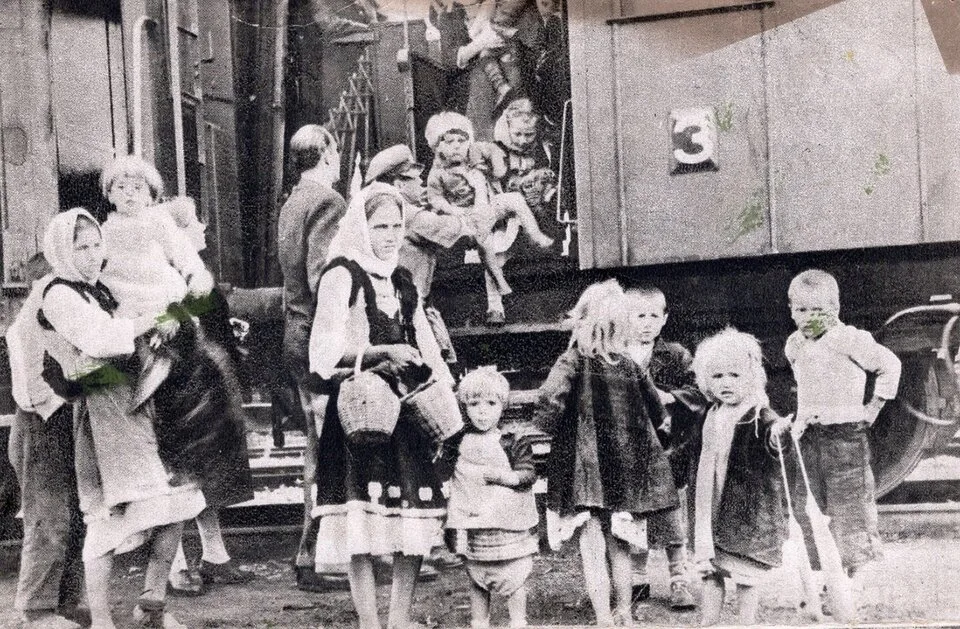
Throughout 1948 and 1949, The Greek Herald devoted enormous coverage to reports that communist forces were removing children from northern Greece and transporting them to Eastern Bloc countries.
The paper published extensive village-by-village lists of abducted children, reproduced statements from diplomats and international organisations, and framed the issue as a national tragedy threatening the survival of Hellenism itself.
The rhetoric used was extraordinarily powerful.
The newspaper repeatedly described the removal of children as a form of “genocide against the Greek race” and compared the events to Ottoman devshirme practices.
The issue resonated deeply within the migrant community because so many readers still had family members in villages directly affected by the conflict.
The paper used the paedomazoma extensively as a tool of diaspora mobilisation.
Cypriot organisations protested against the abductions, fundraising campaigns were organised for displaced children, and reports celebrating the establishment of children’s welfare centres in Greece were prominently featured.
These campaigns further reinforced the newspaper’s self-appointed role as defender of national interests abroad.
The Greek Herald and the migration transformation
While the Civil War dominated emotionally, migration transformed the demographic reality of Greek Australia. Between 1947 and 1956, thousands of Greeks and Cypriots arrived in Australia aboard steamships and aircraft, reshaping the social structure of the diaspora.
The newspaper chronicled this migration wave obsessively.
Passenger names, ship arrivals and migration agents appeared weekly throughout the paper. The arrival of the Asturias, Misr and numerous other vessels symbolised the emergence of a mass migration era.
The paper also acted as a migration guide.
Grivas frequently warned prospective migrants not to believe exaggerated promises made by immigration agents regarding Australian prosperity. He urged established settlers to be honest about the hardships of Australian life and criticised newcomers who arrived expecting instant prosperity.
Yet despite these warnings, the newspaper recognised that migration was fundamentally transforming the future of Greek Australia.
The arrival of women and families was especially significant.
Throughout the interwar decades, many Greek settlements had been overwhelmingly male. By the late 1940s, however, the arrival of brides from Greece dramatically altered communal life. The paper frequently reported on mass weddings conducted in Sydney and Melbourne and described the growing family presence as essential for the future stability of Hellenism in Australia.
The newspaper also reflected the tensions generated by rapid demographic change.
Some editorials criticised newly arrived migrants for complaining about conditions in Australia or failing to appreciate the sacrifices made by relatives who sponsored them. Others lamented the growing movement of Greeks away from prosperous regional centres toward overcrowded urban areas.
Still, beneath these tensions lay an emerging realisation: Greek settlement in Australia was becoming permanent.
By 1948, Grivas explicitly acknowledged this transformation, proudly declaring that Greeks had succeeded in every field of Australian life and that post-war settlement was no longer temporary or transient.
Campaigning journalism: racism, migration and advocacy
One of the most striking features of the period was the newspaper’s increasingly outspoken campaign against racism and xenophobia in Australia.
Throughout the late 1940s, The Greek Herald repeatedly condemned the White Australia mentality and attacked sections of the Australian media for portraying migrants as inferior or undesirable.
In February 1947, Grivas published a major English-language editorial titled “Prejudice Against Foreigners,” condemning anti-migrant hostility and criticising Australia’s restrictive immigration mentality.
The paper repeatedly highlighted hypocrisy within Australian society.
During the war, Greeks and other migrants had been welcomed as loyal allies and contributors. Yet immediately after the war, many Australians resumed treating migrants with suspicion and contempt.
The paper strongly defended migrants arriving without English-language skills and rejected claims that Southern Europeans were uncivilised. It also condemned differential treatment between northern European migrants and Greeks.
One especially powerful editorial in late 1948 criticised Australian authorities for generously subsidising Baltic migrants while Greek migrants were forced to pay enormous transport costs themselves.
At times, the newspaper’s language was remarkably direct.
In October 1948, the paper accused many Australians of displaying hostility toward migrants who worked hard, established businesses and purchased homes, arguing that prejudice reflected fear and insecurity rather than national strength.
Yet the paper’s anti-racism campaign also coexisted with a strong emphasis on respectability.
Grivas frequently urged migrants to learn English, maintain cleanliness, dress appropriately and conduct themselves responsibly in public. The newspaper believed that communal discipline and educational advancement were essential for gaining acceptance within Australian society.
This balancing act — simultaneously defending migrants while encouraging adaptation — became one of the defining characteristics of the paper’s editorial philosophy.
A newspaper building communal Australia
Perhaps the most important long-term contribution of The Greek Herald during this decade was its role in encouraging communal organisation across Australia. The paper consistently argued that Greek migrants could not survive as isolated individuals.
Throughout 1947 and 1948, Grivas repeatedly urged communities to establish federations, cultural centres, schools and coordinated leadership structures.
One of the most significant developments was the First Pan-Community Congress held in Melbourne in April 1947 under the presidency of Dr Charalambos Paroulakis. Representatives from communities across Australia gathered to discuss national coordination and ultimately established the Federated Council of Greek Orthodox Communities.
The newspaper strongly supported this development. Grivas believed that fragmented localism weakened the diaspora and left Greek Australians vulnerable to internal division and external prejudice.
The paper also extensively documented the formation of new regional and island associations.
The period witnessed the establishment or expansion of organisations representing Euboeans, Kastellorizians, Cypriots, Ithacans, Symians, Arcadians, Rhodians and numerous other regional identities.
At the same time, entirely new communities emerged.
The establishment of the Greek community in Canberra in 1947–48 symbolised the geographical expansion of organised Hellenism into the national capital.
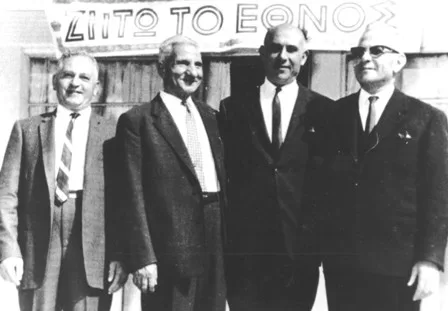
The paper also closely followed community elections, constitutional disputes and leadership battles. Melbourne, in particular, remained politically volatile.
The ongoing tensions between “Despotikoi” and “Koinotikoi” factions repeatedly disrupted community governance and elections. Yet unlike the earlier schism years, the newspaper now consciously attempted to avoid inflaming divisions.
By the late 1940s, Grivas repeatedly insisted that the paper’s mission was to unite the community rather than intensify conflict. This represented a major evolution from the aggressive factionalism of the 1920s.
Church, authority and the arrival of Theophylactos
Relations between the newspaper and ecclesiastical authority remained complicated throughout the decade.
The departure of Metropolitan Timotheos in 1947 marked the end of an important era. Timotheos had played a central role in stabilising communal life after the schism years, and the paper devoted extensive coverage to his farewell and enthronement in Rhodes.
The election of Theophylactos as his successor proved far more contentious.
Grivas and several community leaders strongly objected to the Patriarchate appointing a metropolitan without adequately consulting Australian Greek communities. Yet despite these reservations, the paper ultimately adopted a policy of restraint.
In May 1947, The Greek Herald publicly declared that it would refuse to publish letters attacking the new metropolitan, arguing that communal peace was more important than polemics. This was a critical moment in the newspaper’s evolution.
The memory of the devastating ecclesiastical schism of the 1920s remained strong, and Grivas consciously sought to avoid repeating the same destructive conflicts.
The enthronement of Theophylactos in Sydney in June 1948 became a major communal event covered extensively by the paper. The newspaper detailed the ceremony, receptions and ecclesiastical proceedings while carefully balancing support for institutional stability with ongoing criticism of clerical inactivity.
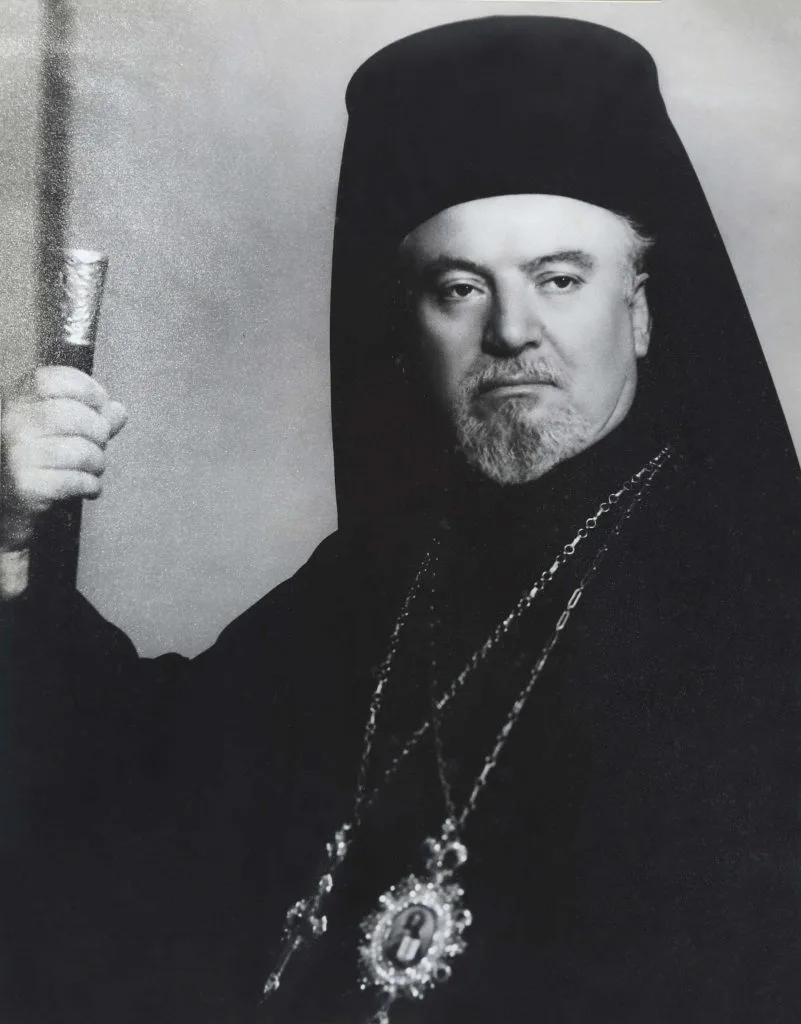
At the same time, the paper remained deeply committed to the idea that communities — not clergy alone — should shape organised Hellenism.
Grivas’ famous call for “Koinokratia instead of Papadokratia” encapsulated this philosophy. He argued passionately that the future of Greek Australia depended upon strong lay-led communal organisation rather than clerical domination.
This tension between ecclesiastical authority and communal autonomy remained one of the defining themes of Greek Australian life throughout the decade.
Education and the struggle to preserve Hellenism
Education occupied a central place within the newspaper’s vision for the future. The post-war migration boom created enormous pressure for Greek schools, teachers and cultural institutions.
The Greek Herald consistently campaigned for organised Greek education and strongly supported efforts by the Greek government to send trained teachers to Australia.
In early 1947, the paper celebrated the decision of the Greek Ministry of Education to investigate educational needs among diaspora communities in Australia.
By 1948, professionally trained teachers from Greece were beginning to arrive, including Ioannis and Anthe Tambakis in Perth — among the first officially appointed Greek government teachers in Australia.
The newspaper recognised that language preservation would determine whether Greek identity survived beyond the migrant generation.
The work of educators such as Anargyros Fatseas received extensive coverage. Fatseas promoted correspondence lessons for children living in rural Australia and later produced detailed reports on the operation of Greek schools in Sydney.
At the same time, the paper acknowledged the growing educational aspirations of the diaspora. The emergence of university students, professional teachers, doctors and intellectuals represented a major social transformation.
The paper celebrated figures such as Dr Anna Gregoriadou, who graduated in medicine from the University of Sydney and established her own practice in regional New South Wales.
The Hellenic Students Association in Sydney also received attention for organising lectures and cultural activities. These developments reflected the gradual transition of Greek Australians from an overwhelmingly working-class migrant population into a more socially diverse community.
Reporting culture: theatre, music and intellectual life
Despite the intense political atmosphere of the late 1940s, cultural life flourished across Greek Australia. The newspaper devoted extensive coverage to theatre, literature, music and intellectual debate.
Greek theatrical productions became major communal events.
In Melbourne, the club Olympiakos staged performances of the celebrated wartime comedy Fon Dimitrakis, while amateur actors across the country participated in theatrical and musical productions.
Literary debates also occupied an important place within the paper.
Oscar Georgoulas — writing as Veros Athineos — engaged in extensive discussion regarding the language question between katharevousa and demotic Greek. The paper regularly published poetry, literary criticism and translated fiction.
Andronikos’ translated short story The Yearning, dealing with two brothers fighting on opposite sides of the Civil War, demonstrated how deeply political trauma had penetrated diaspora literature itself.
Music also featured prominently.
The paper reported on choirs, concerts and new recordings, including the release of singer Angela Parselis’ phonographic disc in 1948. Ecclesiastical choirs, particularly those associated with Agia Triada under George Barbaressos, became important centres of youth cultural participation.
The paper additionally celebrated artists, intellectuals and benefactors.
It honoured painter Vlassis Zanalis, praised translators and poets, and mourned the deaths of major communal figures including Dimitrios Ioannidis, Demetrios Lalas and George Marcellos.
These commemorations reinforced the newspaper’s growing role as custodian of collective memory within the diaspora.
Sport, youth and the newspaper’s communal vision
Sport became another major vehicle for communal consolidation during the post-war years. The newspaper strongly encouraged the formation of Greek sporting clubs, viewing athletics as essential for attracting younger generations into organised communal life.
In Sydney, the establishment of the Greek Bowling Club in 1947 represented one of the earliest attempts to create structured sporting institutions for Greek migrants. The club quickly expanded and drew support from prominent community figures.
Melbourne’s Olympiakos also emerged as an important social and sporting centre. The paper consistently promoted efforts to unite sporting organisations and urged clubs to cooperate rather than fragment.
The Greek Leschi’s proposal to acquire sporting grounds for football, bowling and cricket reflected broader recognition that youth engagement would determine the long-term future of communal life.
The emergence of journals such as Discobolus further demonstrated the growing sophistication of Greek Australian sporting culture.
The newspaper and political influence
By the end of the decade, The Greek Herald had become an increasingly influential political voice within both Greek and Australian public life.
The paper maintained close relationships with Australian politicians sympathetic to Greek causes.
Dr Herbert Evatt occupied a particularly complex position within the newspaper’s pages. The paper celebrated his role in international diplomacy and his connections with Greece, including the honour bestowed upon him by the City of Athens in 1947. Yet it also fiercely criticised his interventions regarding communist prisoners and sailors during the Civil War.
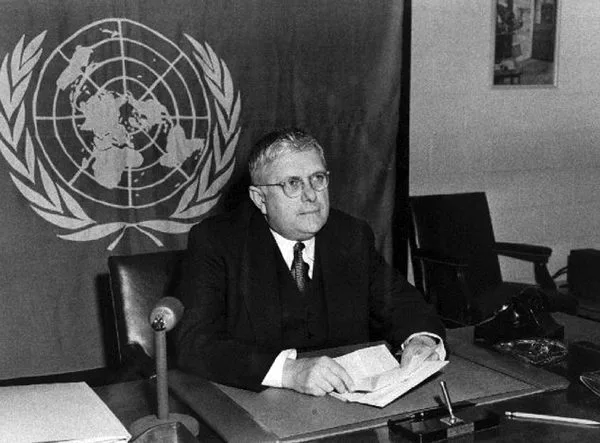
The newspaper additionally encouraged Greek engagement with Australian political parties.
The first organised interactions between Greek community figures and the Australian Labor Party were closely followed by the paper, which recognised the growing electoral significance of the migrant vote.
The paper also covered broader international developments involving Hellenism.
The Dodecanese union with Greece generated major celebrations throughout Australia. Cypriot politics increasingly occupied attention as demands for enosis intensified.
Royal visits, diplomatic ceremonies and Greco-Turkish relations all featured prominently within the newspaper’s pages.
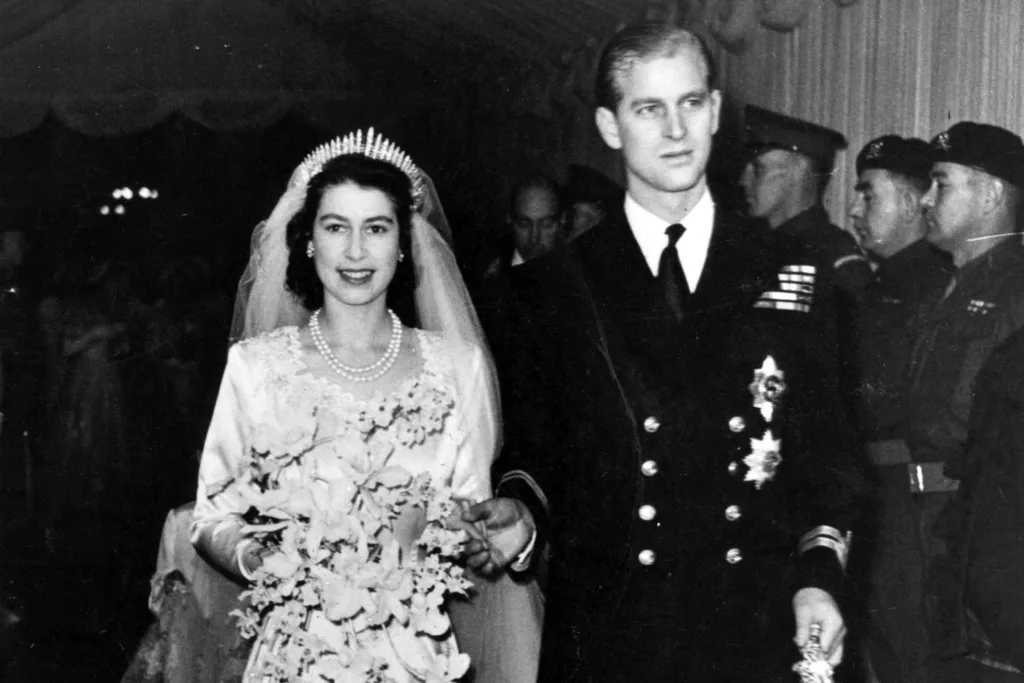
The engagement and marriage of Princess Elizabeth and Prince Philip received extensive celebratory coverage, particularly because Philip’s Greek origins were viewed as a source of communal pride.
A transformed institution
By the beginning of the 1950s, The Greek Herald had become the most influential Greek-language institution in Australia.
Its pages reveal a newspaper attempting simultaneously to guide, discipline, defend and unify a rapidly expanding diaspora.
It campaigned for Greek schools and cultural centres. It pushed for federated communal organisation across Australia. It publicly confronted anti-Greek prejudice and challenged sections of the Australian press over racism and xenophobia. It criticised exploitative migration agents and warned migrants about the realities of post-war Australia. It encouraged political participation, promoted sporting and youth organisations and documented the emergence of an increasingly permanent Greek Australian society.
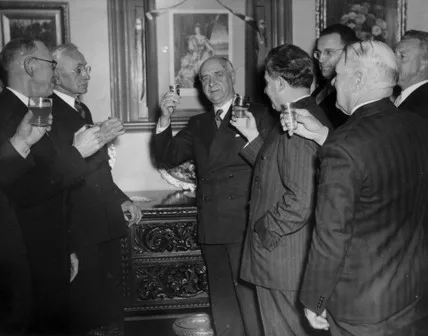
The paper also served as the emotional bridge between Australia and Greece during one of the most traumatic periods in modern Greek history.
Week after week, readers encountered reports on the Civil War, the paedomazoma, the fate of Macedonia, Cyprus, the Dodecanese, anti-communist campaigns and international diplomacy. The Hellenic Herald mobilised fundraising campaigns, defended Greece’s position internationally and fiercely attacked organisations and individuals it believed undermined national interests.
At the same time, the paper documented the everyday remaking of Greek Australia.
Issue after issue, the paper recorded the establishment of new communities in Canberra, Port Pirie and Lismore; the creation of sporting clubs and choirs; the expansion of Greek schools; the arrival of trained teachers from Greece; the growth of Cypriot and island associations; the flourishing of theatre and music; and the emergence of new professionals, businesspeople and university graduates.
The Greek Herald itself was also undergoing major transformation.
New English-language columns appeared. Interstate correspondents expanded coverage nationally. The paper increasingly catered both to newly arrived migrants and to an emerging Australian-born generation. By the end of the decade, The Greek Herald had evolved from a factional community paper into a sophisticated national institution.
