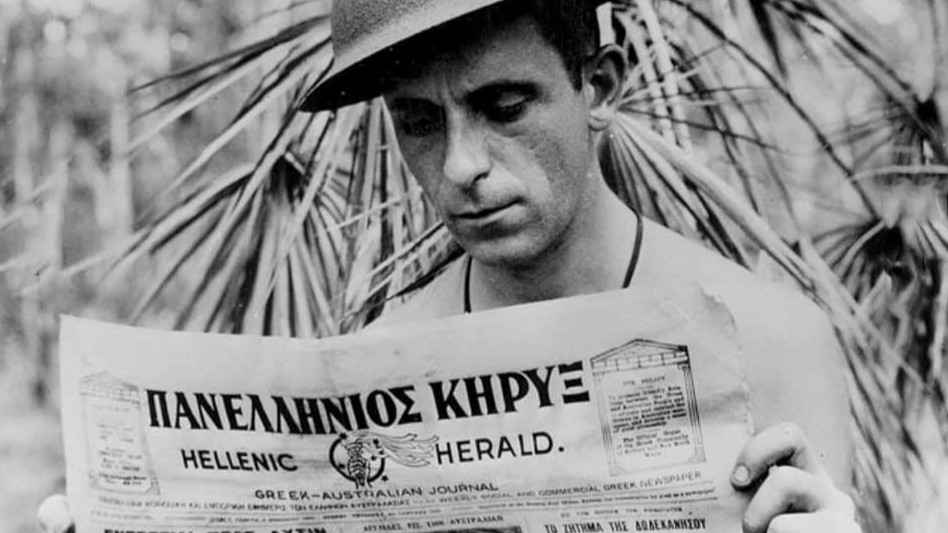
By the beginning of 1937, The Greek Herald had already survived one turbulent decade.
The bitter ecclesiastical wars of the 1920s had gradually eased, the newspaper’s leadership structure had stabilised under Demetrios Lalas, Alexandros G. Grivas and editor M.E. Malachias, and the paper had evolved from a combative Sydney-based publication into one of the most influential institutions in Greek Australian life.
But if the first decade had been defined by survival, ideological conflict and the foundations of organised Hellenism in Australia, the second would be shaped by consolidation, war and the growing political maturity of the Greek Australian diaspora.
Between 1937 and 1946, The Greek Herald chronicled one of the most dramatic periods in modern Greek history. Greece descended into dictatorship under Ioannis Metaxas, Europe moved toward catastrophe, the Second World War engulfed the globe, the Greek campaign of 1940–41 captured international admiration, and Nazi occupation devastated the homeland. By the decade’s end, the first signs of the Greek Civil War had already emerged.
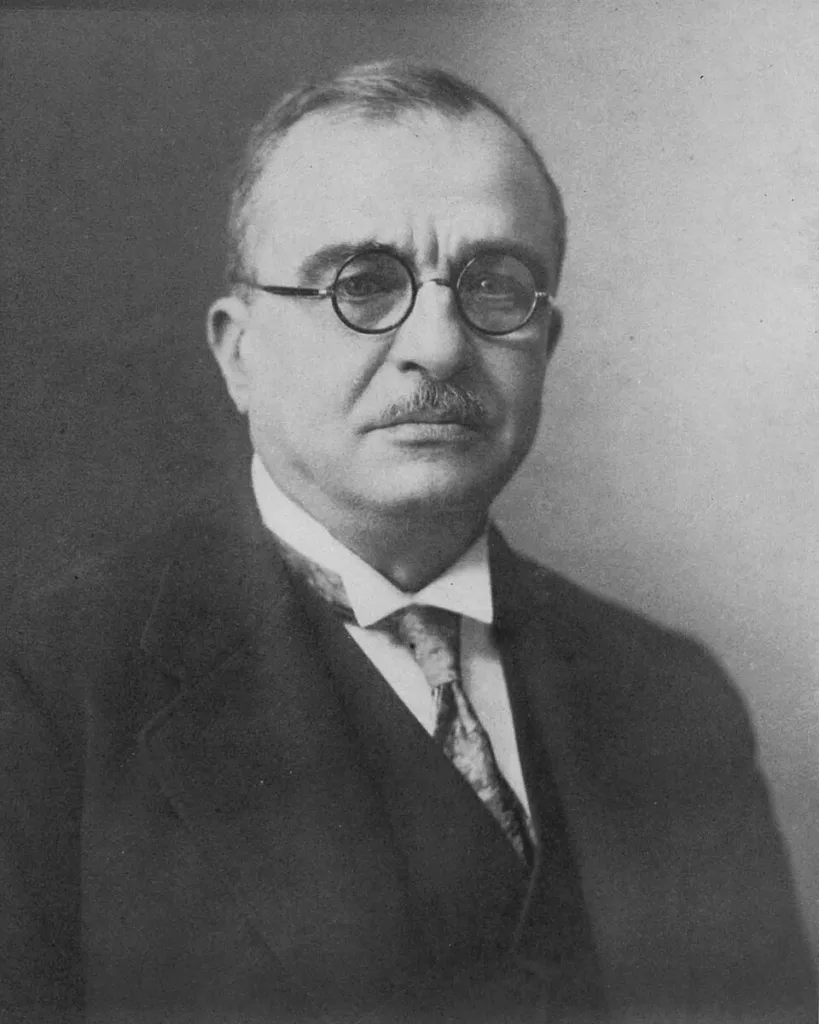
At the same time, Greek Australia itself was changing rapidly.
The isolated migrant settlements of the interwar years were becoming more organised, institutionalised and politically visible. Churches reunited after years of division. Greek schools expanded. Australian-born children entered communal life in greater numbers. Greeks increasingly participated in Australian civic society while remaining emotionally and culturally tied to the homeland.
Throughout this transformation, The Greek Herald evolved alongside the community it served.
Its pages no longer focused primarily on factional warfare and communal polemics. Instead, the newspaper increasingly acted as a national forum documenting every aspect of Greek Australian life: schools, churches, philanthropy, migration, politics, war relief, business activity and the emergence of a second generation born in Australia.
By the close of the Second World War, both the newspaper and the community it represented had been fundamentally transformed.
From factional newspaper to national institution
The late 1930s marked the beginning of a more confident and nationally influential era for The Greek Herald.
Under the increasingly influential Lalas–Grivas–Malachias leadership structure established during the early 1930s, the paper expanded far beyond its original Sydney focus. Through interstate travel, growing circulation and an expanding network of correspondents, it became the principal connective force linking Greek communities across Australia.
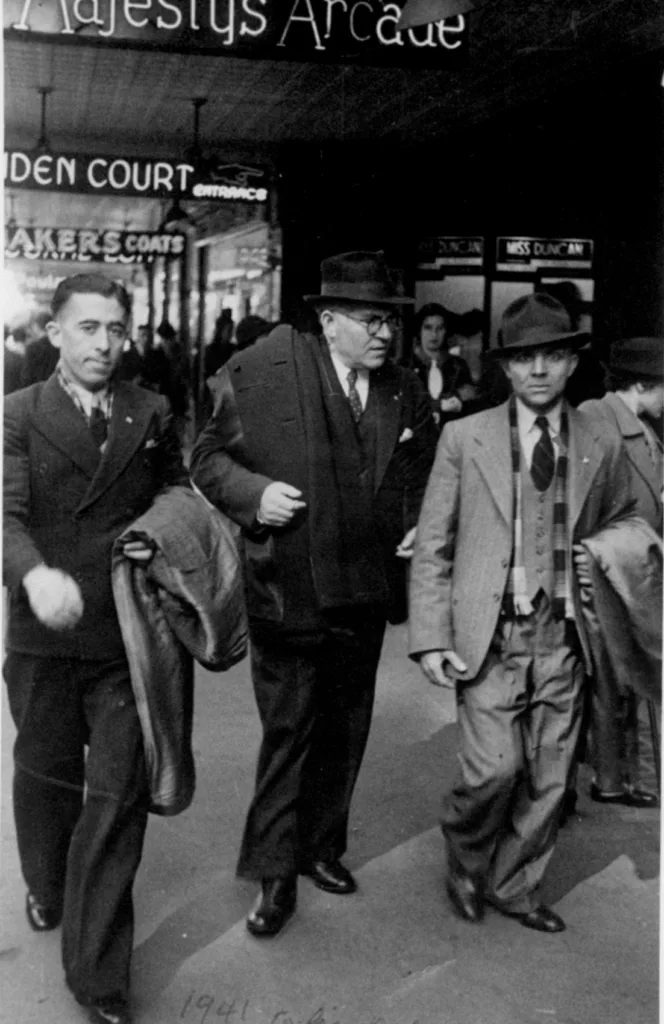
For Greeks living in Port Pirie, Innisfail, Kalgoorlie, Broken Hill and regional Queensland, the newspaper became a vital link to the wider diaspora. Baptisms, weddings, funerals, business ventures, church disputes, charity drives, school concerts and community elections from every corner of Australia increasingly filled its pages.
This expansion reflected a broader transformation within Greek Australian life itself. What had once been a loose collection of isolated migrant settlements was slowly becoming a recognisable national community.
The newspaper strongly encouraged this process. Throughout the decade, Grivas and Malachias repeatedly criticised endless fragmentation into village brotherhoods and regional factions, arguing that organised Hellenism in Australia required broader communal cooperation and national coordination.
At the same time, the newspaper’s editorial scope widened considerably. Australian politics, labour conditions, migration policy, international affairs and developments across the wider Greek world received increasing attention.
Cypriot affairs, the Dodecanese, Constantinople and the Eastern Mediterranean all featured prominently within the paper’s pages, reinforcing the idea that Greek Australia formed part of a larger global Hellenic network.
From Venizelism to Metaxism
The decade also witnessed a major ideological shift within the newspaper itself.
By 1937, The Greek Herald had become one of the strongest diaspora supporters of the authoritarian 4th of August Regime established by Ioannis Metaxas in Greece. Front-page editorials praised dictatorship as the salvation of the Greek nation. Parliamentary democracy was portrayed as weak and chaotic, while authoritarian rule was framed as patriotic, disciplined and necessary.
Malachias openly celebrated Metaxas and King George II for restoring order and national unity after years of political instability. The newspaper strongly supported the regime’s anti-communist policies and enthusiastically promoted its efforts to engage Greeks abroad.
Coverage of the First International Conference of Greeks Abroad in Athens in 1937 reflected this excitement. The Greek Herald portrayed the conference as historic recognition of diaspora Hellenism and warmly endorsed attempts by the Metaxas regime to strengthen ties with overseas Greek communities.
When Metropolitan Timotheos met both Metaxas and King George II in Athens to discuss the needs of Greeks in Australia, the newspaper triumphantly declared: “It is the first time that the Greeks of Australia begin to exist.”
The statement captured the emotional insecurity of the diaspora itself. Despite decades of migration and economic success, many Greek Australians still felt peripheral to both Australia and Greece. Recognition from Athens carried enormous symbolic significance.
Yet the paper’s embrace of authoritarian nationalism also reflected broader anxieties within the community. The trauma of depression, racism and years of communal fragmentation had left many migrants deeply suspicious of instability and political division.
Reconciliation and the union of the churches
One of the most important developments of the late 1930s was the gradual reconciliation of the ecclesiastical divisions that had dominated Greek Australian life during the previous decade.
Under Metropolitan Timotheos, efforts intensified to reunify Sydney’s fractured Orthodox communities. Significantly, The Greek Herald — once among the fiercest anti-Patriarchate voices during the schism years — increasingly positioned itself as a strong advocate for unity.
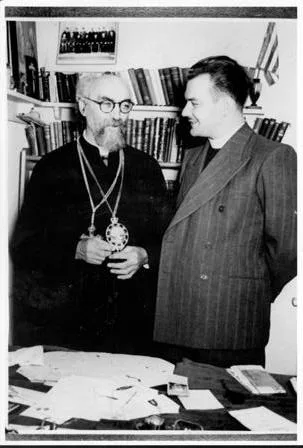
The process remained bitter and contentious. Concerns over debt, authority and communal control continued to divide supporters of Agia Triada and Agia Sophia, while tensions escalated dramatically in 1939 when opponents barricaded Agia Triada and physically locked worshippers outside the church.
The spectacle embarrassed the Greek community publicly and attracted attention within the wider Australian press. The newspaper responded furiously, condemning those prolonging the dispute and accusing them of undermining organised Hellenism in Australia.
By the end of the decade, however, reconciliation had largely prevailed. The Greek Herald presented reunification not simply as a church settlement, but as evidence that Greek Australia itself was entering a more mature and institutionally stable phase.
This broader process of consolidation was also visible elsewhere in Australia. In Melbourne, the formal transformation of the Greek Orthodox Church into the Greek Orthodox Community of Melbourne and Victoria in 1938 reflected the growing sophistication and confidence of communal organisation.
The newspaper closely followed elections, structural changes and leadership disputes within Melbourne’s Greek community, recognising the city’s growing importance within Australian Hellenism.
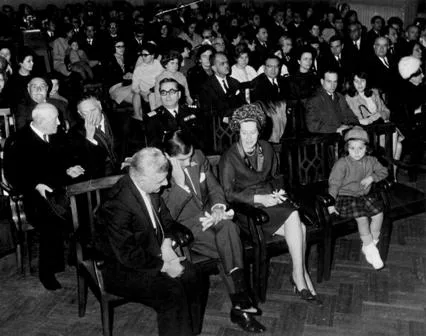
Greek schools, students and the second generation
The preservation of Greek language and culture remained one of the newspaper’s defining priorities throughout the decade, but the conversation increasingly shifted from simple preservation toward adaptation.
By the late 1930s, more Greek Australian children were Australian-born and English-speaking. The newspaper continued to warn that language loss threatened the survival of Hellenism abroad, but it also began confronting the realities of a changing diaspora.
The expansion of Greek schools across Australia received extensive coverage. Communities in regional centres such as Broken Hill, Babinda and Silkwood established schools despite enormous financial and organisational difficulties. Teachers including Evanthia Vergou, Spyros Economou and Marika Christophidou were portrayed not merely as educators, but as custodians of Hellenic culture in Australia.
At the same time, the newspaper increasingly acknowledged the need for cultural adaptation.
In Brisbane, Archimandrite Nikon Patrinakos translated the Divine Liturgy into English for younger generations — a development treated by the newspaper as historically significant.
The paper also began documenting the emergence of educated second-generation Greeks entering universities and professional life. Early student and intellectual associations reflected a community slowly moving beyond its overwhelmingly working-class migrant origins.
For The Greek Herald, these developments represented both promise and anxiety: hope that Hellenism might survive into a second generation, but concern that assimilation and language loss could weaken communal identity over time.
Greeks, respectability and Australian society
Throughout the late 1930s, The Greek Herald became increasingly concerned with how Greeks were perceived within Australian society.
Anti-Greek racism and restrictive immigration attitudes remained widespread, but the newspaper’s approach had evolved since the openly defensive tone of the 1920s. Rather than simply condemning prejudice, the paper increasingly promoted education, organisation, philanthropy and civic participation as ways of improving the standing of Greeks within Australia.
Malachias repeatedly argued that stronger leadership, better educational standards and greater communal discipline were essential if Greek Australians wished to gain respect within Australian public life.
This concern with respectability shaped much of the newspaper’s editorial direction during the late 1930s. Charity drives, hospital donations and community fundraising campaigns received extensive coverage not only as acts of generosity, but also as demonstrations that Greeks were loyal and valuable contributors to Australian society.
The newspaper also engaged strategically with Australian public debates. When mainstream newspapers attacked Southern Europeans, The Greek Herald responded by defending migrants against chauvinism while simultaneously encouraging Greeks to improve their public image and communal organisation.
Legal battles and communal influence
Despite its growing institutional maturity, controversy continued to surround the newspaper.
In 1937, Lalas and Grivas became embroiled in a major defamation case brought by Nicholas Sophios, who accused the paper of damaging his reputation during communal elections.
The lengthy proceedings highlighted both the newspaper’s influence and the continuing volatility of Greek communal politics. After weeks of hearings, the jury ultimately cleared the newspaper of wrongdoing.
Following the case, Lalas published a rare front-page appeal calling for unity within the Greek community.
The episode reflected a newspaper increasingly conscious of its own power and increasingly aware that stabilising communal life had become more important than inflaming old factional divisions.
War transforms the newspaper
The outbreak of the Second World War transformed The Greek Herald completely.
By 1940, the newspaper had effectively become a wartime institution.
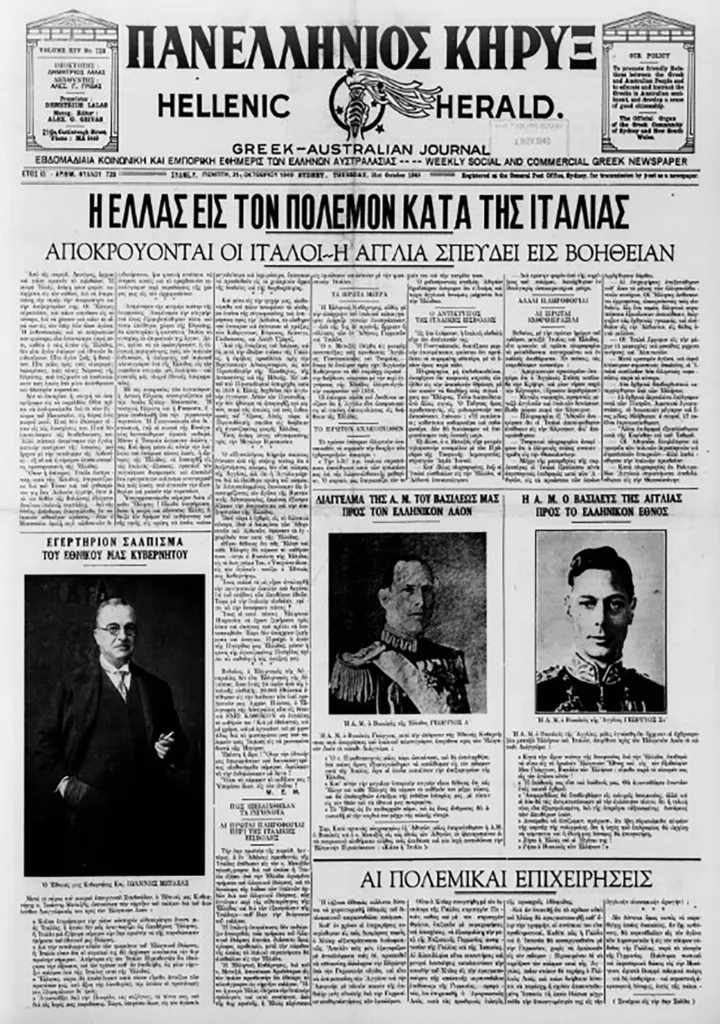
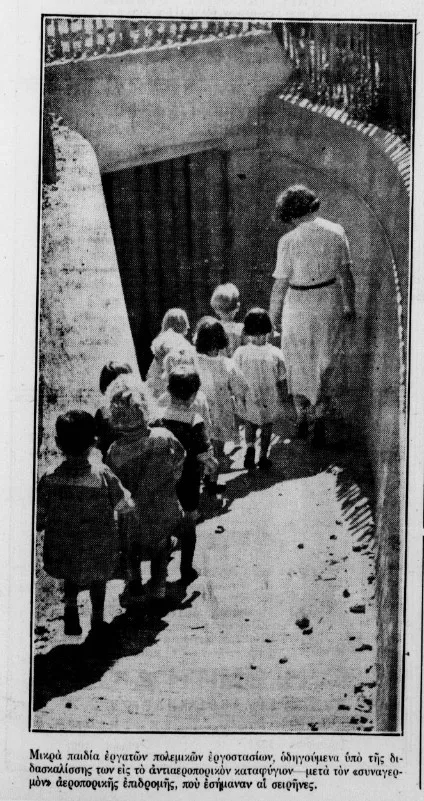
The Italian invasion of Greece on 28 October 1940 electrified Greek Australia. From the opening days of the conflict, the paper devoted itself almost entirely to the Greek war effort. Front pages filled with reports from the Greco-Albanian front, patriotic editorials, fundraising appeals and updates on the mobilisation of Greeks throughout the world.
As war reshaped Greek Australian life, Grivas emerged as one of the central organisers of wartime diaspora mobilisation through the newspaper’s pages.
The Greek Herald coordinated relief campaigns, promoted fundraising drives and encouraged Greek Australians to contribute money, clothing and medical supplies for the homeland. Campaigns such as I Fanella tou Stratiotou received extensive promotion throughout the paper.
At the same time, the newspaper carefully cultivated a dual identity: loyal to Australia, yet emotionally bound to Greece.
Greek Australians donated heavily to Australian defence appeals and war funds, while the newspaper strongly encouraged enlistment and support for the Allied cause. When Greek Australians contributed to Australian air defence campaigns, The Greek Herald framed these acts as expressions of gratitude toward their adopted homeland.
The war also transformed Australian perceptions of Greeks.
The same community that had frequently been treated with suspicion during the 1930s was suddenly celebrated as belonging to a heroic allied nation resisting fascism. Greece’s resistance against Mussolini generated enormous admiration throughout Australia and dramatically altered the public image of Greeks.
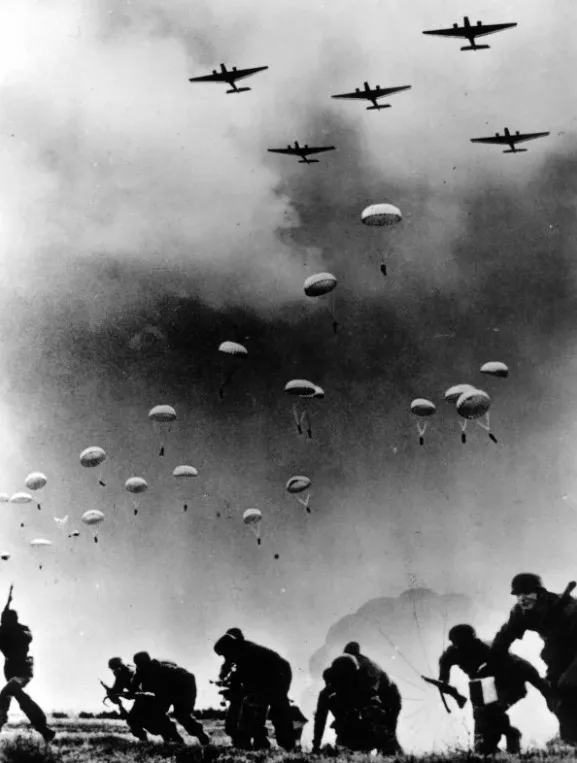
The German invasion of Greece and Crete in 1941 deepened this emotional connection even further.
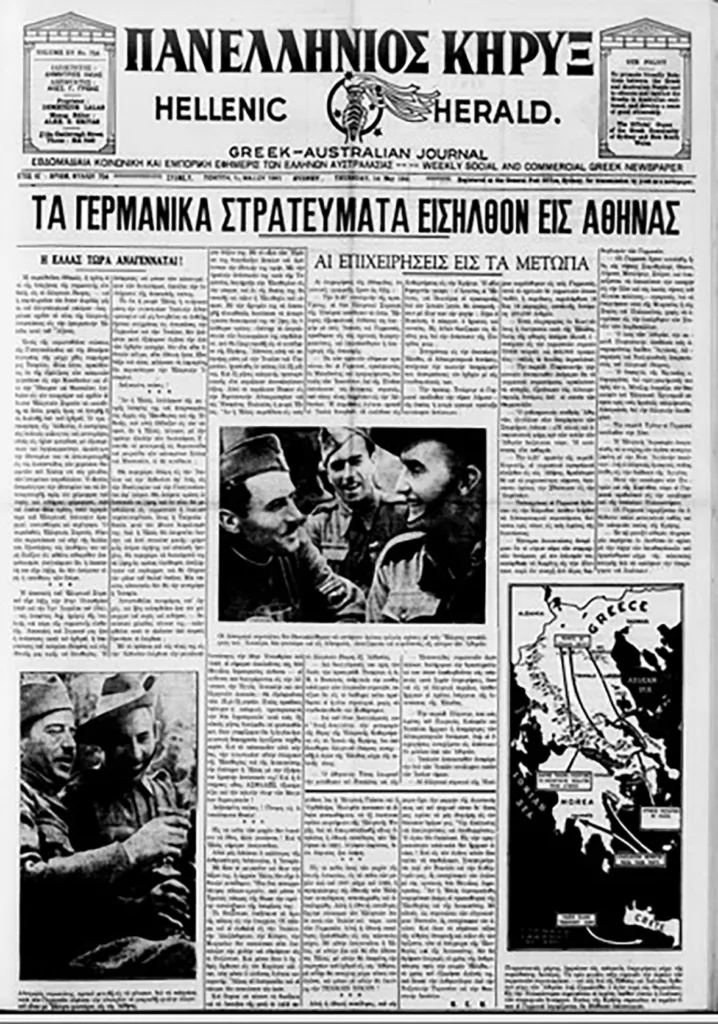
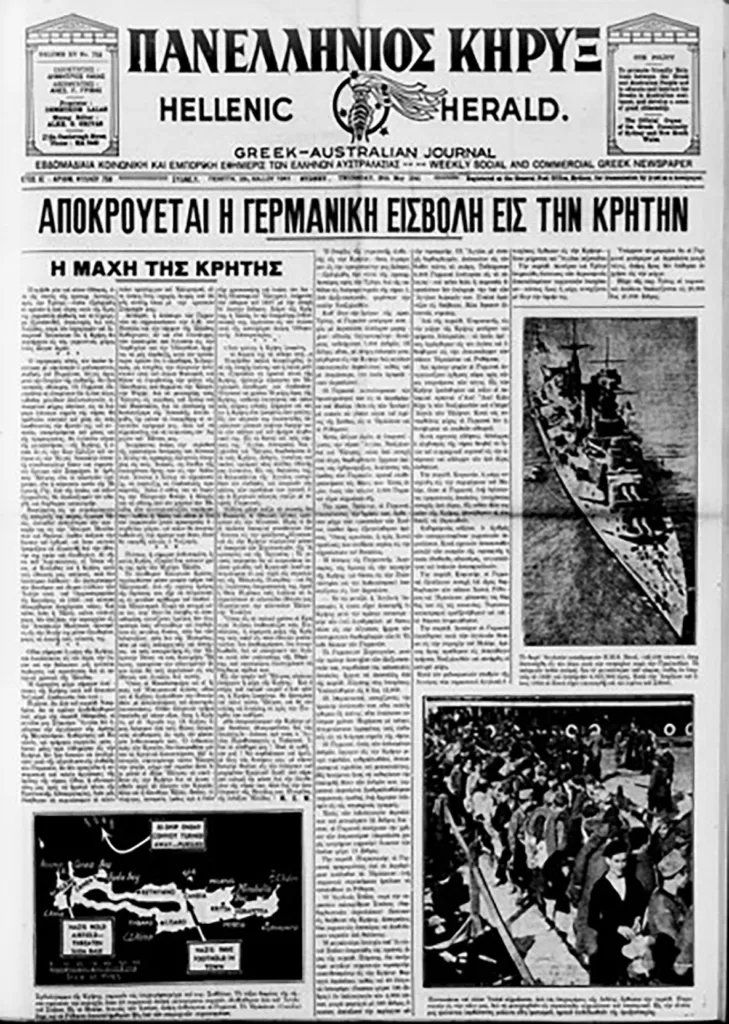
The Greek Herald devoted enormous attention to the Battle of Greece and the Battle of Crete, publishing emotional testimonies from Australian soldiers describing how ordinary Greek civilians sheltered, fed and protected Allied troops during the retreat through mainland Greece and Crete.
These wartime stories became foundational to the ANZAC–Hellenic relationship that would later occupy such an important place within Greek Australian commemorative culture.
The newspaper also highlighted the service of Greeks and Greek Australians within Allied forces, celebrating soldiers, sailors and doctors serving both Australia and Greece during wartime.
Occupation, relief and survival
The Nazi occupation of Greece devastated diaspora communities emotionally.
Throughout the war years, The Greek Herald became an informational and emotional lifeline connecting migrants to the suffering homeland. Its pages carried constant reports of famine, executions, destruction and resistance activity under occupation.
Relief campaigns soon became central to communal life.
Women’s organisations, church committees and community associations across Australia organised bazaars, dances, collections and fundraising drives for occupied Greece, all extensively covered by the newspaper. Greek women emerged as especially important organisers of wartime welfare activity throughout the country.
Greek cafés and community centres once again functioned as informal welfare networks, supporting struggling migrants, unemployed workers and displaced sailors during wartime hardship.
During these years, the newspaper’s role extended far beyond journalism. It functioned simultaneously as a communal organiser, welfare coordinator and emotional support system for a diaspora experiencing collective grief and anxiety.
In July 1945, shortly after the end of the war in Europe, Grivas became principal proprietor of The Greek Herald, marking the beginning of a new post-war phase in the newspaper’s history.
That same year, M. Kosmas Andronikos joined the paper as shareholder, deputy manager, columnist and technical manager as part of a broader restructuring that prepared the newspaper for the enormous migratory and social transformations that would reshape Greek Australia after the war.
A transformed newspaper for a transformed community
By the end of 1946, The Hellenic Herald had become one of the central institutions of Greek Australia.
The paper documented every stage of the diaspora’s transformation throughout one of the most turbulent decades in modern history: dictatorship, reconciliation, migration, racism, war, occupation, philanthropy, education and communal consolidation.
It campaigned for schools and language preservation, defended migrants against prejudice, coordinated relief for occupied Greece and helped forge the wartime bonds between Greece and Australia that would profoundly shape post-war Greek Australian identity.
If the first decade of The Hellenic Herald was defined by survival and internal conflict, the second was shaped by consolidation, wartime mobilisation and the growing visibility of Greeks within Australian public life.
By the close of the Second World War, the newspaper was no longer simply recording Greek Australian history.
It had become one of the institutions helping shape the future of Greek Australia itself.
